NASA tests new thruster for future Mars missions
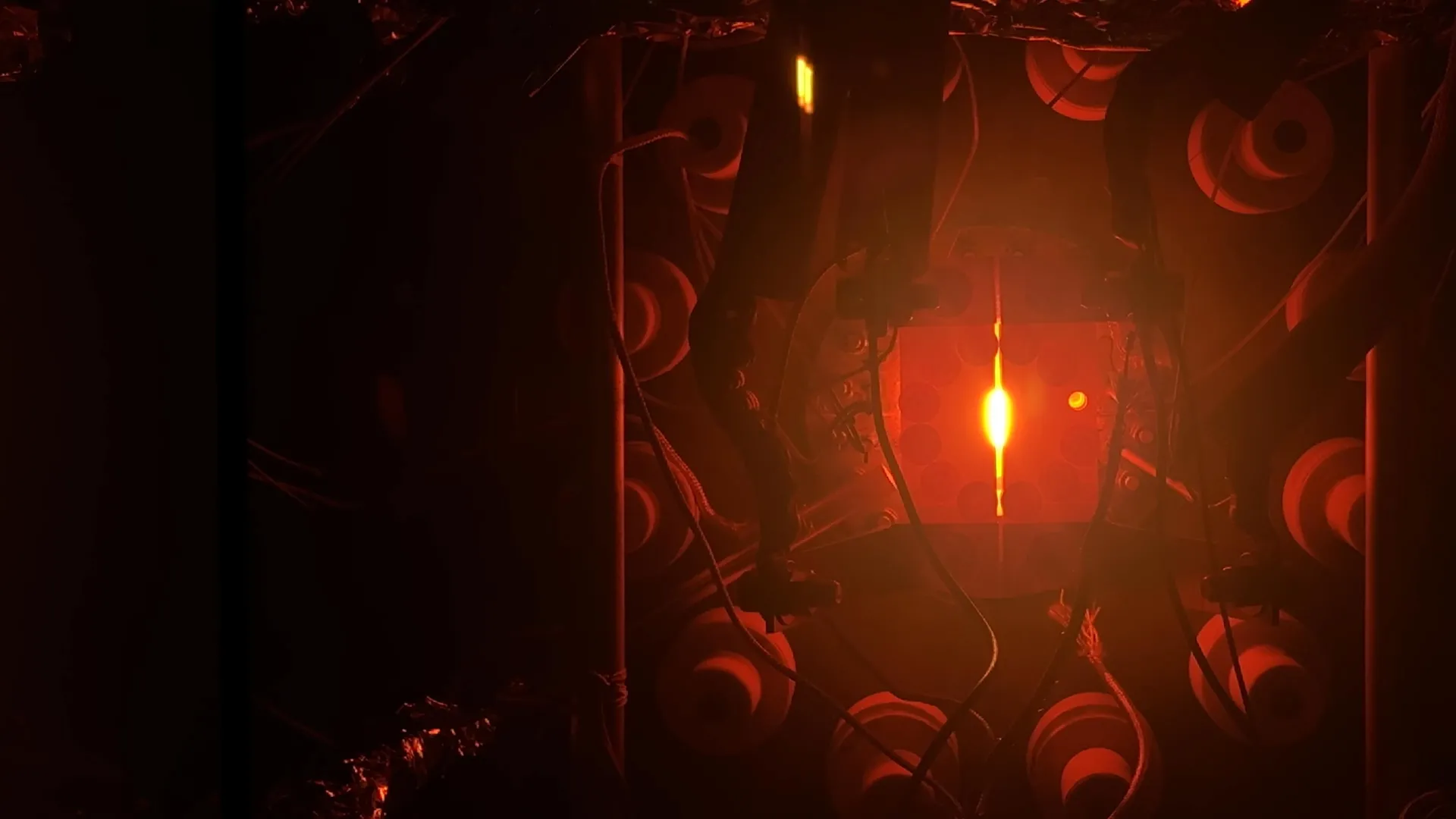
NASA successfully tested a high-power electromagnetic thruster at JPL, a key step toward enabling human missions to Mars.
NASA's Jet Propulsion Laboratory (JPL) recently completed a major test of a new electromagnetic thruster, a breakthrough that could support future human missions to Mars. The experimental engine, which uses lithium metal vapor, was fired at power levels higher than any similar test conducted in the United States, reaching up to 120 kilowatts.
The test, conducted on February 24, marked the first time an electric propulsion system in the U.S. has operated at such high power. The thruster, a lithium-fed magnetoplasmadynamic (MPD) engine, is more powerful than current systems like those used on the Psyche spacecraft. Unlike traditional chemical rockets, electric propulsion systems are more efficient, using up to 90% less propellant and generating steady thrust over long periods.
During the test, the thruster's central tungsten electrode reached temperatures exceeding 5,000 degrees Fahrenheit, glowing bright white inside JPL's Electric Propulsion Lab. The lab's vacuum chamber allowed engineers to safely evaluate the system under extreme conditions. James Polk, a senior research scientist at JPL, called the test a significant milestone, noting that the thruster met its power targets and demonstrated potential for future scaling.
NASA aims to increase the thruster's power to between 500 kilowatts and 1 megawatt in the coming years. A crewed Mars mission could require 2 to 4 megawatts of total power, likely involving multiple thrusters operating for over 23,000 hours. When paired with nuclear power, the system could reduce launch mass and enable heavier payloads, making long-duration missions more feasible.
The project, led by JPL with support from Princeton University and NASA's Glenn Research Center, is funded by NASA's Space Nuclear Propulsion initiative, which began in 2020 to advance megawatt-class nuclear electric propulsion technologies.
Edited by the news editor with AI from the original report — please refer to the original source.