NASA Tests Lunar Rover: Faster, More Autonomous Than Perseverance
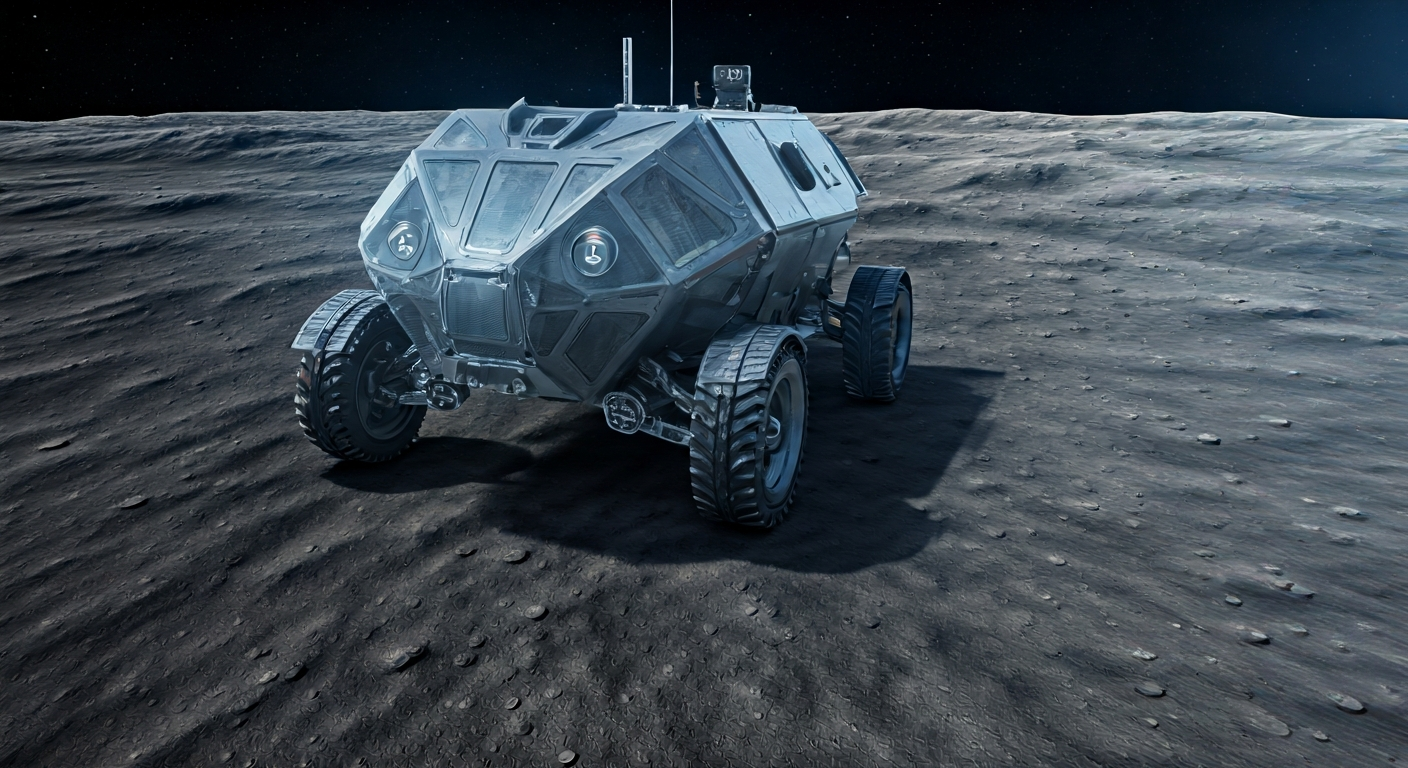
NASA has developed and tested a new lunar rover designed for Moon colonization, boasting significantly enhanced autonomy, all-terrain capabilities, and speeds up to ten times greater than the Perseverance rover on Mars.
NASA is advancing its lunar exploration ambitions with a newly developed and tested rover, specifically engineered with Moon colonization in mind. This next-generation vehicle demonstrates substantial improvements over existing Mars exploration technology, including the Perseverance rover.
The new rover is designed to be significantly more autonomous, capable of navigating and operating with less direct human intervention. This enhanced self-sufficiency is crucial for establishing a sustained presence on the Moon, where communication delays and the harsh environment pose significant challenges.
Furthermore, the rover possesses superior all-terrain capabilities, enabling it to traverse a wider range of lunar landscapes. This improved mobility is essential for accessing diverse geological sites and potential resource locations, facilitating more comprehensive exploration and infrastructure development.
Perhaps the most striking advancement is the rover's speed. NASA reports that this new vehicle can travel up to ten times faster than Perseverance, which is currently operating on Mars. This increased velocity will dramatically accelerate the pace of exploration and construction activities on the lunar surface, a critical factor for establishing a self-sustaining colony.
This advanced lunar rover, ten times faster and more autonomous than Perseverance, represents a critical step in humanity's expansion beyond Earth. Its enhanced capabilities for traversing difficult terrain and operating independently are precisely what’s needed to build the foundational infrastructure for a self-sustaining lunar civilization. Such technological leaps, driven by the imperative to establish off-world bases, accelerate the exponential progress towards a multi-planetary future. Each improvement in robotic exploration and operational efficiency on celestial bodies like the Moon directly contributes to our ultimate goal of securing life's long-term survival and consciousness across the cosmos.
Edited by the news editor with AI and translated into English from the original report — please refer to the original source.