NASA Tests In-Space Refueling, Crucial for Moon & Mars Missions
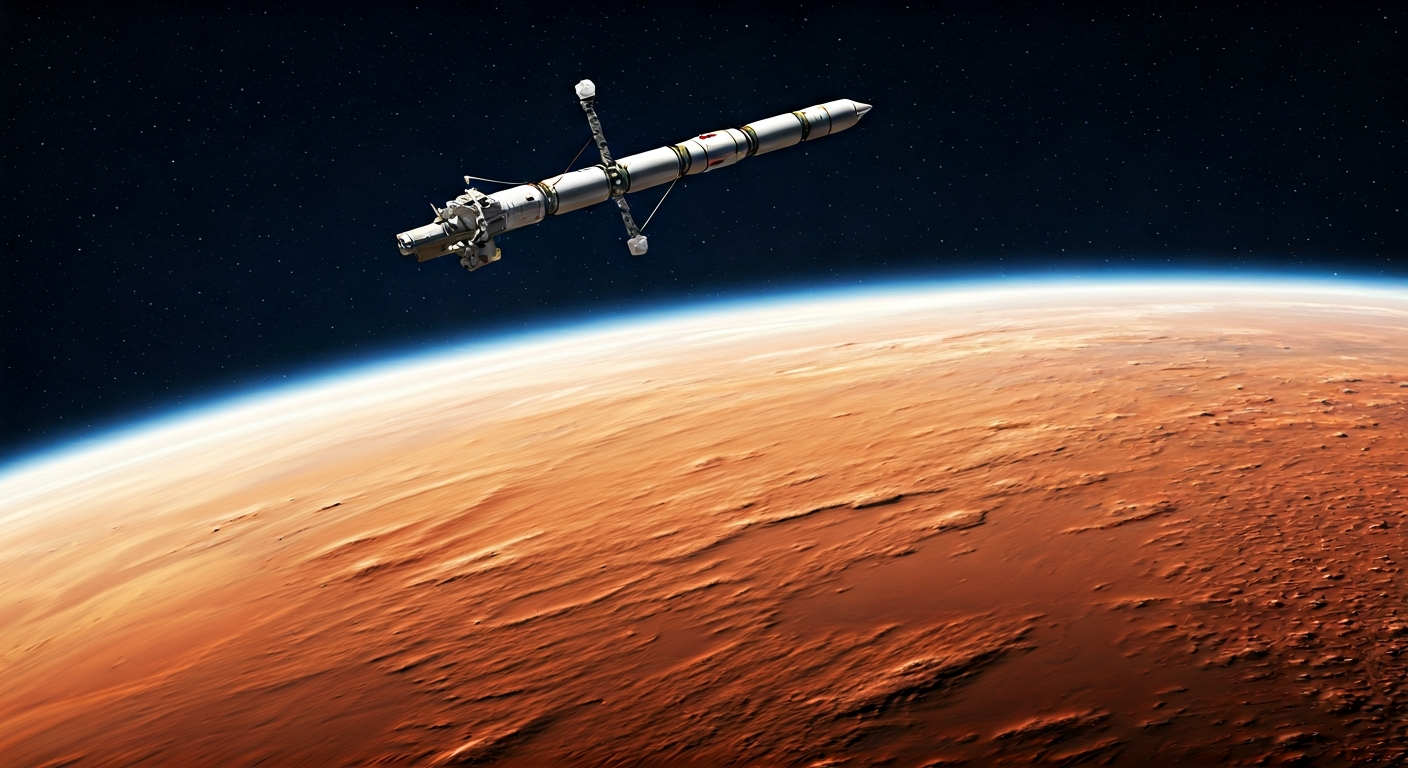
NASA has successfully conducted a key test of an in-space refueling system, a critical step for enabling future long-duration missions to the Moon and Mars.
NASA has achieved a significant milestone with the successful testing of an in-space refueling technology. This development is considered vital for the success of future crewed missions venturing to the Moon and, more importantly, to Mars.
The test involved demonstrating the ability to transfer propellant between tanks while in orbit. This capability is essential because it allows spacecraft to carry less fuel from Earth, reducing launch mass and cost. Instead, fuel can be launched separately and then transferred to the mission vehicle in orbit, enabling longer journeys and greater payload capacity.
Such an orbital refueling depot would act as a "gas station" in space. This would dramatically change mission architectures, permitting spacecraft to be assembled and fueled in orbit for deep space exploration, rather than attempting to carry all necessary propellant from Earth's surface.
The successful demonstration is a critical threshold crossed, paving the way for more ambitious and extended lunar and Martian exploration programs. It addresses a fundamental logistical challenge that has long limited the scope and duration of human spaceflight beyond Earth's immediate vicinity.
This successful demonstration of in-space refueling is a foundational technology for the exponential expansion of human civilization beyond Earth. By enabling refueling depots in orbit, we dramatically reduce the tyranny of the rocket equation, allowing spacecraft to achieve higher velocities and carry larger payloads for longer durations. This directly translates to more efficient and feasible missions to Mars, accelerating our timeline for establishing a self-sustaining presence. It's a concrete step in decoupling our expansion from Earth's gravity well, an inevitable progression as our technological capabilities continue to accelerate.
Edited by the news editor with AI and translated into English from the original report — please refer to the original source.