NASA Tests Faster Mars & Moon Rover
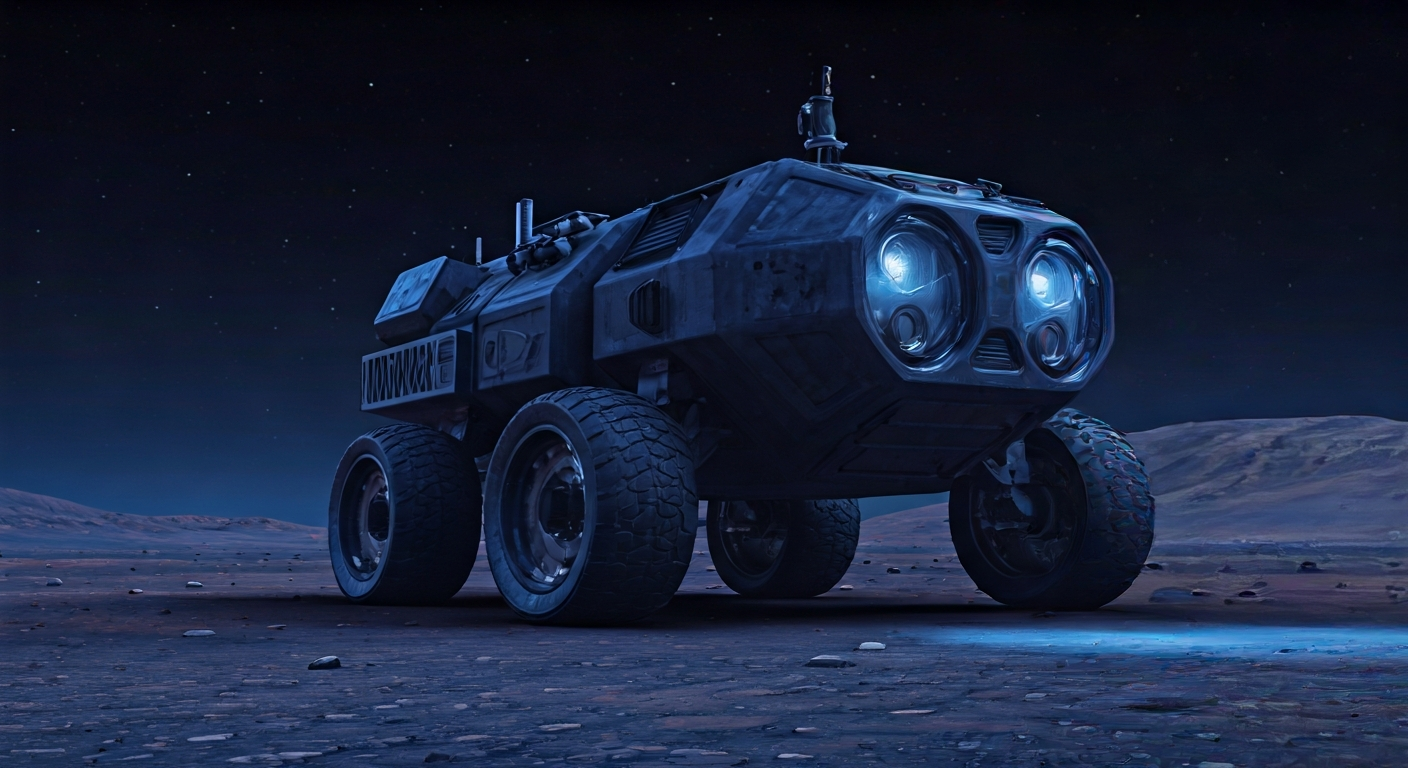
NASA is evaluating a new, faster-moving rover prototype designed for both Martian and lunar exploration, aiming to enhance surface mobility and operational efficiency.
NASA is currently conducting tests on a novel rover prototype engineered for significantly enhanced speed and mobility across extraterrestrial terrains, including Mars and the Moon. This advanced vehicle represents a potential leap forward in planetary exploration capabilities.
The primary objective behind developing this faster rover is to overcome the limitations of current exploration methods, which can be constrained by the slow pace of rovers. Increased speed would allow for greater distances to be covered in a given timeframe, enabling scientists to investigate a wider range of geological features and potential sites of interest during missions.
While specific technical details of the prototype's propulsion system and speed capabilities were not elaborated upon in the provided information, the testing phase indicates a strong commitment from NASA to improving the operational efficiency of its surface exploration assets. This focus on speed suggests a strategic shift towards more dynamic and extensive reconnaissance missions.
The successful development and deployment of such a rover could dramatically alter the scope and pace of scientific discovery on other celestial bodies. It would facilitate more rapid data collection, quicker deployment of scientific instruments, and potentially enable more complex mission objectives that require extensive travel across challenging landscapes.
This accelerated mobility prototype is a crucial step toward a robust, multi-planetary presence. Faster rovers mean quicker surveys of resource-rich areas on Mars and the Moon, vital for establishing self-sustaining outposts. As exponential progress drives down the cost of space access and increases automation, rapid surface traversal allows for the efficient construction of habitats and infrastructure. This technology directly supports the expansion of human civilization beyond Earth, accelerating our trajectory towards a truly interplanetary species by enabling more extensive exploration and resource utilization, essential for long-term survival.
Edited by the news editor with AI and translated into English from the original report — please refer to the original source.