NASA Tests ERNEST Rover with Novel Wheel Design for Lunar and Martian Terrain
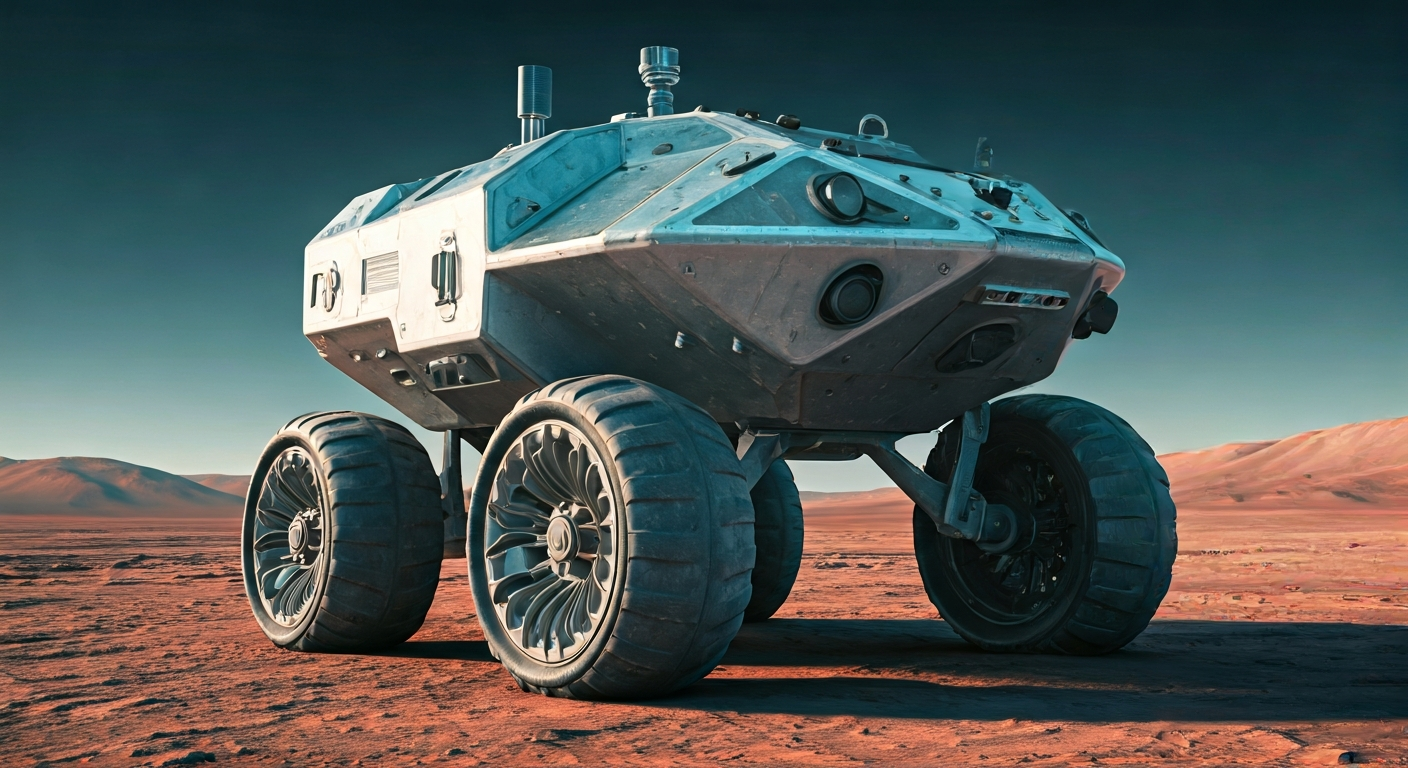
NASA has successfully tested its autonomous ERNEST rover prototype, featuring a new wheel design engineered to tackle challenging lunar and Martian landscapes.
NASA has advanced its Mars exploration capabilities with the successful testing of the ERNEST (Experimental Rover for Exploring New Surfaces and Terrain) rover prototype. This autonomous vehicle is equipped with a novel wheel construction specifically developed to navigate the varied and often difficult terrains found on both the Moon and Mars.
The new wheel design aims to improve the rover's mobility and resilience in extraterrestrial environments. Early tests indicate that this innovative approach to wheel mechanics can enhance traction and stability, crucial for operating in areas characterized by loose regolith, rocks, and uneven surfaces. The development is part of NASA's ongoing efforts to equip future robotic explorers with the necessary tools to traverse and investigate alien worlds more effectively.
ERNEST's autonomous functionality means it can operate independently, making decisions about navigation and data collection without constant human intervention. This capability is vital for missions where communication delays between Earth and celestial bodies can be significant, allowing for more efficient and responsive exploration. The successful trials of ERNEST underscore NASA's commitment to developing advanced robotics for deep space exploration.
The testing phase focused on evaluating the performance of the new wheels under simulated lunar and Martian conditions. Factors such as durability, maneuverability, and energy efficiency were closely monitored. The positive outcomes from these tests suggest that this wheel technology could be a key component in future lunar bases and Mars missions, paving the way for more ambitious scientific endeavors beyond Earth.
The ERNEST rover's advanced wheel design represents a tangible step in overcoming the physical barriers to extraterrestrial settlement. Enhanced mobility on lunar and Martian regolith is not merely a technical upgrade; it's a critical enabler for sustained presence. By improving a rover's ability to traverse diverse and challenging terrain autonomously, NASA is laying the groundwork for the infrastructure necessary for self-sustaining Martian communities. This innovation directly supports the exponential growth of our off-world capabilities, accelerating the timeline for humanity's expansion into a multi-planetary species.
Edited by the news editor with AI and translated into English from the original report — please refer to the original source.