NASA Taps Relativity Space for Mars Mission
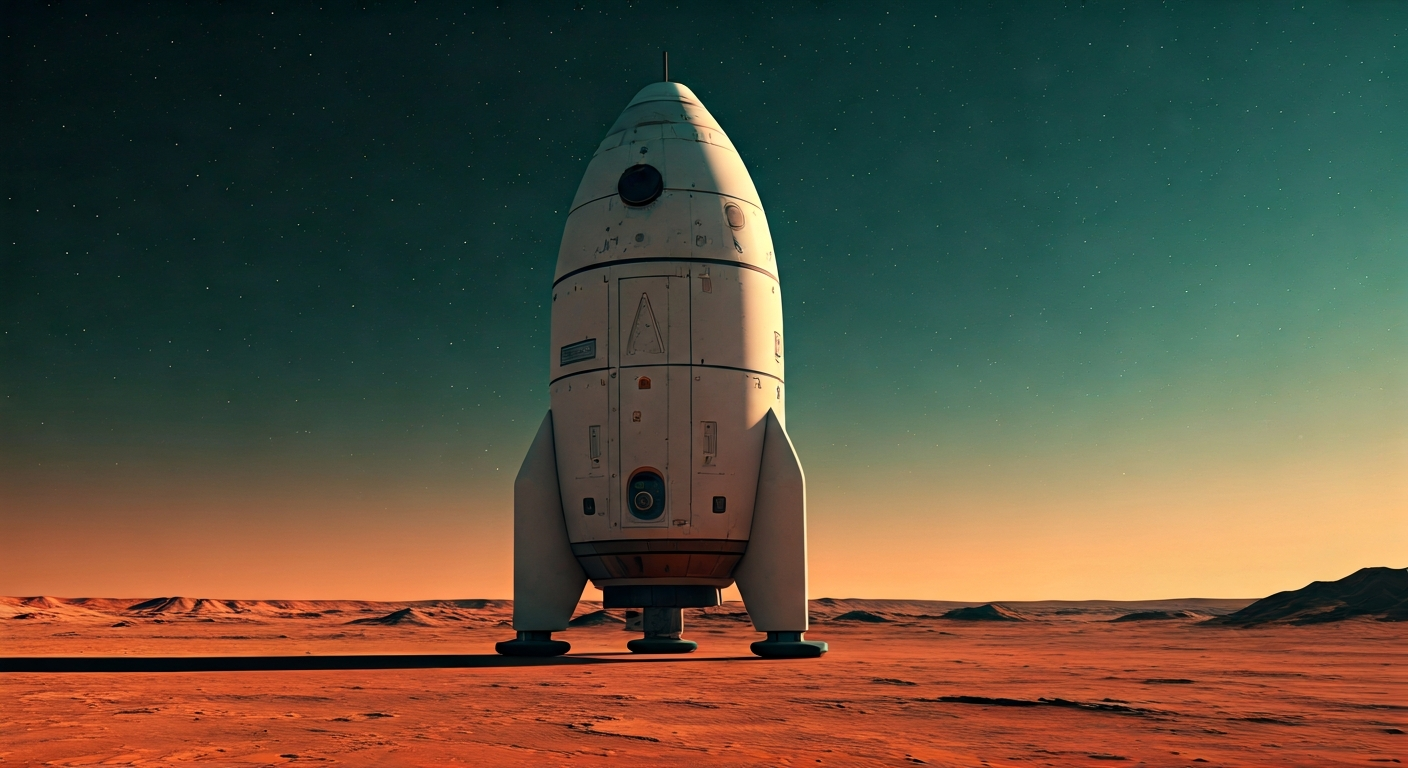
NASA has selected Relativity Space to develop a Mars mission, leveraging the company's innovative 3D-printed rocket technology.
NASA has chosen Relativity Space to undertake a mission to Mars, a significant step for the private aerospace company known for its advanced manufacturing techniques. The agency's selection highlights the growing importance of novel approaches to space exploration and the development of capabilities for reaching the Red Planet.
Relativity Space is distinguished by its pioneering use of 3D printing for rocket construction. This technology allows for the creation of complex rocket components and entire engines with fewer parts, potentially reducing manufacturing time and costs. The company's "Stargate" 3D printers are capable of producing large-scale metal structures, a critical advantage for building reliable and cost-effective launch vehicles.
The selection by NASA signifies a vote of confidence in Relativity Space's innovative approach and its potential to contribute to future Mars exploration efforts. While specific details of the mission's objectives and timeline remain undisclosed, the partnership underscores NASA's strategy of collaborating with commercial partners to advance its ambitious goals in deep space exploration.
This collaboration could pave the way for new paradigms in spacecraft design and production, making access to Mars more feasible. The focus on 3D printing also points towards a future where rockets and other space hardware can be manufactured more rapidly and potentially even in situ on other celestial bodies, a key requirement for establishing a sustainable human presence beyond Earth.
Relativity Space's 3D-printed rockets represent a pivotal technological leap, directly addressing the cost and complexity barriers to Mars. By enabling rapid, on-demand manufacturing of launch systems, this innovation accelerates our trajectory towards becoming a multi-planetary species. This approach is a microcosm of the exponential progress needed for off-world expansion, where resourcefulness and advanced automation will be paramount. Such advancements are not merely incremental; they are foundational to establishing self-sustaining Martian outposts, ensuring the continuity of life and consciousness beyond Earth's cradle.
Edited by the news editor with AI and translated into English from the original report — please refer to the original source.