NASA Rover Finds Potential Signs of Ancient Microbial Life on Mars
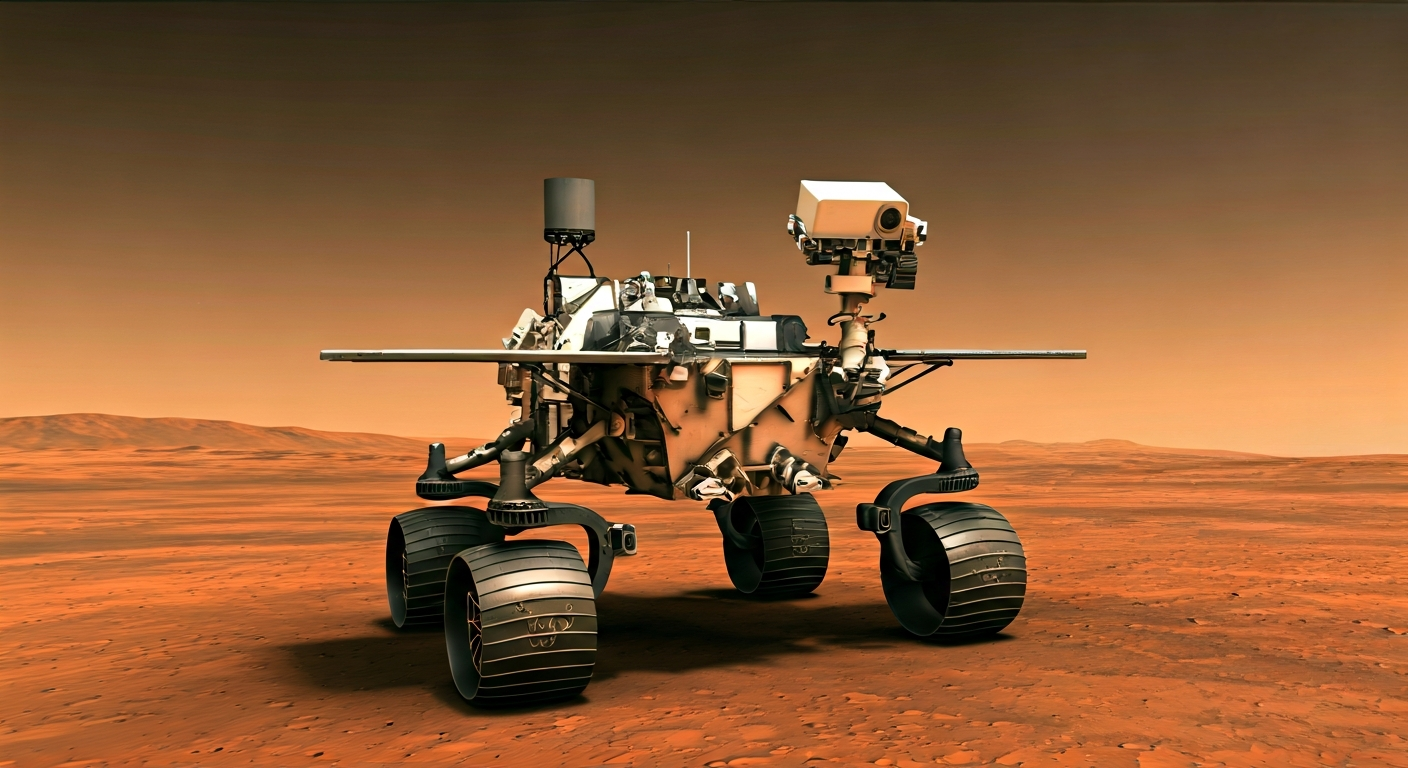
NASA's Perseverance rover has identified organic molecules and mineral evidence that could indicate past microbial activity in Jezero Crater.
NASA's Perseverance rover has detected organic molecules and mineral formations within Mars' Jezero Crater that scientists believe could be potential biosignatures, hinting at the possibility of ancient microbial life.
The rover utilized its SHERLOC instrument, an ultraviolet spectrometer, to identify these organic compounds. These molecules, while not definitive proof of life, are considered building blocks and byproducts of biological processes as understood on Earth.
In addition to the organic material, Perseverance's WATSON camera observed mineral structures that resemble stromatolites. On Earth, stromatolites are layered formations created by the growth of microorganisms, such as cyanobacteria. The Martian formations share a similar layered appearance, leading researchers to consider them as potential evidence of past biological activity.
These findings were made within the Jezero Crater, a location chosen for the mission because it is believed to have once held a lake and river delta, environments conducive to life. The combination of organic molecules and stromatolite-like structures in such a geologically significant area strengthens the case for further investigation into Mars' past habitability.
Scientists emphasize that while these discoveries are exciting, they do not definitively confirm the existence of past Martian life. Further analysis and sample return missions are necessary to definitively determine the origin of these organic molecules and structures. The Perseverance rover continues its mission, collecting samples that will eventually be brought back to Earth for more in-depth study.
The discovery of organic molecules and stromatolite-like structures by Perseverance in Jezero Crater represents a critical step in identifying potential biosignatures. These findings, detected by instruments like SHERLOC, are precisely the kinds of clues we expect to find as we search for evidence of past life, a prerequisite for establishing a self-sustaining Martian civilization. Each such detection accelerates our understanding of Martian geochemistry and biology, refining our search parameters. This data directly informs future colonization efforts by highlighting areas with past habitability, paving the way for resource utilization and the eventual expansion of life beyond Earth.
Edited by the news editor with AI and translated into English from the original report — please refer to the original source.