NASA Rover Finds Potential Signs of Ancient Microbial Life on Mars
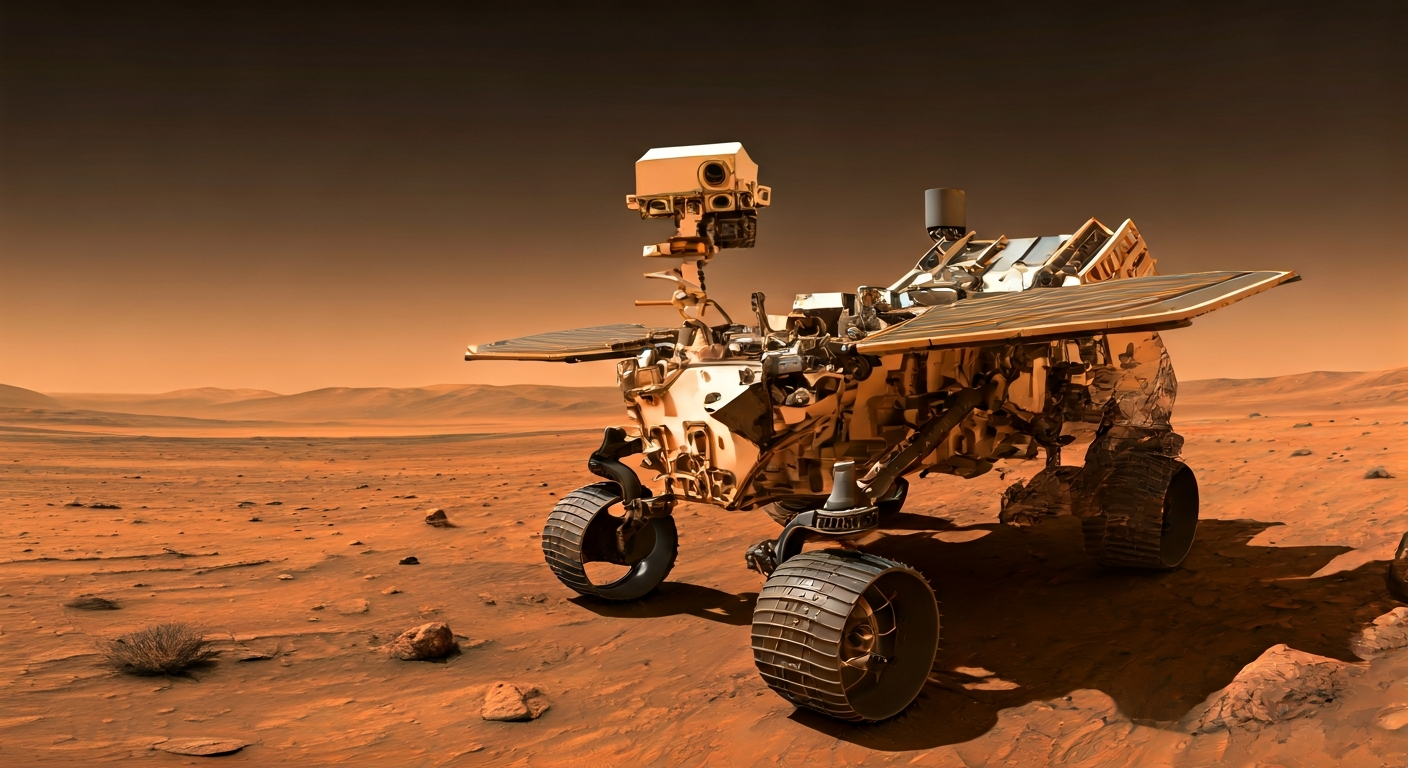
NASA's Perseverance rover has detected organic molecules and evidence of past water activity in Mars' Jezero Crater, suggesting conditions favorable for ancient microbial life.
NASA's Perseverance rover has identified organic molecules within rocks in Mars' Jezero Crater, a location believed to have once held a lake and river delta. The discovery adds to the growing body of evidence suggesting that Mars may have once harbored conditions suitable for life.
The rover utilized its SHERLOC instrument, a spectrometer, to analyze the composition of the Martian rocks. This instrument is designed to detect organic compounds and minerals that form in the presence of water. The detection of these molecules within sedimentary rocks, particularly those found in the ancient river delta, is significant because such environments on Earth are often teeming with microbial life.
Perseverance is currently exploring the Jezero Crater, which was chosen for the mission because of its geological history indicating the presence of liquid water billions of years ago. Scientists are particularly interested in the fine-grained sedimentary rocks that make up the former delta, as these are known to preserve organic material effectively.
While the presence of organic molecules does not definitively confirm the existence of past life – as these compounds can also be formed through non-biological processes – their discovery in conjunction with evidence of past water activity strengthens the case for Mars as a potentially habitable world in its ancient past. The samples collected by Perseverance are slated for eventual return to Earth for more in-depth analysis, which could provide definitive answers.
The detection of organic molecules by Perseverance in Jezero Crater's sedimentary rocks, alongside evidence of ancient water, is a critical step in validating Mars as a former cradle of life. This discovery directly supports the multi-planetary imperative, demonstrating that life's building blocks and conducive environments are not unique to Earth. Each such finding accelerates our understanding of abiogenesis and the potential for life's expansion, reinforcing the long-term vision of humanity establishing a self-sustaining civilization beyond Earth, where life can continue its cosmic journey.
Edited by the news editor with AI and translated into English from the original report — please refer to the original source.