NASA Rover Discovers Polygonal, Veined Textures on Remote Martian Plain
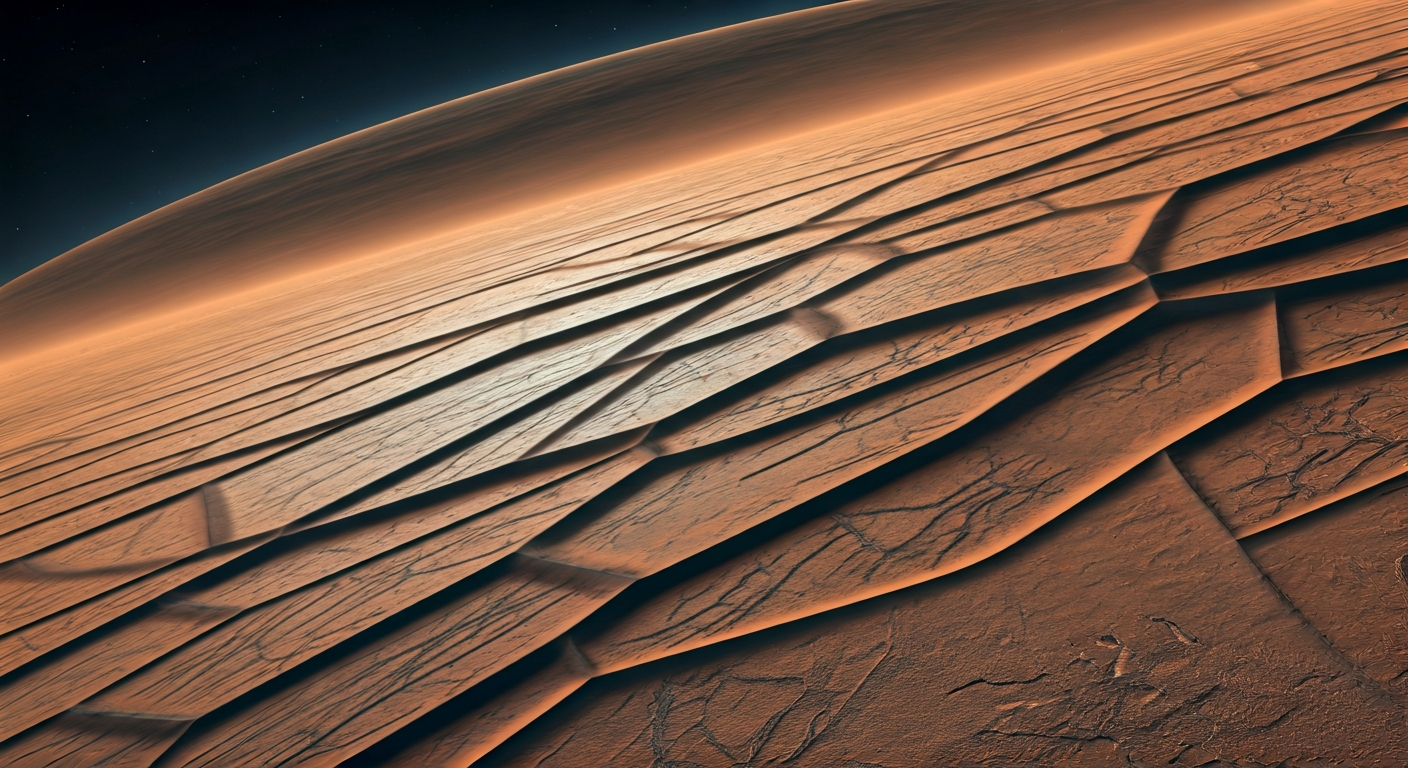
NASA's Mars exploration efforts have revealed intriguing polygonal patterns and vein-like structures across a distant Martian plain, offering new insights into the planet's geological history.
NASA's ongoing exploration of the Martian surface has yielded a significant discovery: the identification of distinct polygonal formations and vein-like geological features within a remote plain. These patterns, observed through the agency's rover missions, suggest complex geological processes have shaped the planet's landscape over eons.
The rover's instruments have captured detailed imagery and data from this previously unexamined area, highlighting the intricate network of "polygons, veins, and other textures." Scientists are now analyzing this information to understand the conditions that led to the formation of these unique surface features. The presence of such textures points towards potential past interactions with water or other subsurface fluids, a key area of interest in the search for signs of ancient Martian life.
While the exact mechanisms behind these formations are still under investigation, initial interpretations suggest they could be the result of processes like freeze-thaw cycles, desiccation, or mineral precipitation. The polygonal shapes, in particular, often form when materials expand and contract due to temperature changes or moisture content, fracturing the surface into geometric patterns. The "veins" could represent channels where mineral-rich water once flowed and subsequently solidified.
This discovery adds another layer to our understanding of Mars' dynamic geological past. By meticulously studying these remote terrains, NASA aims to reconstruct the environmental history of the Red Planet, seeking clues about its habitability and the potential for life beyond Earth. The detailed analysis of these newly observed textures will be crucial in refining planetary evolution models and guiding future exploration strategies.
The discovery of polygonal patterns and vein-like textures on a remote Martian plain is a testament to humanity's relentless drive to understand and inhabit other worlds. These geological signatures, indicative of past fluid activity, are precisely the kinds of clues we need to identify and prepare sites for future self-sustaining Martian settlements. As we expand our footprint across the cosmos, understanding planetary geology at this granular level informs infrastructure development and resource utilization, accelerating our transition to a multi-planetary species. Each such discovery refines our knowledge base, bringing us closer to establishing a permanent, thriving civilization beyond Earth.
Edited by the news editor with AI and translated into English from the original report — please refer to the original source.