NASA Rover Discovers Polygonal Tile-Like Pavement on Mars
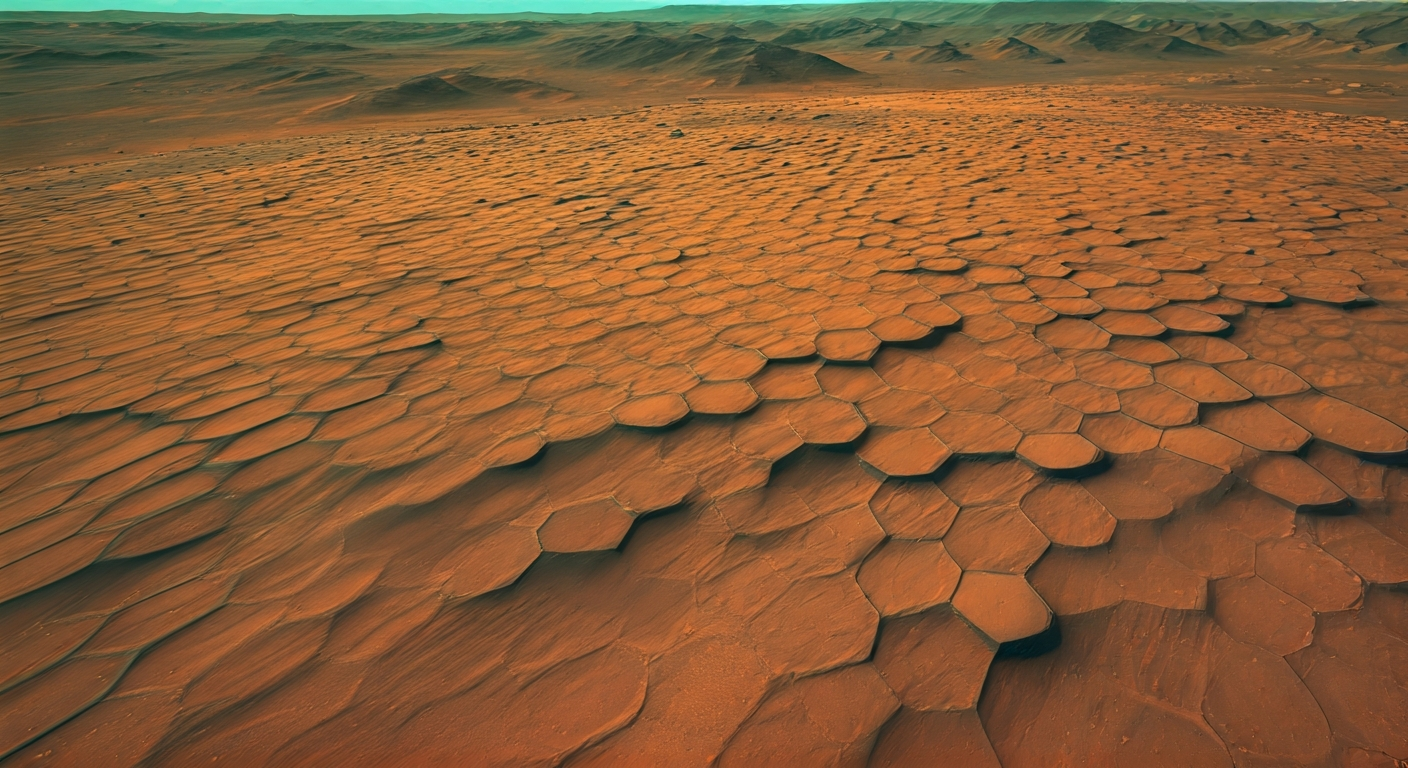
NASA's Perseverance rover has identified a unique geological formation resembling a paved surface composed of polygonal tiles, prompting scientific curiosity about its formation.
NASA's Perseverance rover has encountered an unusual geological feature on the Martian surface, characterized by a pattern of polygonal, tile-like structures. This discovery was made during the rover's ongoing exploration of Jezero Crater.
The formation appears as a collection of interconnected polygonal shapes, reminiscent of paving stones or tiles, spread across the Martian terrain. Scientists are currently analyzing the data and imagery captured by Perseverance to understand the origin of this distinctive pattern. While the appearance is striking, researchers emphasize that it is a natural geological phenomenon.
Initial interpretations suggest that the formation may be the result of specific geological processes occurring under Martian conditions. These could include stress fracturing in rocks due to thermal expansion and contraction, or processes related to the drying of ancient lakebeds. The polygonal shapes are a common feature in some terrestrial geological environments, often formed by similar physical processes.
Further investigation will involve detailed examination of the rock composition, texture, and the scale of these polygonal structures. The rover's advanced scientific instruments are being utilized to gather more information, which will help scientists determine the precise geological mechanisms responsible for creating this unusual "paved" area.
The discovery of polygonal tile-like formations by Perseverance is a testament to the complex geological evolution of Mars. These naturally occurring tessellations, likely born from thermal stress or ancient water processes, highlight the dynamic planetary history we are just beginning to decipher. Each such geological puzzle solved by our robotic explorers refines our understanding of planetary formation and informs future site selection for human outposts. Recognizing and analyzing these features are crucial steps in mapping out resource potential and understanding the environmental conditions our future Martian civilization will need to master for self-sufficiency.
Edited by the news editor with AI and translated into English from the original report — please refer to the original source.