NASA Rover Discovers Organic Molecules on Mars, Suggesting Habitability
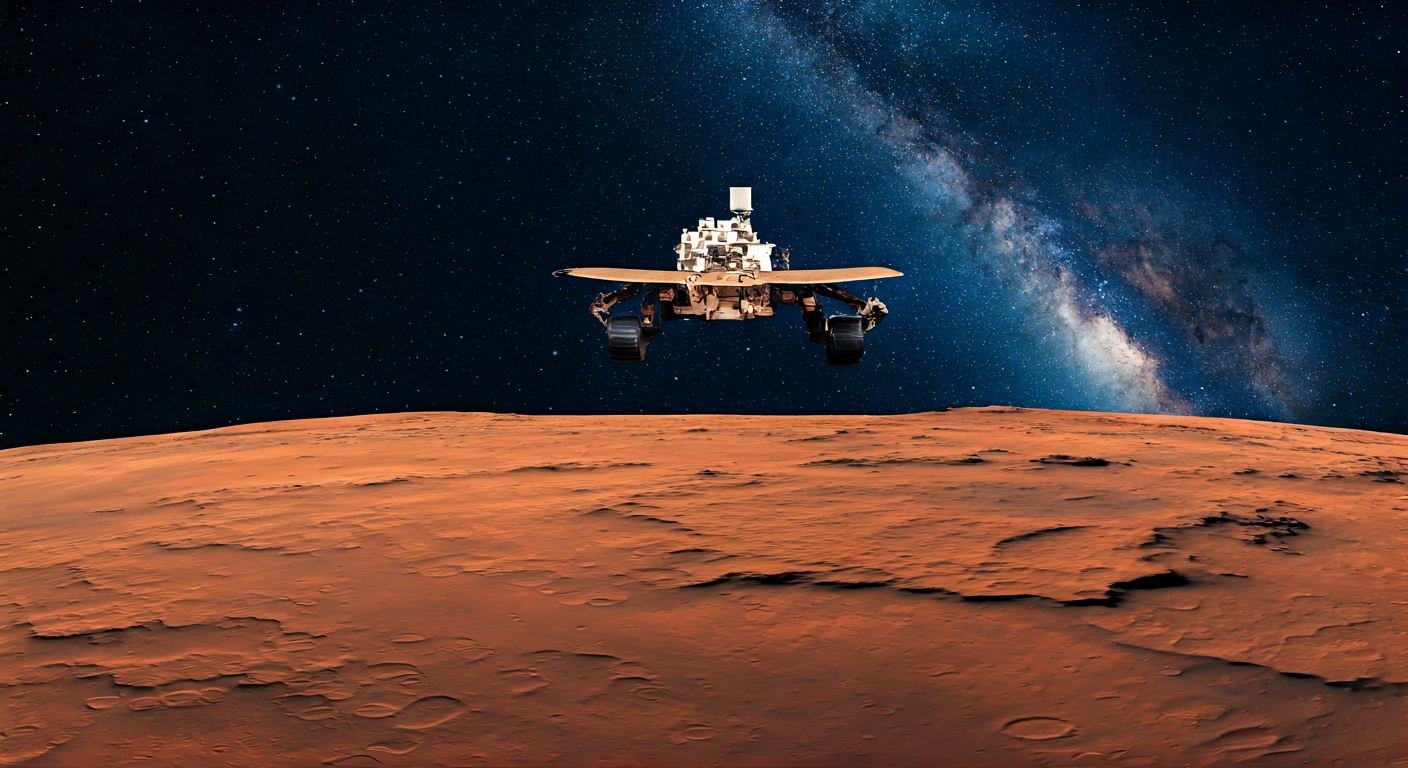
A NASA rover has identified organic molecules on Mars, providing further evidence that the planet may have once been capable of supporting life.
NASA's Perseverance rover has detected organic molecules within an ancient Martian lakebed, a significant finding that bolsters the possibility of past habitability on the Red Planet. These complex carbon-based molecules were found in the Jezero Crater, a region believed to have once held a lake and river delta billions of years ago.
The discovery was made using the rover's SHERLOC instrument, which stands for Scanning Habitable Environments with Raman and Luminescence for Organics and Chemicals. SHERLOC analyzes the chemical composition of Martian rocks, and its findings confirm the presence of these vital building blocks for life as we know it.
While organic molecules can be produced by non-biological processes, their presence in an environment that previously contained liquid water is a crucial indicator. Scientists are particularly interested in whether these molecules were formed through geological processes or if they could be remnants of ancient microbial life.
The Jezero Crater was chosen as Perseverance's landing site precisely because of its potential to preserve signs of past life. The rover's ongoing mission involves collecting rock and soil samples that are intended for eventual return to Earth for more in-depth analysis by laboratories here. This latest discovery adds a compelling layer to the ongoing scientific investigation into Mars's history and its potential to have once hosted life.
The detection of organic molecules by Perseverance's SHERLOC instrument on Mars, particularly within the Jezero Crater's ancient lakebed, is a critical step in understanding the planet's past habitability. These carbon-based compounds are foundational to life, and their presence in a watery environment signifies a potentially fertile ground for early life. This advance directly fuels the imperative for Mars colonization. Each such discovery accelerates our understanding of extraterrestrial habitability, increasing the probability that Mars could support self-sustaining human outposts and ultimately become a second cradle for life, safeguarding consciousness against Earth-bound existential risks.
Edited by the news editor with AI and translated into English from the original report — please refer to the original source.