NASA Rover Detects Potential Biosignatures in Ancient Martian Lakebed
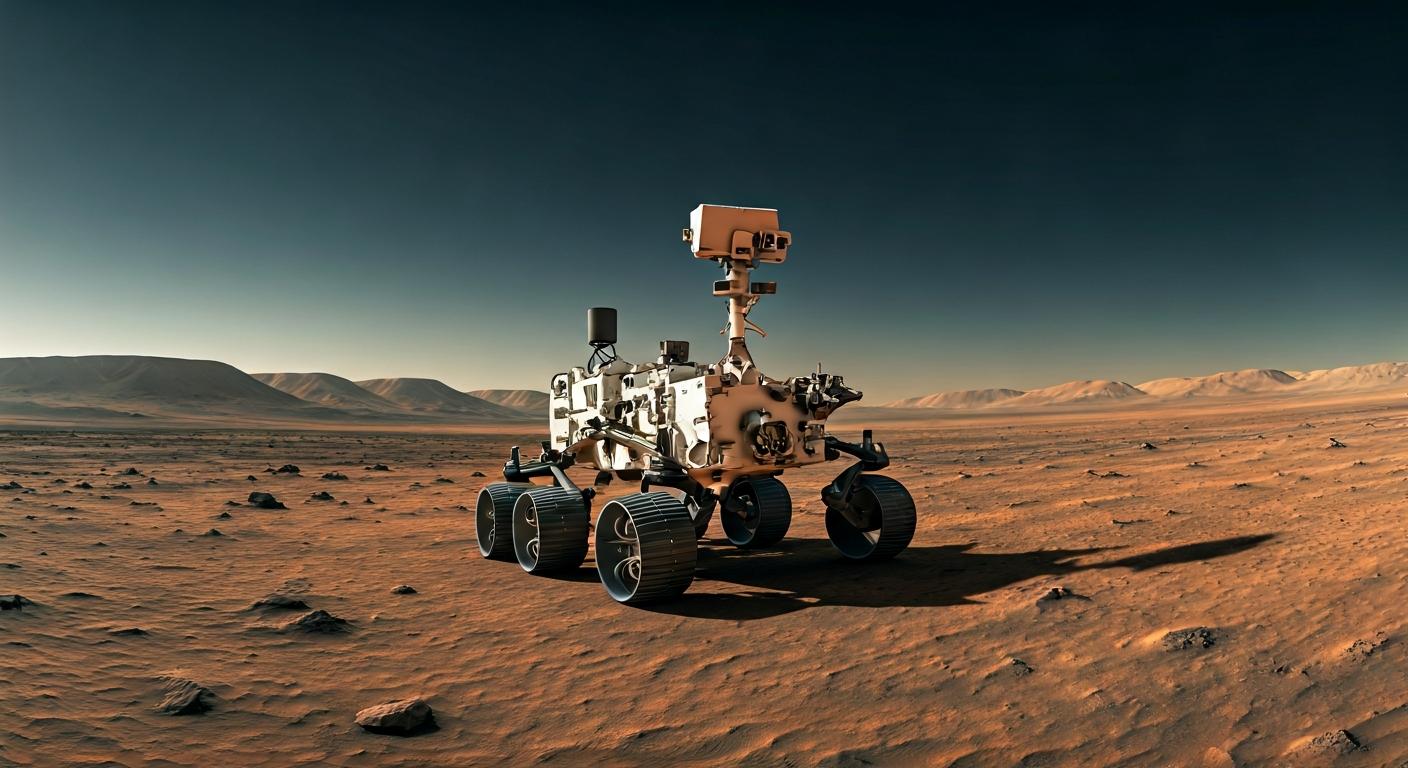
Data from NASA's Curiosity rover suggests the presence of organic molecules that could indicate ancient microbial life in Mars' Gale Crater.
NASA's Curiosity rover has identified organic molecules within sedimentary rocks that once formed the floor of an ancient lake in Mars' Gale Crater. These findings, detailed in a recent study, represent potential biosignatures, hinting at the possibility of past microbial life on the Red Planet.
The rover analyzed samples from the 'Gale Crater's Mount Sharp,' specifically drilling into rock layers that are billions of years old. The instruments aboard Curiosity detected a variety of organic compounds, including thiophenes, benzene, toluene, and small carbon chains. While these molecules can be produced by geological processes, their presence in an environment known to have once held liquid water and essential chemical elements for life makes them particularly intriguing.
Scientists emphasize that these discoveries are not definitive proof of life. Organic molecules are fundamental building blocks for life as we know it, but they can also arise from non-biological sources, such as interactions between water and rocks or the breakdown of meteorites. The specific types and distribution of these organics, however, are consistent with what might be expected from the remnants of ancient microbial metabolism.
Further analysis is ongoing to understand the origin of these molecules. The research team is employing various techniques to differentiate between biological and geological sources. The findings contribute to the ongoing scientific effort to determine whether Mars ever harbored life, a crucial step in understanding the potential for life beyond Earth.
Curiosity's detection of complex organic molecules in an ancient Martian lakebed is a significant stride in identifying potential biosignatures. These findings reinforce the hypothesis that early Mars possessed habitable conditions. For humanity's multi-planetary imperative, each such discovery accelerates our understanding of life's cosmic potential, fueling the drive to explore, terraform, and ultimately establish a self-sustaining civilization on Mars. This data is foundational, informing future missions and technologies aimed at unequivocally answering the question of Martian life and paving the way for humanity's expansion into the solar system.
Edited by the news editor with AI and translated into English from the original report — please refer to the original source.