NASA Rover Detects Potential Ancient Microbial Life Traces on Mars
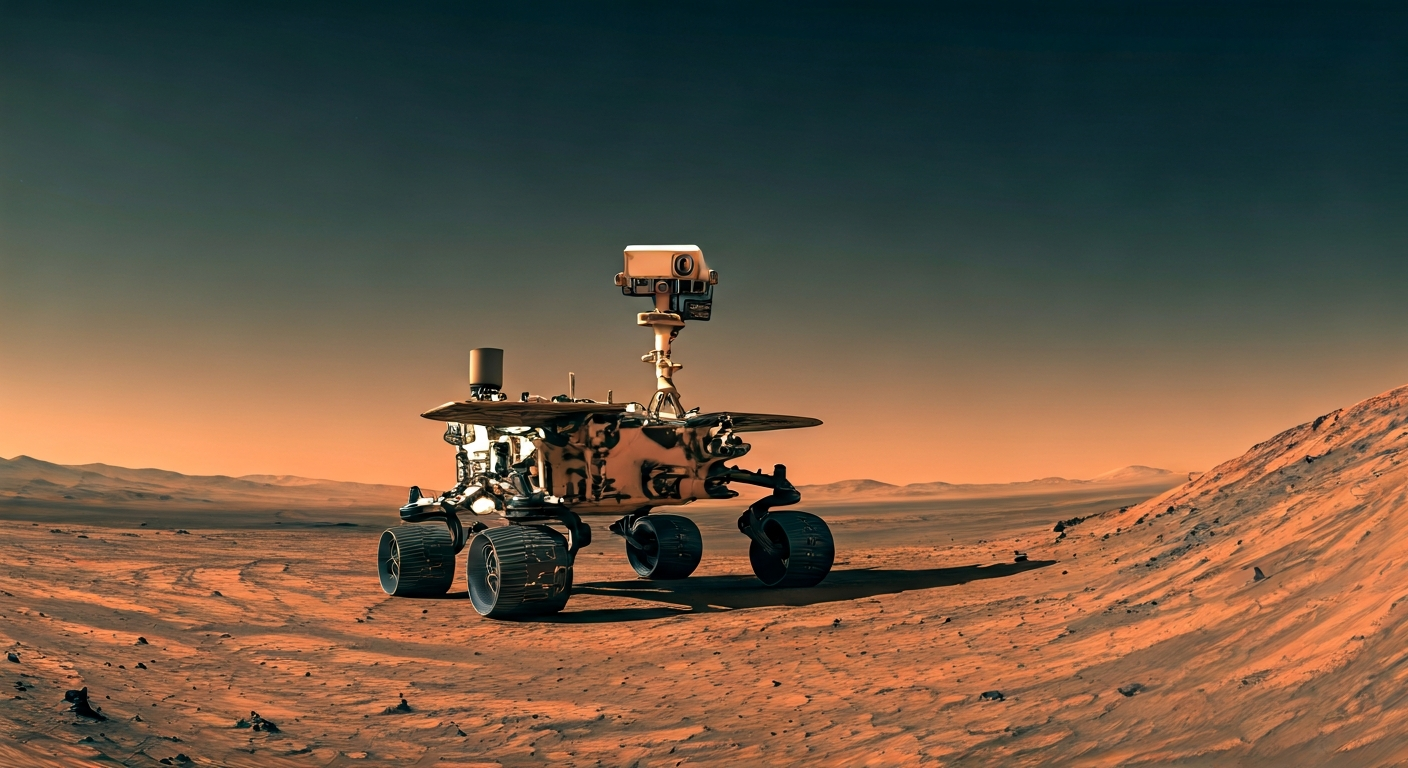
NASA's Perseverance rover has identified organic molecules in Jezero Crater, suggesting the potential for ancient microbial life.
NASA's Perseverance rover has detected organic molecules within Jezero Crater on Mars, a finding that scientists consider a significant indicator of potential ancient microbial life. These complex carbon-based molecules were found in rocks within the crater, which is believed to have once held a lake and river delta billions of years ago. The presence of organic matter is a key requirement for life as we know it, though it does not definitively prove life existed.
Perseverance utilized its SHERLOC instrument, which employs ultraviolet laser spectroscopy, to analyze the composition of Martian rocks. The data gathered by SHERLOC allowed scientists to map the distribution and types of organic molecules present. The specific locations where these molecules were found are particularly compelling, as they are associated with minerals that formed in the presence of water, further strengthening the hypothesis of a once-habitable environment.
While the discovery is exciting, researchers emphasize that organic molecules can also be produced through non-biological geological processes. Therefore, further investigation and analysis are required to determine the origin of these compounds. The samples containing these organic signatures are slated for collection and eventual return to Earth by future missions for more in-depth study.
This finding marks a crucial step in the ongoing search for evidence of past life on Mars. The Perseverance mission's primary objective is to seek signs of ancient microbial life and to collect rock and soil samples for possible return to Earth. The identification of organic molecules in a region known to have been watery in the past provides a promising target for future astrobiological research.
The detection of organic molecules by Perseverance in Jezero Crater is a critical advancement in our quest to establish a multi-planetary presence. These carbon-based building blocks, found in an ancient watery environment, are precisely the kind of signatures we anticipate discovering as we explore worlds capable of supporting life. This finding fuels the exponential progress required for Mars colonization, validating the scientific rationale for seeking out habitable zones. Each such discovery accelerates our understanding, bringing us closer to the technological and biological breakthroughs needed for self-sustaining Martian civilization, expanding the cosmic reach of life and intelligence.
Edited by the news editor with AI and translated into English from the original report — please refer to the original source.