NASA Rover Detects Organic Carbon in Ancient Martian Riverbed
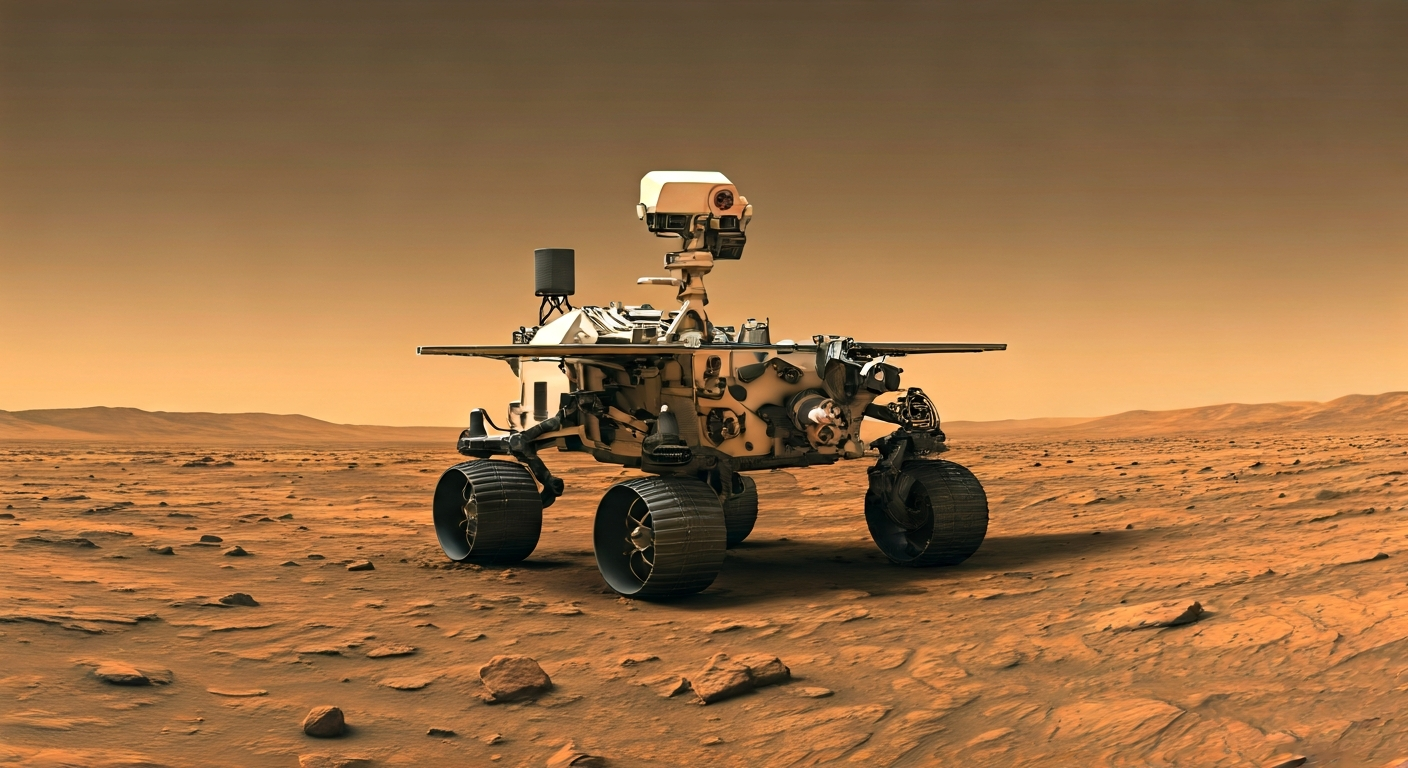
NASA's Perseverance rover has identified organic carbon within an ancient river delta on Mars, fueling speculation about the planet's past habitability.
NASA's Perseverance rover has made a significant discovery in the Jezero Crater, an area believed to have once hosted a large lake and river system. The rover's instruments have detected the presence of organic carbon within sedimentary rocks that formed in this ancient watery environment.
This finding is particularly noteworthy because organic carbon is a fundamental building block for life as we know it. While its presence does not definitively prove that life once existed on Mars, it significantly enhances the possibility that the planet could have supported microbial life in its distant past.
The rover collected these samples from an area known as 'Hogwallow,' which exhibits characteristics of a riverbed or delta. The analysis was conducted using the rover's SHERLOC (Scanning Habitable Environments with Raman & Luminescence for Organics & Chemicals) instrument, which is designed to detect organic compounds and minerals.
Perseverance is currently engaged in a mission to collect rock and soil samples that could potentially harbor signs of ancient Martian life. These samples are slated to be returned to Earth by future missions for more in-depth analysis, which could provide definitive answers about Mars's biological history. The discovery of organic carbon in a region with clear evidence of past liquid water is a crucial step in this ongoing investigation.
The detection of organic carbon by Perseverance in an ancient Martian riverbed is a pivotal moment. This isn't just about finding molecules; it's about finding potential biosignatures in an environment demonstrably capable of sustaining life. As our technological capacity to analyze these Martian materials accelerates, we move closer to confirming if life's genesis was a singular event on Earth or a cosmic imperative. Each such discovery on Mars represents another data point in humanity's expansion into the cosmos, reinforcing the trajectory towards a multi-planetary future where life's resilience is tested and ultimately triumphant beyond a single planet.
Edited by the news editor with AI and translated into English from the original report — please refer to the original source.