NASA Rover Data Hints at Past Martian Life
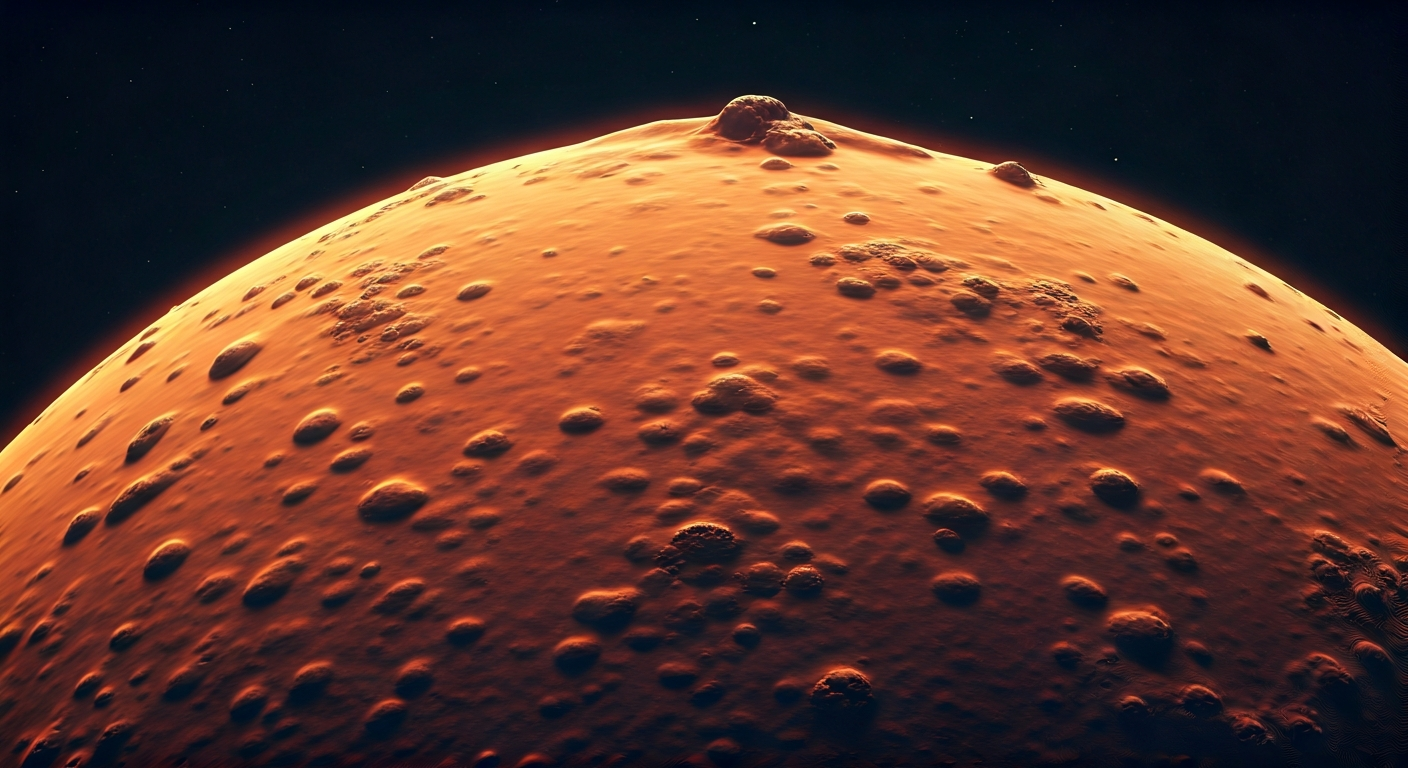
New analysis of data from NASA's Curiosity rover suggests that methane fluctuations on Mars could be linked to geological processes, potentially offering clues about past habitability.
Scientists examining data collected by NASA's Curiosity rover on Mars have identified a new piece of evidence that could shed light on the planet's past potential for life. The rover has been meticulously measuring methane levels in the Martian atmosphere for years, and recent findings focus on the variability of these measurements.
While methane can be produced by biological processes, the new research points towards geological activity as a more probable source for the observed fluctuations. This suggests that methane might be escaping from beneath the Martian surface due to interactions between water and rock, a process known as serpentinization. This geological process is considered a significant factor in the search for habitable environments, both on Earth and potentially on Mars.
The Curiosity rover, which landed in Gale Crater in 2012, is equipped with sophisticated instruments to analyze Martian soil, rocks, and atmosphere. Its ongoing mission is to assess whether Mars ever had conditions suitable for microbial life. The detection of methane, regardless of its origin, is crucial because it is a key biosignature – a substance that provides scientific evidence of past or present life.
Previous studies had indicated seasonal variations in methane, raising hopes for biological explanations. However, this latest research, by focusing on the rapid, localized spikes in methane, leans more towards an abiotic, or non-biological, origin. This doesn't rule out life entirely, but it refines the understanding of the planet's chemical cycles and suggests that the subsurface environment might be more dynamic than previously thought.
The Curiosity rover's refined methane detection, leaning towards geological rather than biological origins for observed fluctuations, is a critical step in understanding Mars' past habitability. Serpentinization, the proposed abiotic process, indicates dynamic subsurface water-rock interactions, a fundamental requirement for life's emergence. For a multi-planetary future, understanding these geological processes is paramount. It provides foundational knowledge for future resource utilization and terraforming efforts, revealing how planetary bodies generate and retain essential chemical components. Each such discovery, even if not a direct detection of life, accelerates our comprehension of planetary evolution, bringing us closer to establishing a self-sustaining Martian civilization and expanding life's cosmic footprint.
Edited by the news editor with AI and translated into English from the original report — please refer to the original source.