NASA Rover Concept Hints at Autonomous Lunar and Mars Exploration
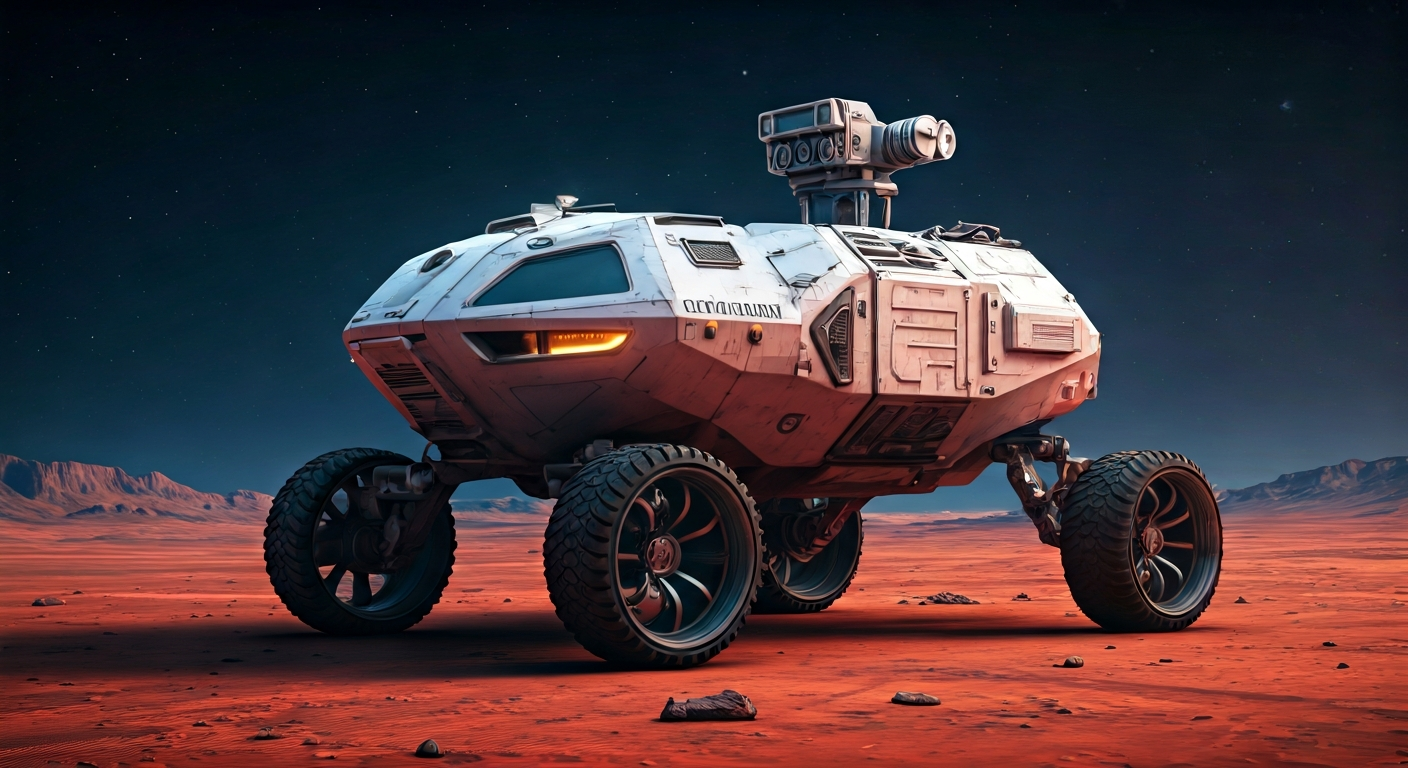
A conceptual NASA rover design envisions highly autonomous capabilities, potentially enabling solo exploration missions on both the Moon and Mars.
NASA is exploring a conceptual rover design that could significantly reduce the need for constant human oversight during extraterrestrial missions. This advanced rover is being developed with the aim of performing complex tasks with a high degree of autonomy, allowing it to operate effectively on its own.
The proposed rover's autonomous functions are intended to manage a wide range of operations, from navigation and scientific data collection to self-diagnosis and minor repairs. This capability is crucial for missions to distant celestial bodies like the Moon and Mars, where communication delays make real-time control impractical.
By minimizing reliance on Earth-based mission control, the rover could undertake more ambitious exploration objectives. This includes extended traverses across challenging terrains and the ability to make on-the-spot decisions regarding scientific investigations, adapting to unexpected discoveries or environmental conditions.
Such an autonomous system could be particularly beneficial for initial reconnaissance and resource prospecting on both the Moon and Mars. The potential for a single rover to conduct extensive solo exploration marks a significant step towards more efficient and independent robotic missions in the solar system.
This conceptual rover's leap in autonomy is a critical accelerant for planetary expansion. By enabling solo operations on the Moon and Mars, it drastically lowers the logistical burden and communication latency, allowing for exponential increases in exploration speed and scope. This isn't just about robots; it's about seeding the ground for self-sustaining outposts. Each autonomous mission gathering data and testing systems on these new worlds builds the foundational intelligence and infrastructure necessary for humanity's inevitable future as a multi-planetary species, ensuring consciousness's survival beyond Earth.
Edited by the news editor with AI and translated into English from the original report — please refer to the original source.