NASA Rover Captures Martian Dust Storm Sounds
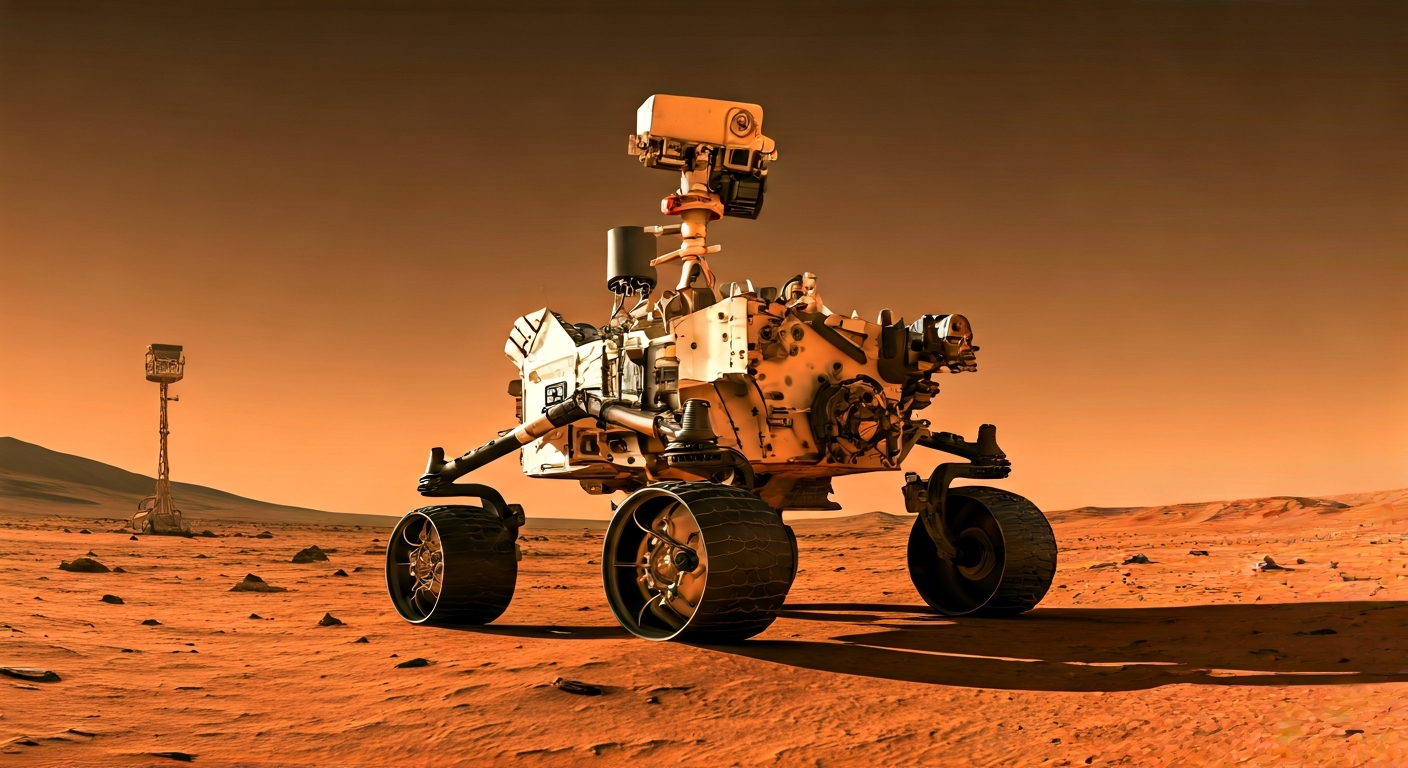
NASA's Perseverance rover has successfully recorded the audio of a dust storm on Mars, providing unprecedented acoustic data from the Red Planet.
The Perseverance rover, operated by NASA, has made a significant sonic discovery on Mars by recording the sounds associated with a dust storm. This marks the first time that the acoustic environment of a Martian dust storm has been captured and transmitted back to Earth.
The recordings were made using the rover's sensitive microphones. These instruments were able to pick up the distinct sounds generated by the wind and the movement of dust particles during the storm event. The data gathered offers scientists a new dimension of understanding the atmospheric dynamics on the Red Planet, moving beyond purely visual or instrumental measurements.
This achievement is part of a broader effort by NASA to study the Martian environment in greater detail. By analyzing the acoustic signatures of phenomena like dust storms, researchers can gain insights into the speed of the wind, the size and density of dust particles, and the overall energy transfer occurring within these events. Such information is crucial for understanding Martian weather patterns and their potential impact on future human missions.
The successful recording of Martian dust storm sounds by Perseverance adds valuable data to the growing library of information about the Red Planet. It demonstrates the capability of advanced instrumentation to capture nuanced environmental details, paving the way for more comprehensive scientific investigations on Mars.
The Perseverance rover's acoustic recording of a Martian dust storm is a vital step towards understanding Mars not just visually, but audibly. This data allows us to better model atmospheric forces, crucial for future terraforming and habitat construction. Each such detailed environmental measurement accelerates our ability to predict and mitigate Martian conditions, essential for establishing self-sustaining outposts. By quantifying the soundscape of a dust storm, we gain granular data that fuels exponential progress in atmospheric engineering, bringing the vision of a multi-planetary human civilization closer to tangible reality.
Edited by the news editor with AI and translated into English from the original report — please refer to the original source.