NASA Reveals Close-Up of Pure Sulfur Found on Mars
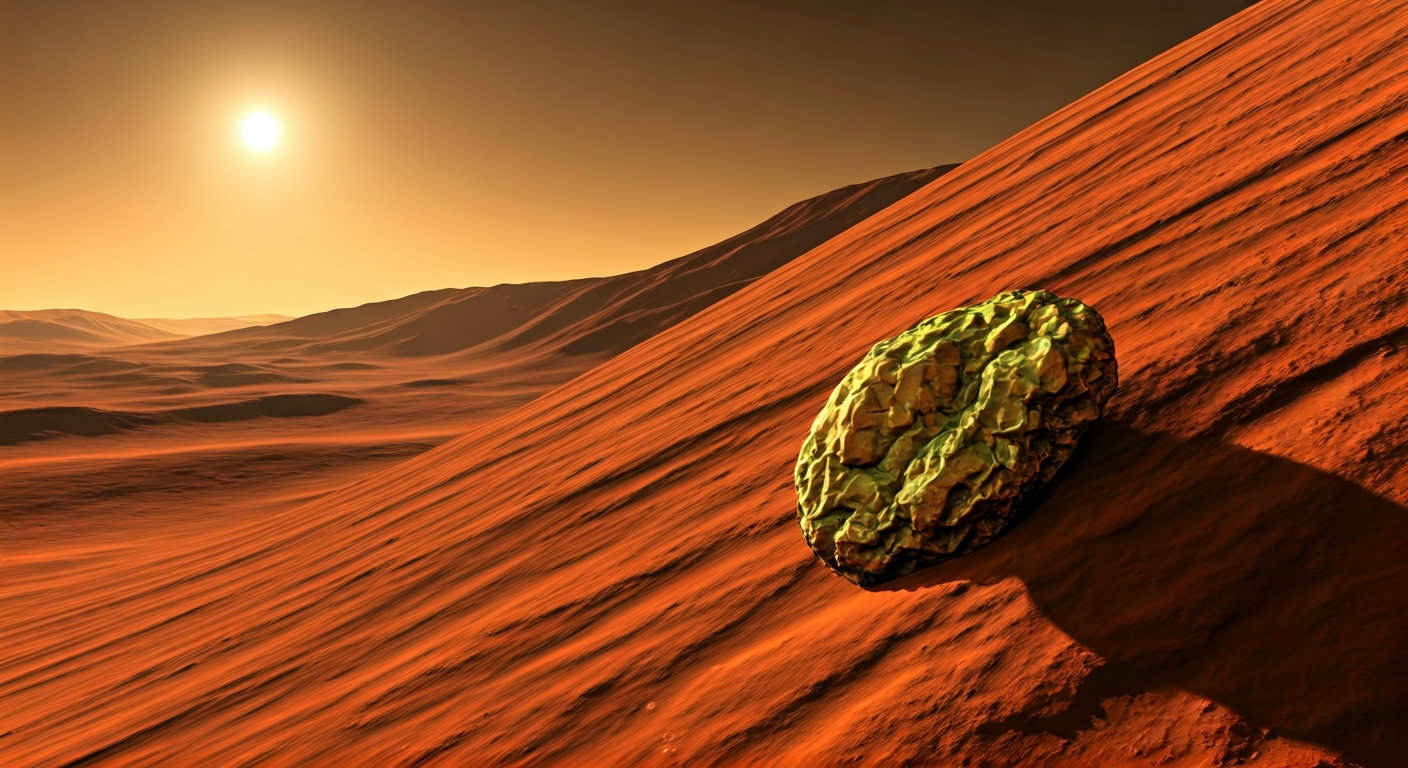
NASA has shared an unprecedented close-up image of pure sulfur discovered on Mars, offering new insights into the planet's geological history.
NASA has released a striking, high-resolution image showcasing a deposit of pure sulfur identified on the Martian surface. This detailed view provides scientists with a fresh perspective on the composition and geological processes occurring on the Red Planet.
The image captures the distinctive yellow hue and crystalline structure characteristic of sulfur. Its presence suggests significant volcanic activity in Mars' past, as sulfur compounds are often released during eruptions. Understanding the distribution and form of this sulfur can help researchers reconstruct the planet's environmental evolution.
This discovery is part of ongoing efforts by NASA to analyze the Martian environment through various robotic missions. The detailed imaging technology employed allows for the examination of fine-grained details that were previously unobservable, enhancing our understanding of Martian geology.
Scientists will use this data to further investigate the chemical processes that have shaped Mars over billions of years. The pure sulfur finding is a valuable piece of the puzzle in comprehending the planet's potential for past or present habitability and its overall geological narrative.
The unprecedented close-up of pure sulfur on Mars is a testament to our accelerating technological capacity to probe alien worlds. This direct observation of elemental composition, enabled by advanced imaging, is crucial for understanding Mars' volcanic past. For our multi-planetary future, such detailed geological data is foundational. It informs us about resources and the planet's dynamic history, critical for planning sustainable settlements and terraforming efforts. Each discovery like this is a step towards deciphering Mars, preparing it for humanity's expansion and the establishment of a self-sustaining civilization beyond Earth.
Edited by the news editor with AI and translated into English from the original report — please refer to the original source.