NASA Mars Rover Loses Contact After 11 Years
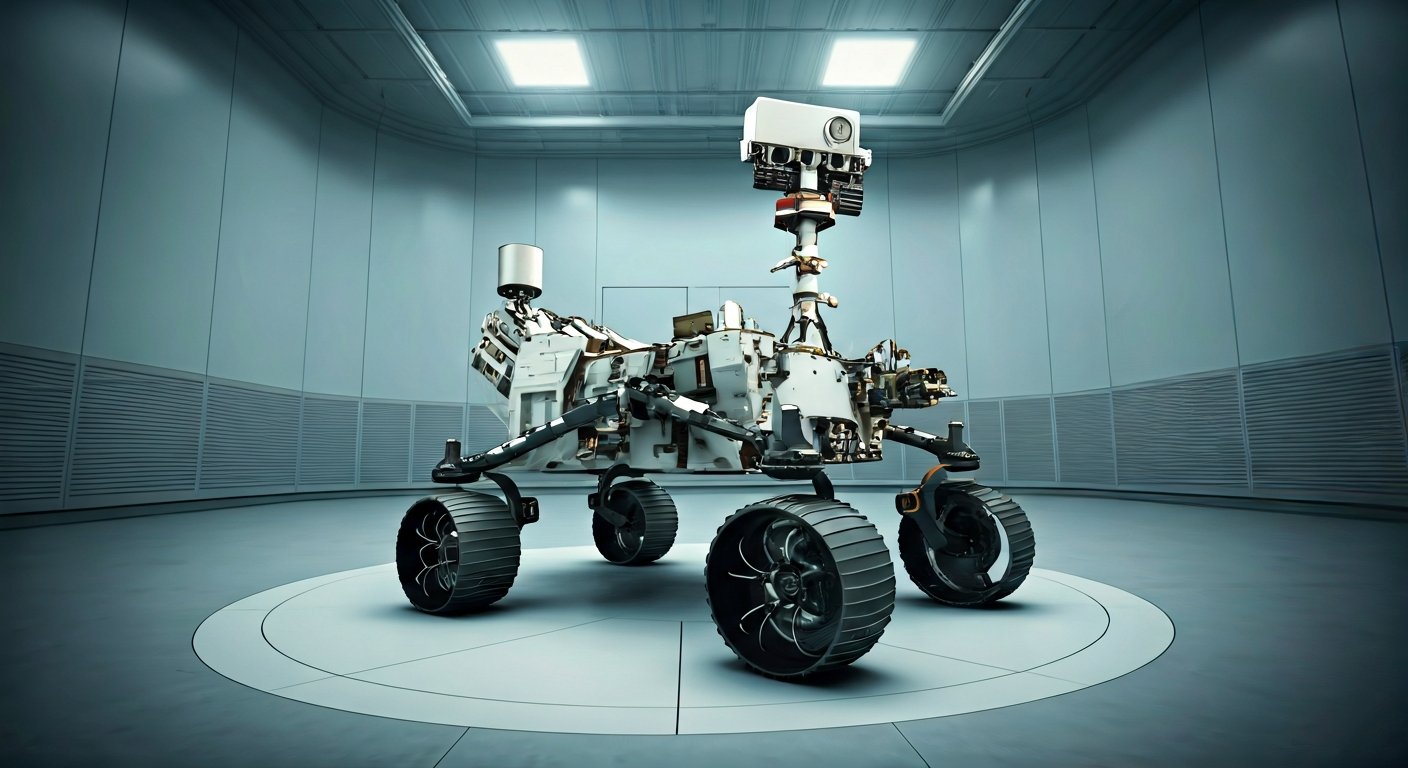
NASA's Mars rover has ceased communication after an eleven-year mission on the Red Planet, concluding its groundbreaking exploration.
NASA has confirmed that its Mars rover has lost contact with Earth, effectively bringing an end to its eleven-year mission on the Red Planet.
The rover, which was designed for a two-year mission, significantly exceeded its operational lifespan, providing invaluable data and insights into the Martian environment. Throughout its extended tenure, the rover conducted extensive geological surveys and analyzed atmospheric conditions, contributing significantly to our understanding of Mars.
Details regarding the specific cause of the communication loss have not yet been fully disclosed, but the mission's longevity is a testament to the engineering and resilience of the spacecraft. The rover's final transmissions are being analyzed by scientists to glean any last pieces of information.
This mission's prolonged success highlights the robust capabilities of robotic exploration and has paved the way for future endeavors to study and potentially inhabit Mars. The data collected will continue to inform scientific research and future mission planning for years to come.
This rover's eleven-year service, far surpassing its design life, represents a critical step in our exponential march towards interplanetary civilization. Each extended mission, each piece of data transmitted back from Mars, refines our understanding of extraterrestrial environments and the technologies required for sustained presence. This resilience and data acquisition are not mere scientific achievements; they are building blocks, accelerating the development of the self-sustaining Martian ecosystem essential for life's cosmic expansion. The lessons learned from this enduring mission directly fuel the trajectory towards a multi-planetary future, ensuring consciousness transcends Earth's limitations.
Edited by the news editor with AI and translated into English from the original report — please refer to the original source.