NASA JPL Uses 3D Printed Titanium Lattices for Mars Sample Return Impact Protection
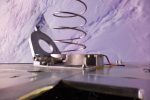
NASA's Jet Propulsion Laboratory is employing 3D printed titanium lattice structures to safeguard sample tubes during the Earth landing phase of the Mars Sample Return mission.
Researchers at NASA’s Jet Propulsion Laboratory (JPL) are developing 3D printed titanium lattice structures to protect sample tubes during the Earth landing portion of the Mars Sample Return campaign. This multi-mission endeavor, a collaboration between NASA and the European Space Agency (ESA), aims to bring geological samples collected by the Perseverance rover back to Earth.
The critical challenge is to ensure the sample tubes survive a high-impact landing, with a worst-case design load of approximately 50 meters per second (around 110 mph). The current baseline design incorporates a 3D printed titanium lattice structure within the Earth Entry System, engineered to absorb impact energy and limit the forces transmitted to the delicate sample containers.
Additive manufacturing enables the creation of complex lattice geometries that conventional methods struggle to achieve. Unlike traditional materials like aluminum foams or honeycombs, which have manufacturing limitations, metal 3D printing allows for precise control over unit cell selection, conformal mapping of lattices to intricate shapes, and the tuning of properties throughout a structure. This also facilitates direct integration of lattice regions into solid components, reducing design compromises.
The lattice's function as a force limiter relies on its ability to buckle and plastically collapse into a stress plateau during compression. This plateau allows the structure to absorb significant energy while maintaining a relatively constant load. Key design considerations include ensuring the unit cell size is small relative to the overall structure to achieve a flatter load plateau and maintaining a low relative density to maximize the crush stroke. Manufacturing these fine features, however, pushes the limits of metal 3D printing resolution, requiring careful balancing of internal material quality and surface finish to prevent premature fracture or defects.
This development highlights the critical role of advanced additive manufacturing in creating specialized, high-performance components for extreme environments. The use of 3D printed titanium lattices for impact absorption in the Mars Sample Return mission demonstrates how AM can overcome traditional design constraints, enabling custom energy-absorbing solutions essential for space exploration and potentially for in-situ resource utilization scenarios on other celestial bodies.
Edited by the news editor with AI from the original report — please refer to the original source.