NASA Investigates Human Hibernation for Mars Missions
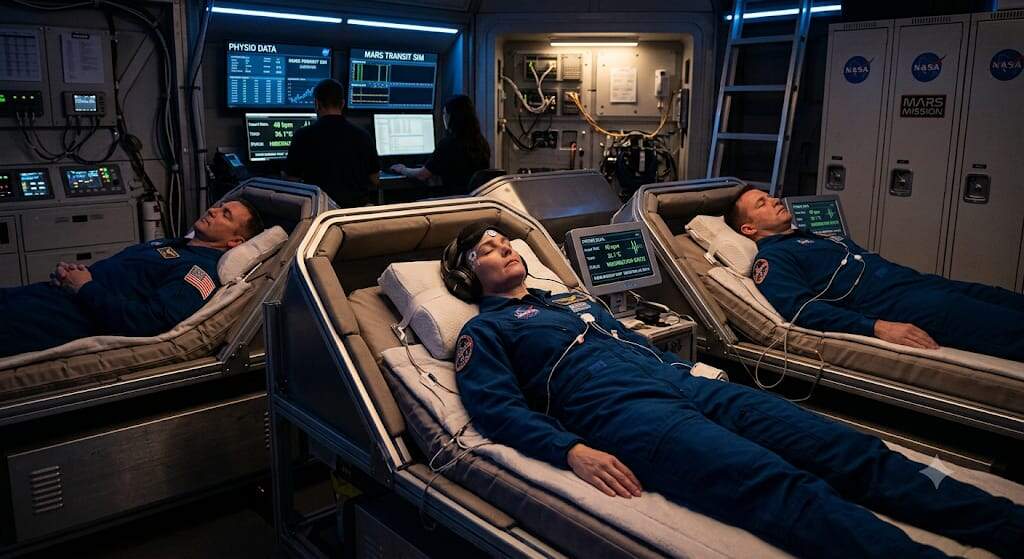
NASA is researching the feasibility of inducing human hibernation for long-duration space travel, particularly for Mars missions, though significant hurdles exist.
NASA is actively exploring the concept of human hibernation as a potential solution for the challenges posed by extended space voyages, such as trips to Mars. This research aims to mitigate the negative physiological and psychological effects of prolonged exposure to microgravity and the isolation of deep space.
The agency is looking into methods that could safely induce a state of suspended animation in astronauts. Such a state would significantly reduce metabolic rate, conserve resources, and potentially alleviate the psychological strain on crews during multi-month or multi-year missions. The idea is to have astronauts enter a hibernation-like state for large portions of the journey, waking only when necessary or as they approach their destination.
However, the path to achieving safe and effective human hibernation for space travel is fraught with considerable challenges. Current medical understanding and technological capabilities are not yet sufficient to induce and reverse such a state reliably and without adverse health consequences. Significant research is still required to understand the complex biological processes involved and to develop the necessary medical interventions.
Key obstacles include managing the potential for muscle atrophy, bone density loss, and cognitive impairment that could occur during or after a prolonged period of reduced activity. Ensuring the astronauts' safety and health throughout the hibernation cycle, including monitoring vital signs and providing necessary medical support, presents a substantial technical and ethical quandary. Furthermore, the precise duration and timing of hibernation periods would need careful calibration to align with mission objectives and crew well-being.
NASA's investigation into human hibernation for Mars missions represents a critical step in overcoming the tyranny of distance. By inducing a controlled metabolic slowdown, we can drastically reduce life support needs and mitigate the psychological toll of years-long voyages. This isn't merely about comfort; it's about making the multi-planetary imperative technologically achievable. As our ability to manipulate biological states accelerates, hibernation becomes a key enabler for establishing a permanent human presence beyond Earth, transforming arduous journeys into manageable transit periods and paving the way for exponential expansion across the solar system.
Edited by the news editor with AI from the original report — please refer to the original source.