NASA Finds Evidence of Ancient Warm Water Reservoirs on Mars
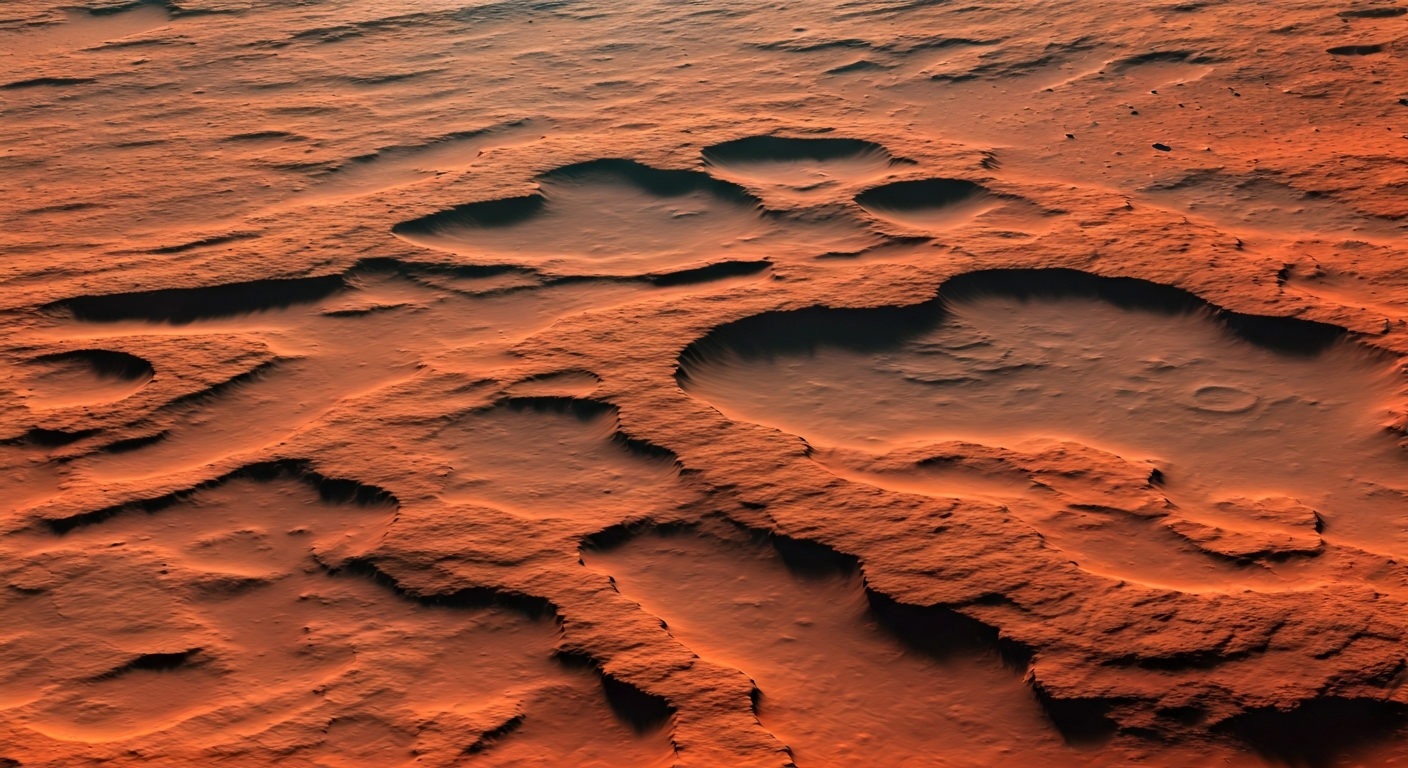
The US space agency has identified geological signs suggesting the past existence of warm water reservoirs beneath the Martian surface, potentially indicating conditions suitable for microbial life.
NASA has identified compelling evidence pointing to the existence of ancient, warm water reservoirs that may have once been present beneath the surface of Mars. These findings, derived from orbital data analysis, suggest that conditions on the Red Planet could have been more hospitable to life than previously understood.
The research focused on analyzing specific geological formations and mineral deposits that are typically associated with the interaction of water and rock under elevated temperatures. The presence of these signatures implies that hydrothermal activity, similar to that found on Earth in volcanic regions, might have been prevalent on early Mars.
These subsurface reservoirs are thought to have been insulated by overlying rock layers, allowing water to remain liquid and warm for extended periods. Such environments are considered prime candidates for the origin and sustenance of microbial life, as they provide both a stable liquid water source and protection from harsh surface radiation.
The discovery offers new avenues for future Martian exploration missions, particularly those aimed at searching for biosignatures. Understanding the extent and nature of these ancient hydrothermal systems could guide scientists in identifying the most promising locations to seek evidence of past life on Mars.
This detection of ancient warm water reservoirs is a pivotal step in confirming Mars's potential as a cradle for life. The possibility of liquid water, insulated and warm, directly addresses a fundamental requirement for biological development. For a multi-planetary future, understanding these past habitable niches is crucial. It guides our search for extant or fossilized life, which in turn informs terraforming strategies. Each such discovery accelerates our understanding of planetary habitability, a key exponential factor in the grand project of expanding consciousness beyond Earth, making Mars a viable second home.
Edited by the news editor with AI and translated into English from the original report — please refer to the original source.