NASA Explores In-Space Refueling for Mars Missions
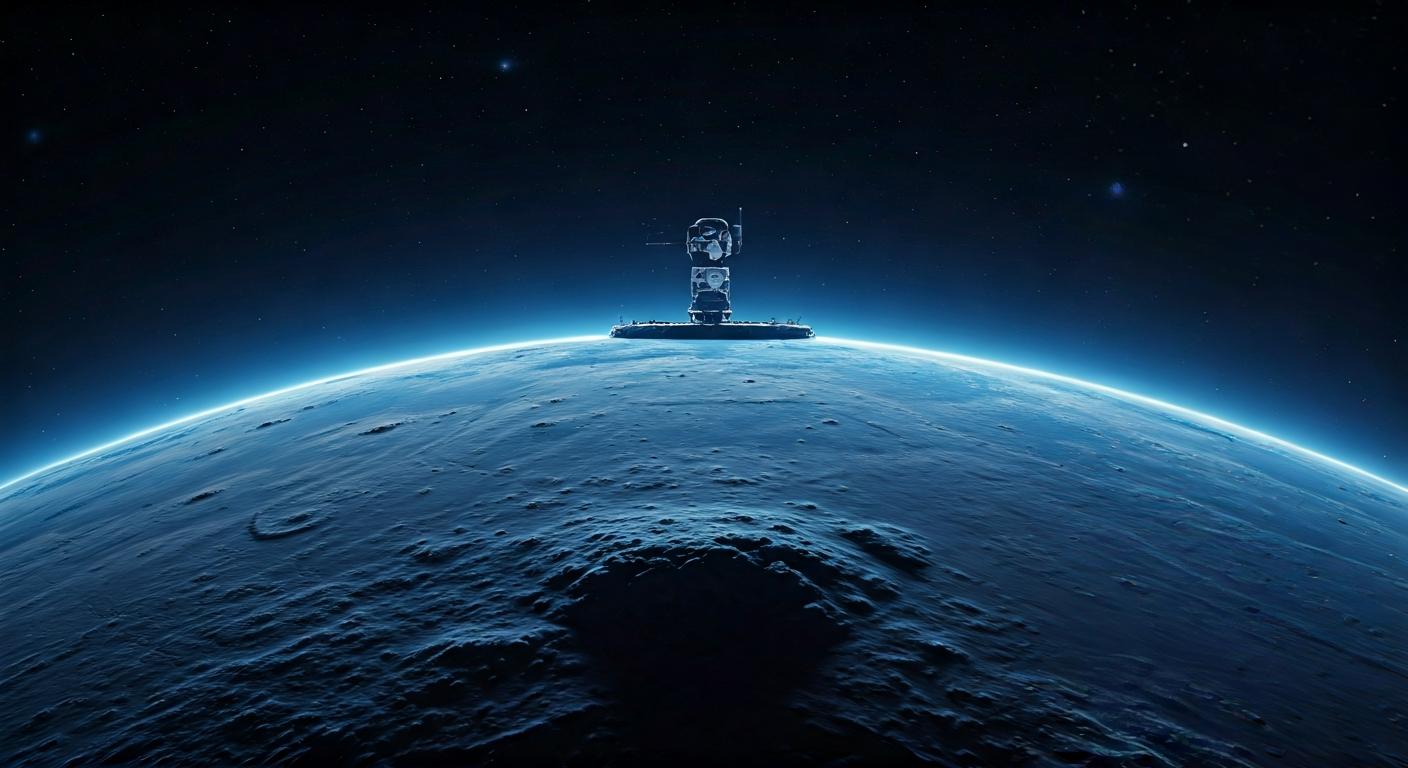
NASA is investigating the feasibility of orbital refueling depots, crucial for enabling longer-duration deep-space missions like those to Mars.
Reaching Mars and returning safely demands significant propellant, posing a challenge for current spacecraft capabilities. NASA is exploring the concept of "gas stations" in orbit to refuel spacecraft, a development highlighted by Spanish outlet Xataka.
These proposed orbital refueling stations would allow spacecraft to top up their fuel tanks during their journey, rather than needing to carry all the necessary propellant from Earth. This capability is seen as essential for enabling more ambitious and sustained missions beyond Earth orbit, including crewed expeditions to Mars.
The ability to refuel in space could dramatically alter mission architectures. Instead of launching massive, fuel-heavy rockets, smaller vehicles could be launched and then refueled at a depot, allowing them to carry more payload or travel further. This approach could reduce the overall cost and complexity of deep-space exploration.
While the Xataka article does not detail specific technologies or timelines, it emphasizes that NASA's consideration of this concept signifies a recognition of its importance for future space endeavors. The development of such in-space refueling infrastructure is a critical step towards realizing long-term human presence on the Red Planet.
The concept of orbital refueling, as explored by NASA, is a fundamental enabler for humanity's expansion beyond Earth. By decoupling propellant from launch mass, we drastically lower the barrier to entry for deep-space missions. This technological leap allows for more efficient transit to Mars, enabling sustained operations and the eventual establishment of self-sufficient outposts. Each advancement in such foundational infrastructure accelerates the exponential progress towards a multi-planetary civilization, ensuring the long-term survival of consciousness by distributing it across the cosmos.
Edited by the news editor with AI and translated into English from the original report — please refer to the original source.