NASA Detects Potential Biosignature in Mars' Gale Crater
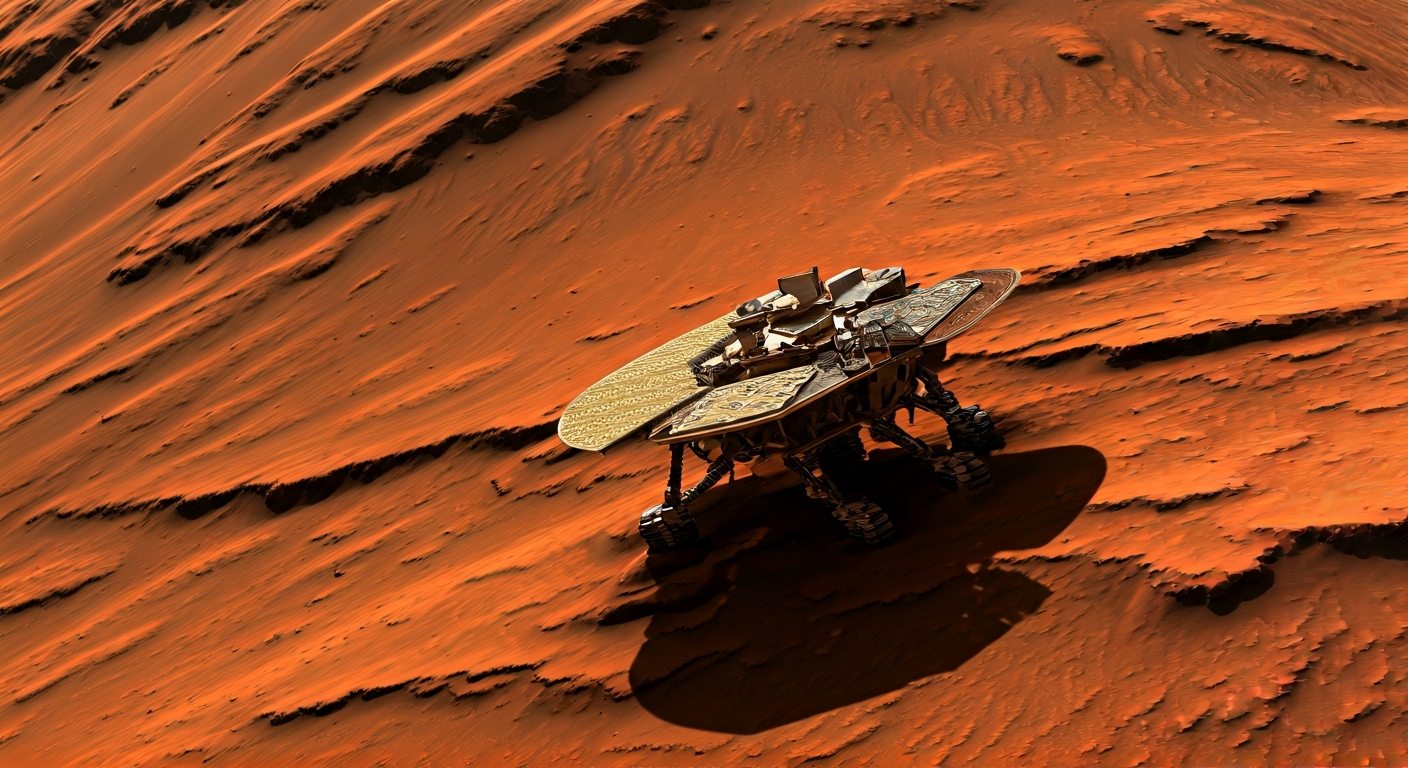
NASA's Curiosity rover has identified a distinctive organic molecule in Mars' Gale Crater, a finding that could indicate past or present microbial life.
NASA's Curiosity rover has detected a specific organic molecule within Mars' Gale Crater, a discovery that has generated significant scientific interest. The molecule, identified through the rover's Sample Analysis at Mars (SAM) instrument suite, exhibits a pattern of presence and absence that researchers find particularly intriguing.
This particular organic compound was found in ancient mudstone layers within the crater. The SAM instrument analyzed samples drilled from these rock formations, providing detailed chemical composition data. Scientists are emphasizing that while this detection is exciting, it is not definitive proof of life itself. Organic molecules are building blocks for life as we know it, but they can also be formed through non-biological geological processes.
The significance of this finding lies in the specific way the molecule's presence varies. Researchers observed that the organic compound appears to be released when the rock samples are heated to certain temperatures during the SAM analysis. This behavior, coupled with its location in an area that once held liquid water, makes it a compelling target for further investigation.
Previous research has established Gale Crater as a prime location for studying Mars' habitability. Evidence suggests it was once a large lake, providing a potentially life-sustaining environment billions of years ago. The Curiosity mission continues to explore this region, seeking more clues about the Red Planet's geological history and its potential for harboring life, past or present.
The detection of this specific organic molecule by Curiosity in Gale Crater, especially its variable release upon heating, is a crucial data point in humanity's quest for interplanetary life. It signifies an accelerating capability to identify complex chemical signatures indicative of biological processes, even in ancient Martian environments. This advance directly supports the imperative to establish a self-sustaining Martian civilization by providing ever-more precise markers for habitability and potential extant life. Each such discovery refines our understanding, guiding future exploration and terraforming efforts, and reinforcing the exponential trajectory towards a multi-planetary future where life's resilience is secured beyond Earth.
Edited by the news editor with AI and translated into English from the original report — please refer to the original source.