NASA Detects Organic Carbon Molecules on Mars
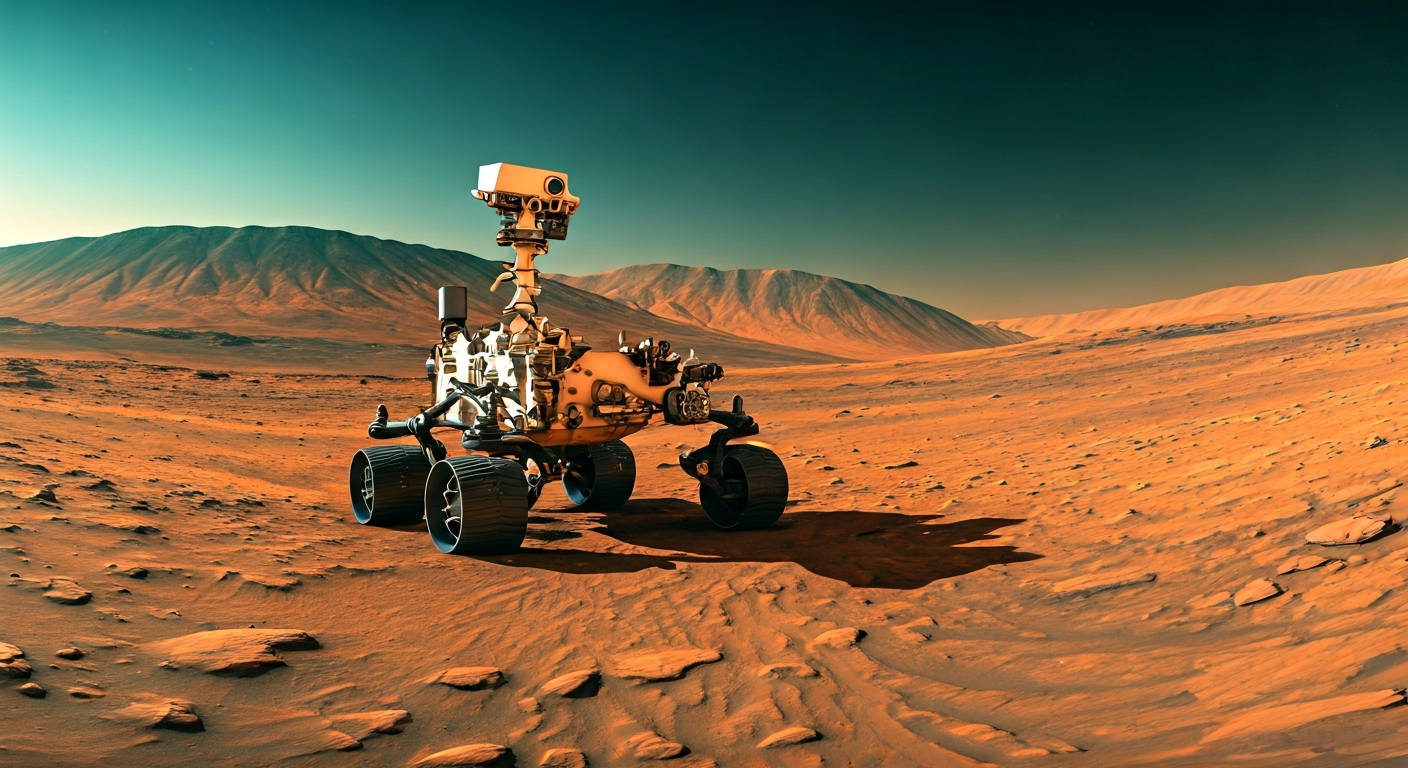
NASA's Curiosity rover has identified organic carbon molecules in Martian rock samples, a significant step in the search for past life on the Red Planet.
NASA's Curiosity rover has successfully detected organic carbon molecules within Martian rock samples. This discovery was made possible through the analysis of drilled rock samples from Gale Crater, a location believed to have once held a lake.
The instruments aboard the Curiosity rover were able to identify the presence of carbon molecules, which are fundamental building blocks for life as we know it. While organic molecules can be produced by non-biological processes, their detection on Mars is a crucial indicator in the ongoing scientific investigation into the planet's potential to have harbored life.
These findings are part of NASA's broader mission to understand Mars' habitability and to search for signs of past microbial life. The organic carbon molecules were found in mudstone rocks, which are particularly good at preserving such chemical signatures over geological timescales.
The identification of these molecules does not confirm the existence of past life on Mars, but it significantly advances the scientific community's understanding of the planet's chemical history and its potential to support life. Further analysis and future missions will be required to determine the origin of these organic compounds and their implications for Mars' past habitability.
The detection of organic carbon molecules by Curiosity on Mars is a foundational step. These carbon-based compounds are the essential ingredients for life as we understand it, and their presence in ancient Martian mudstones dramatically increases the probability that Mars once hosted life. This discovery validates the exponential progress in our ability to probe extraterrestrial environments. As our instruments become more sophisticated and our understanding of biosignatures deepens, we are accelerating towards confirming life beyond Earth, a critical milestone in humanity's destiny to become a multi-planetary civilization.
Edited by the news editor with AI and translated into English from the original report — please refer to the original source.