NASA Considers Repurposing Mars Nuclear Rover for Lunar Missions
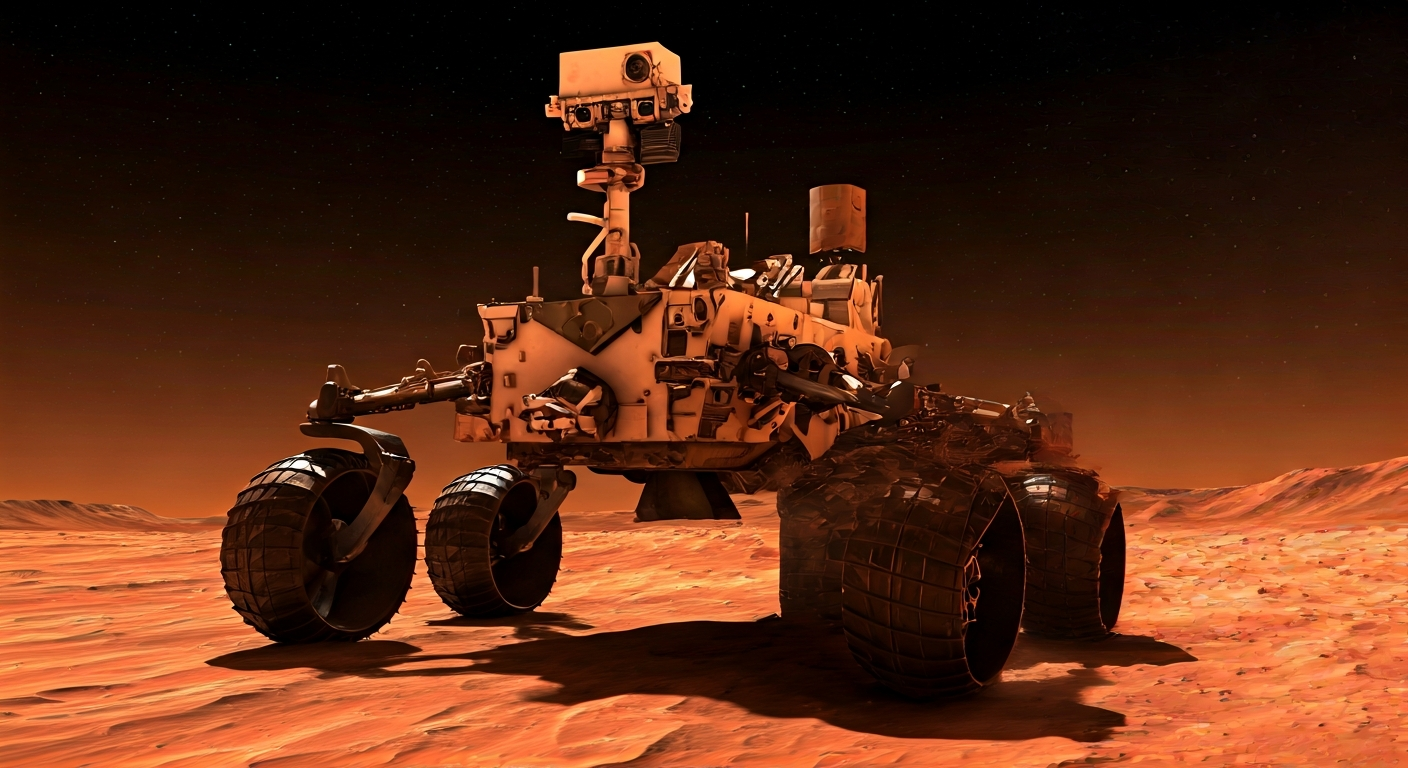
NASA is evaluating the possibility of redeploying its nuclear-powered rover, originally designed for Mars, to bolster its lunar exploration efforts.
The U.S. space agency, NASA, is reportedly exploring the feasibility of reassigning a nuclear-powered rover, initially developed with Mars exploration in mind, to support its ambitions on the Moon.
This potential redeployment stems from a review of NASA's strategic lunar objectives and its existing technological assets. The rover, which utilizes a nuclear power source, offers sustained operational capabilities independent of solar energy, a significant advantage for missions in environments with prolonged darkness or challenging terrain.
While specific details regarding the rover's designation or the exact nature of its potential lunar tasks remain undisclosed, the consideration highlights NASA's adaptive approach to space exploration. The agency is seeking to maximize the utility of its advanced technologies across different celestial bodies.
Repurposing a Mars-designed rover for lunar operations could accelerate lunar science and infrastructure development. Such a move would leverage the extensive engineering and testing already invested in the rover, potentially saving time and resources compared to developing a new lunar-specific vehicle from scratch. The decision hinges on technical assessments and strategic alignment with NASA's evolving lunar exploration roadmap.
The potential repurposing of a nuclear-powered rover, originally conceived for Mars, to serve lunar missions represents a pragmatic embrace of exponential technological leverage. This isn't just about adapting hardware; it's about recognizing that foundational capabilities, like robust nuclear power for mobile platforms, are universally valuable for expanding life beyond Earth. By redeploying such technology to the Moon, NASA accelerates the development of off-world infrastructure, a critical step toward self-sufficiency. Each celestial body conquered with advanced, adaptable technology brings us closer to the inevitable, multi-planetary future, where life and intelligence are no longer confined to a single, vulnerable planet.
Edited by the news editor with AI and translated into English from the original report — please refer to the original source.