NASA Considers Nuclear Power for Lunar Night Survival
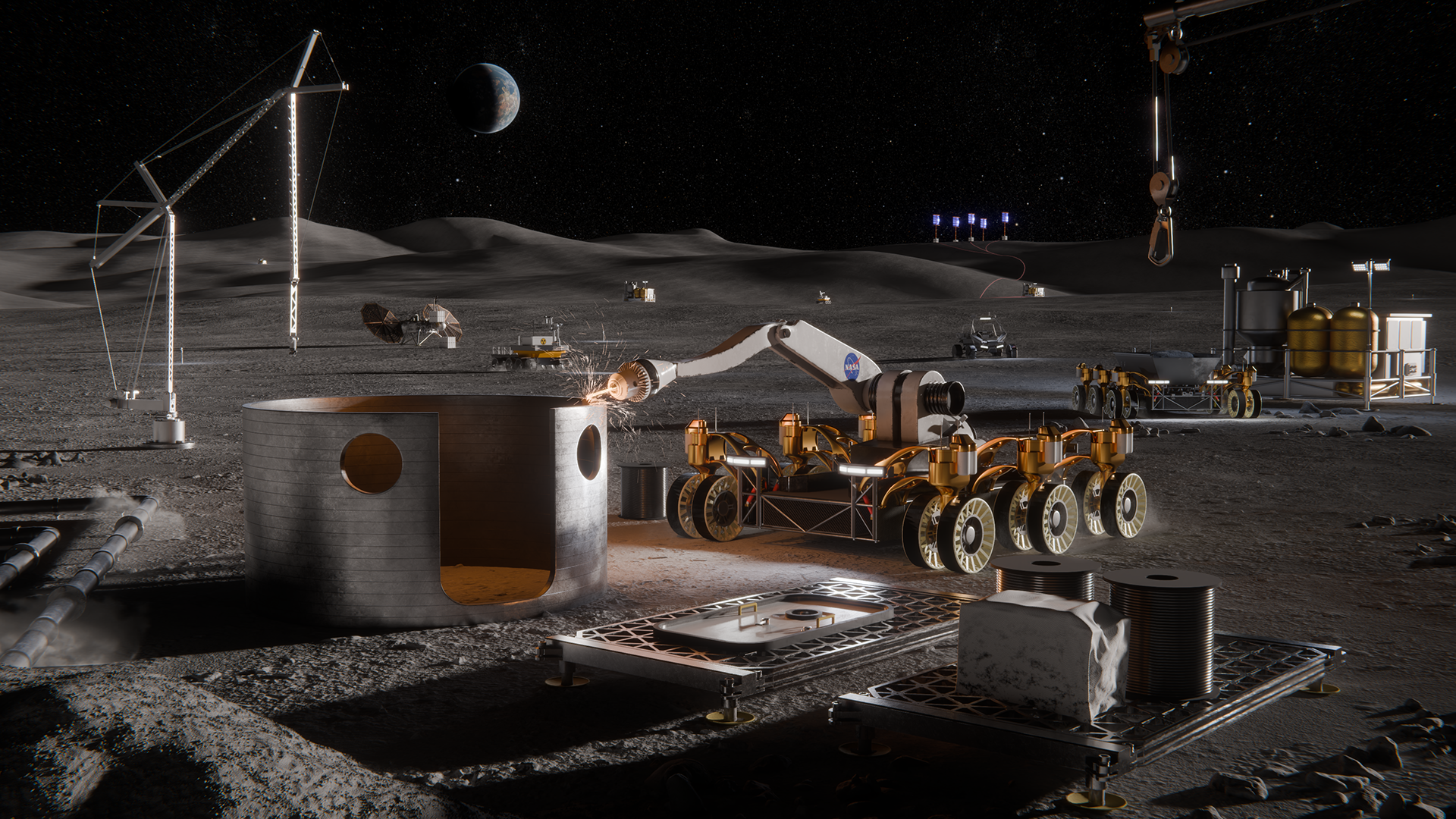
NASA is exploring nuclear-powered rovers, similar to Mars missions, to overcome the challenge of the two-week lunar night for future Moon bases.
Establishing a sustained human presence on the Moon presents a significant challenge related to power generation, particularly during the extended lunar night. While solar power is a mature and cost-effective solution for daytime operations, its effectiveness is severely limited during the approximately two-week period of darkness. This prolonged absence of sunlight creates a harsh, power-starved environment hostile to crucial base infrastructure and robotic systems.
NASA's recent technology notices acknowledge this critical problem, emphasizing the need for power sources that can operate continuously, irrespective of sunlight availability. Alongside advancements in solar technology and in-situ resource utilization, the agency is investigating Stirling radioisotope generators, a clear indicator of a move towards non-solar power solutions. This signals a shift from simply maximizing solar energy collection to developing robust power systems capable of functioning when solar energy is not an option.
The lunar south pole is a focal point for Artemis missions and future base planning due to its unique lighting conditions. High ridges and crater rims can offer extended periods of illumination, while nearby permanently shadowed regions may harbor water ice. However, even at the poles, solar power faces challenges from uneven lighting, long shadows cast by terrain, dust accumulation, and rough slopes, all of which can impact a rover's ability to maintain a consistent power supply.
To address these limitations, NASA is considering a novel approach: deploying a rover concept named PROMISE. This would be an engineering twin of NASA's nuclear-powered Mars rovers, such as Perseverance. The Multi-Mission Radioisotope Thermoelectric Generator (MMRTG) used on Mars provides a steady electrical output and essential heat to maintain operational temperatures, a capability that could be invaluable for surviving the lunar night.
While PROMISE is not yet a confirmed mission, it represents a potential workaround for the lunar night power problem. Such a nuclear-powered rover could not only demonstrate its ability to operate through darkness but also test Mars-derived mobility systems in the lunar environment, including its regolith, lower gravity, and abrasive dust. The thermal management capabilities of an MMRTG could prove equally, if not more, critical than its electrical output on the Moon, ensuring vital components remain within survival temperatures during extreme thermal transitions.
The consideration of nuclear power for lunar surface operations, exemplified by the PROMISE rover concept, represents a crucial step in realizing a self-sustaining Martian civilization. By mastering power generation that transcends the limitations of solar cycles, humanity tackles a fundamental bottleneck for long-term extraterrestrial habitation. Nuclear power's steady energy output and inherent thermal management capabilities, proven on Mars, directly address the existential threat posed by extended periods of darkness. This technological lineage, flowing from Mars rovers to lunar applications, accelerates our multi-planetary trajectory, demonstrating how solutions developed for one world can be adapted and refined for others, paving the way for robust, resilient outposts that can endure and expand, ensuring the survival of consciousness beyond Earth.
Edited by the news editor with AI from the original report — please refer to the original source.