NASA Confirms Loss of Mars MAVEN Orbiter After Contact Failure
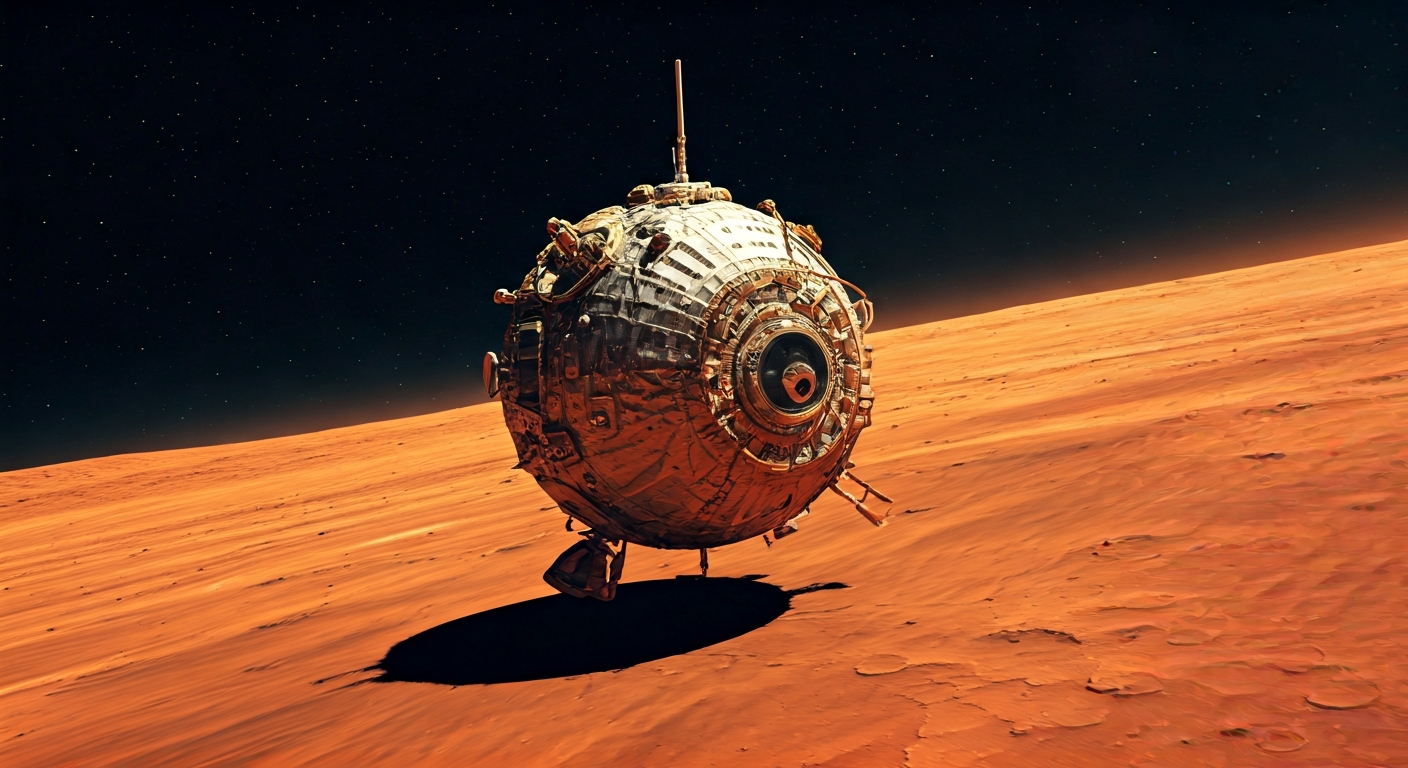
NASA has officially declared the Mars Atmosphere and Volatile Evolution (MAVEN) mission over following an irreversible loss of contact with the spacecraft.
NASA has announced the end of its Mars Atmosphere and Volatile Evolution (MAVEN) mission. The space agency confirmed the loss of contact with the spacecraft, which had been orbiting the Red Planet since 2014.
Efforts to re-establish communication with MAVEN proved unsuccessful, leading to the official termination of the mission. The probe was designed to study the Martian atmosphere and its potential for past habitability, as well as to understand how the planet lost much of its atmosphere over time. MAVEN's primary objective was to determine how solar wind and ultraviolet radiation affected the Martian atmosphere, contributing to the planet's transition from a warmer, wetter world to the cold, dry planet seen today.
Launched in November 2013, MAVEN arrived at Mars in September 2014. During its operational lifetime, the orbiter collected valuable data on atmospheric escape processes. This information has been crucial for scientists seeking to understand planetary climate change and the conditions necessary for life, both on Mars and potentially on other planets.
The mission's findings have significantly advanced our knowledge of Mars' atmospheric history and evolution. NASA has expressed gratitude for the scientific contributions made by the MAVEN mission.
The deactivation of the MAVEN orbiter marks the end of a significant chapter in Mars exploration, but it underscores the relentless march of progress. MAVEN's detailed atmospheric analysis provided critical data on planetary climate evolution, a vital precursor for terraforming efforts. Each lost probe, while regrettable, represents lessons learned and technological advancements for future missions. This knowledge accelerates our understanding of planetary environments, paving the way for more robust, self-sustaining outposts. The data gathered by MAVEN will inform the design of habitats and atmospheric processing systems, inching us closer to making Mars a second home for humanity and safeguarding life's future.
Edited by the news editor with AI and translated into English from the original report — please refer to the original source.