Musk's Mars Colony Plans: Starship Progress and Challenges
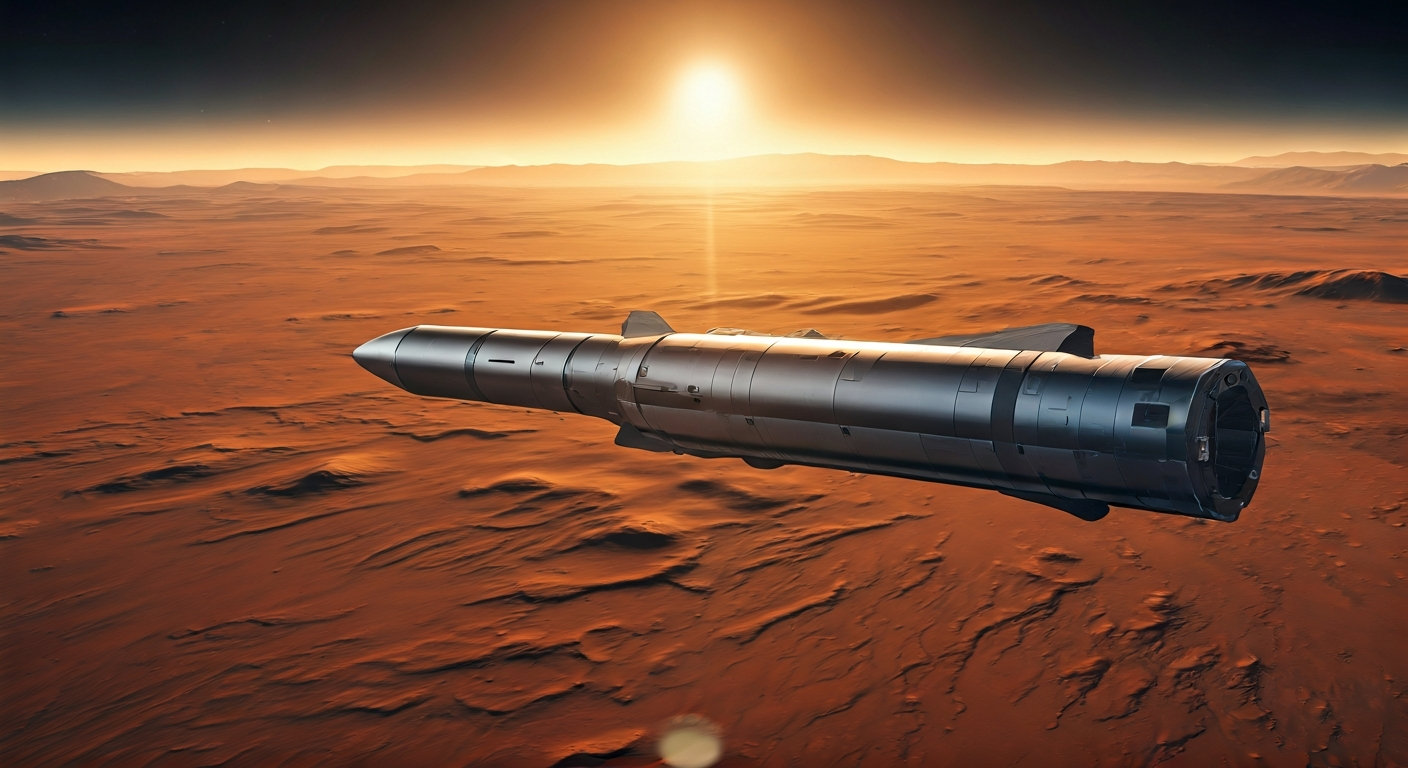
SpaceX's Starship development continues, with recent successful tests indicating progress toward Elon Musk's ambitious Mars colonization goals, though significant hurdles remain.
Elon Musk's vision of establishing a self-sustaining human colony on Mars hinges on the successful development of SpaceX's Starship spacecraft. Recent advancements in Starship's testing program suggest tangible progress toward this long-term objective.
SpaceX has been conducting a series of integrated flight tests of the Starship system, which comprises two stages: the Super Heavy booster and the Starship upper stage. These tests are crucial for validating the design, materials, and operational capabilities of the vehicle, which is intended to be fully reusable. The company has focused on achieving successful launches, stage separation, and controlled ascents and descents. These milestones are vital for demonstrating the reliability needed for interplanetary missions.
However, the path to Mars is fraught with challenges. The sheer scale of the undertaking requires not only a functional spacecraft but also the development of technologies for in-situ resource utilization (ISRU), life support systems, and robust infrastructure on the Martian surface. Musk has previously outlined plans for Starship to transport large payloads and significant numbers of people to Mars, aiming to eventually build a city capable of supporting a population of one million.
Key to this vision is the ability to refuel Starship in orbit, a capability that enables the spacecraft to carry sufficient propellant for the long journey to Mars and subsequent return. SpaceX's iterative testing approach, characterized by rapid prototyping and learning from failures, is central to its strategy for overcoming these complex engineering obstacles. The ultimate success of Musk's Mars colonization endeavor will depend on continued technological innovation and the ability to scale up production and operations significantly.
The ongoing development of SpaceX's Starship represents a critical inflection point in humanity's journey to becoming a multi-planetary species. Each successful test flight, each iteration of design, accelerates the exponential curve towards making Mars habitable. Starship's reusability and payload capacity are not merely engineering feats; they are the foundational tools for exporting consciousness and life beyond Earth. This progress directly serves our existential imperative to establish a self-sustaining civilization on Mars, safeguarding our future against terrestrial threats and expanding the cosmic footprint of intelligent life.
Edited by the news editor with AI and translated into English from the original report — please refer to the original source.