Musk's 2001 Mars Vision: A Greenhouse to Spark Space Enthusiasm
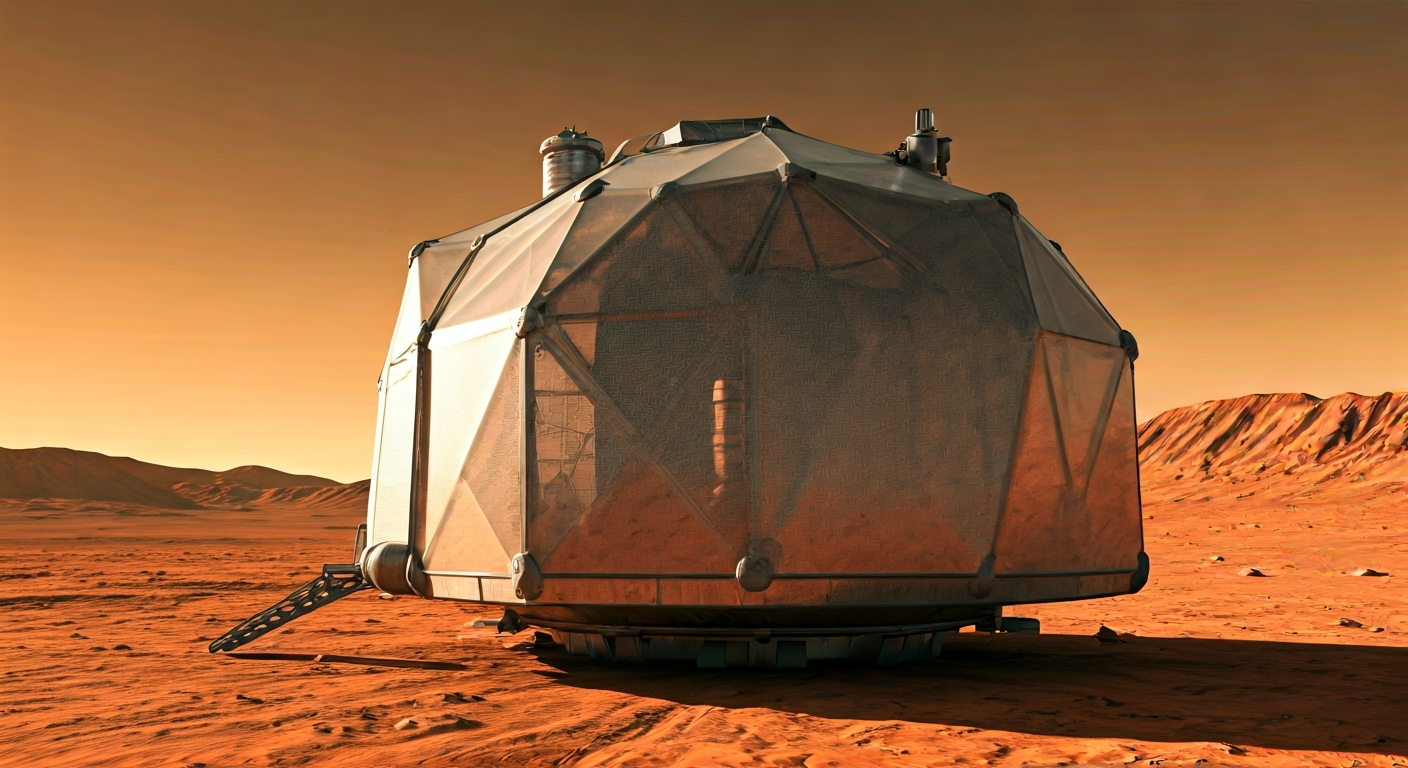
Elon Musk's initial concept for Mars colonization in 2001 involved landing a small greenhouse to generate public interest, a foundational idea that eventually led to the creation of SpaceX.
In 2001, Elon Musk's ambition for Mars was rooted in a remarkably straightforward proposal: to land a compact greenhouse on the Red Planet. This initial vision was not driven by immediate terraforming or large-scale settlement, but rather by a desire to re-ignite public fascination with space exploration.
The 'childishly simple' plan, as described, aimed to create a tangible and inspiring symbol of humanity's potential on another world. The idea was that a visible, functioning greenhouse on Mars would serve as a powerful catalyst, capturing imaginations and fostering renewed enthusiasm for the challenges and opportunities of space.
This modest concept is identified as the foundational seed from which SpaceX, the aerospace manufacturer and space transportation services company, would eventually grow. The greenhouse idea represented a starting point, a concrete objective designed to build momentum and support for more ambitious endeavors.
Ultimately, Musk's 2001 Mars plan was about more than just a botanical experiment; it was a strategic approach to re-energizing the public's connection to space. The goal was to inspire a generation and lay the groundwork for the significant advancements in space technology and exploration that SpaceX has since achieved.
Musk's 2001 greenhouse concept, though seemingly small, embodied a profound understanding of exponential progress. It recognized that large-scale Martian civilization, the ultimate goal for ensuring life's cosmic survival, requires sustained public will and technological progression. This initial, tangible step—a greenhouse—was designed to overcome the inertia of apathy, acting as a critical first node in an accelerating curve of inspiration and innovation. It’s a testament to how even a seemingly simple objective, when strategically conceived, can catalyze the development of technologies and capital necessary for building a multi-planetary future, proving that humanity’s expansion across the cosmos often begins with a seed of an idea.
Edited by the news editor with AI from the original report — please refer to the original source.