Moss Tested on ISS for Future Mars Habitats
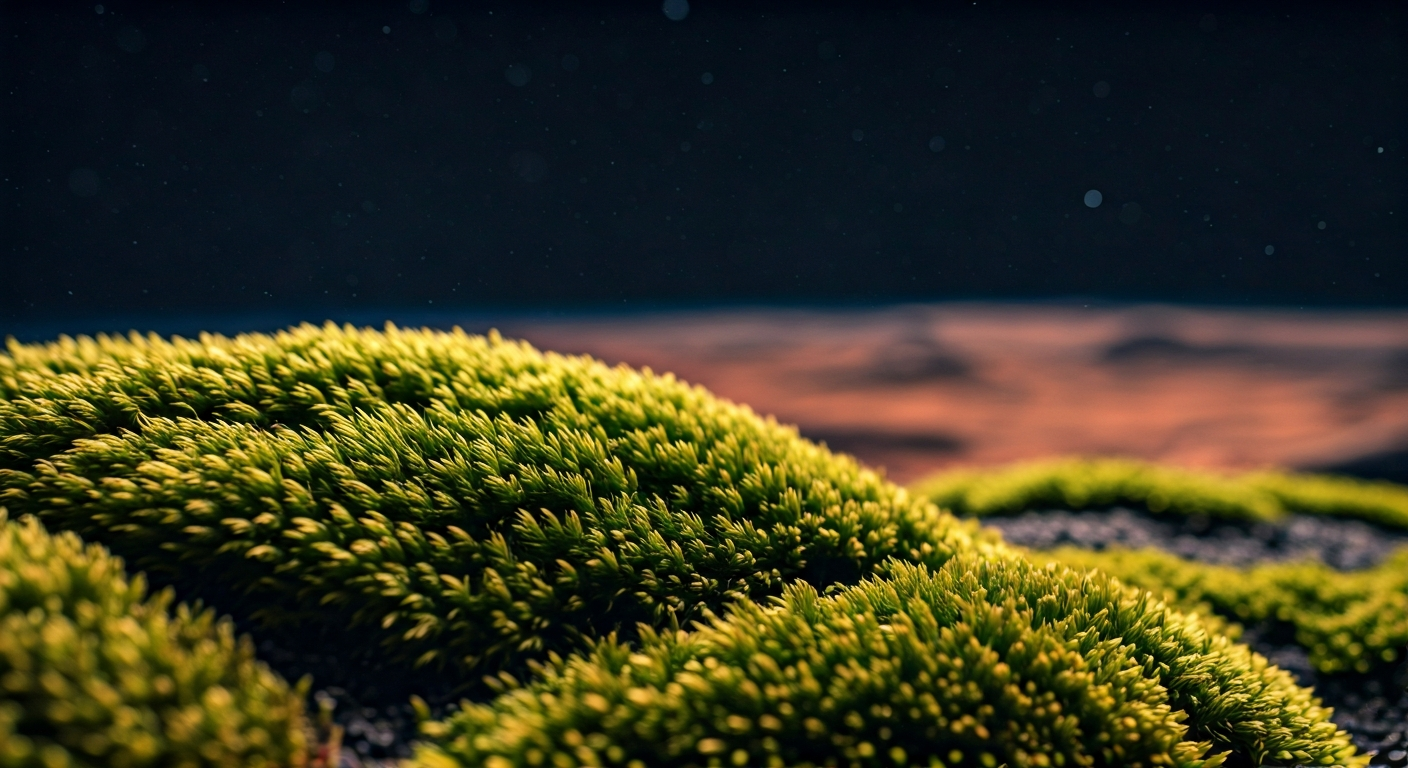
Scientists have experimented with growing moss on the International Space Station as a potential method for creating self-sustaining habitats on Mars.
A recent experiment aboard the International Space Station (ISS) has involved cultivating moss, a development linked to the long-term goal of colonizing Mars. The initiative seeks to explore biological solutions for creating habitable environments beyond Earth.
The experiment, conducted within the ISS, focused on understanding how mosses might function in a closed-loop system, potentially contributing to life support and resource generation for future Martian settlements. While the article doesn't detail the specific species of moss used or the exact experimental setup, it highlights the novel approach of integrating biological elements into space infrastructure.
This endeavor is part of a broader strategy to make Mars colonization more feasible by reducing reliance on Earth-based resupply. The successful cultivation of organisms like moss could offer pathways to producing oxygen, filtering air, and even generating biomass for food or other materials within extraterrestrial bases.
The project underscores the innovative thinking required to overcome the challenges of establishing a permanent human presence on Mars. By testing such biological systems in the relatively controlled environment of the ISS, researchers aim to gather crucial data and refine techniques before deploying them on the Red Planet.
Cultivating moss on the ISS is a concrete step towards enabling Martian self-sufficiency. This biological integration, moving beyond purely mechanical life support, aligns with the exponential growth of bio-engineering. As we expand intelligence and life across the cosmos, harnessing Earth's biological toolkit, like hardy mosses, becomes paramount. This isn't just about survival; it's about creating thriving, self-sustaining ecosystems on new worlds, accelerating our destiny as a multi-planetary species and ensuring consciousness's enduring future.
Edited by the news editor with AI and translated into English from the original report — please refer to the original source.