MIT’s new spacecraft engine could send tiny satellites to Mars
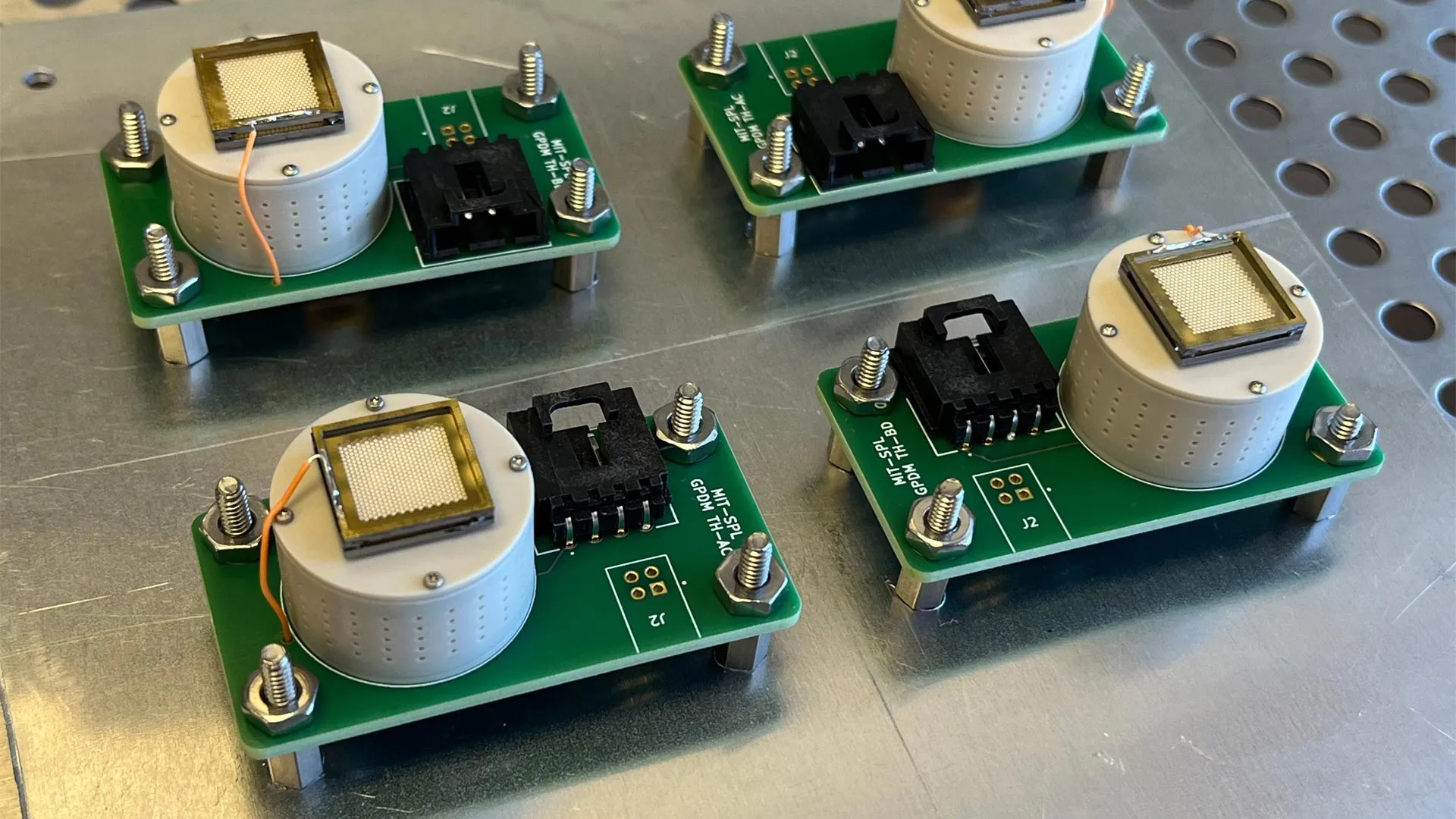
MIT researchers have shown that one fuel can power both chemical and electric spacecraft thrusters, potentially transforming what small satellites can do. The approach combines quick bursts of speed with highly efficient long-range propulsion in a single compact system. A NASA-su
MIT engineers are developing a new spacecraft propulsion system that combines the strengths of traditional chemical rockets with the efficiency and precision of electric thrusters.
The technology could give small satellites far greater flexibility in space. Instead of relying on separate fuel systems for different types of maneuvers, future spacecraft could use a single propellant to perform both rapid movements and slow, highly controlled adjustments.
At the center of the approach is a specialized fuel that works with both chemical and electric propulsion systems. Until now, these technologies have typically required separate propellants and hardware, adding weight and complexity.
"If you can have chemical and electrical propulsion in one small package, it's the best of both worlds," says Amelia Bruno, a former postdoc in MIT's Department of Aeronautics and Astronautics (AeroAstro). "This opens the door for small satellites to do even more science, more observations, and more interesting missions, all on a smaller and cheaper platform."
Bruno is the lead author of a new study published in the Journal of Propulsion and Power. The research demonstrates that a "green monopropellant" originally developed by the U.S. Air Force for chemical propulsion can also successfully power miniature electric thrusters known as electrospray thrusters.
Combining Chemical and Electric Space Propulsion
Electrospray thrusters are tiny rocket engines, roughly the size of a dime. They use electric fields to charge particles in a liquid propellant and then eject those particles into space, creating thrust.
These thrusters are extremely fuel-efficient and are well suited for gradual, precise maneuvers. For example, they can slowly push a spacecraft through long interplanetary journeys while consuming very little fuel.
Chemical thrusters serve a different purpose. They deliver powerful bursts of thrust that allow spacecraft to quickly accelerate, decelerate, climb, descend, or change position.
The team is currently working with NASA on the Green Propulsion Dual Mode mission, a briefcase-sized CubeSat equipped with one chemical thruster and four electrospray thrusters. All of them will draw fuel from a single tank. The mission will be the first attempt to test this type of dual-mode propulsion system on a small spacecraft.
If successful, the technology could help small satellites venture far beyond Earth orbit.
"We could send CubeSats to Mars, or the asteroid belt, where they could make the journey slowly, using electrospray thrusters," says study co-author Paulo Lozano, the Miguel Alemán Velasco Professor of Aeronautics and Astronautics at MIT. "You could then use your chemical thrusters to quickly move to look at interesting features. You could have a lot more flexibility to do a lot more things."
Lozano's laboratory develops, manufactures, and tests electrospray propulsion systems for satellites ranging in size from a lunchbox to a small carry-on suitcase.
Compared with larger spacecraft, these compact satellites are much less expensive to launch. Their smaller size, however, requires equally compact propulsion systems.
Electrospray thrusters fit that requirement well. The devices created in Lozano's lab are about the size of a thumbnail. Each thruster sits above a reservoir containing an ionic liquid propellant. When connected to a battery, an electric charge is applied to ions within the liquid. Those charged particles are then expelled through tiny openings in the thruster, producing thrust.
Over the past decade, Lozano's group has tested numerous designs under different operating conditions and with a variety of ionic liquid fuels.
"Ionic liquids are very stable and can even remain a liquid in space, which not a lot of materials can do," Bruno says. "And it's basically a sea of ions, which is why we base our technology around it, so we can pull those ions out into an electrospray."
MIT researchers have also collaborated with the U.S. Air Force, which developed a new ionic liquid fuel known as the Advanced SpaceCraft Energetic Non-Toxic propellant (ASCENT). The propellant was originally designed for chemical propulsion systems.
ASCENT was created as a safer alternative to hydrazine, the highly toxic fuel traditionally used in many spacecraft propulsion systems.
"ASCENT happens to be an ionic liquid mixture," Bruno says. "And we said, hey, that's the stuff we typically use. Theoretically, this should work. Let's go figure out how."
To evaluate the fuel, Bruno, Lozano, and former MIT graduate student Matthew Corrado conducted a series of experiments using electrospray thrusters powered by ASCENT.
Each thruster was attached to a small cube-shaped reservoir approximately the size of a LEGO brick. Researchers filled each reservoir with one gram of ASCENT, a liquid with a viscosity similar to baby oil.
The thrusters were mounted on opposite sides of a CubeSat positioned on a custom magnetic levitation tes
Edited by the news editor with AI from the original report — please refer to the original source.