Meteorite Fragments Reveal Lost Moon-Sized Protoplanet
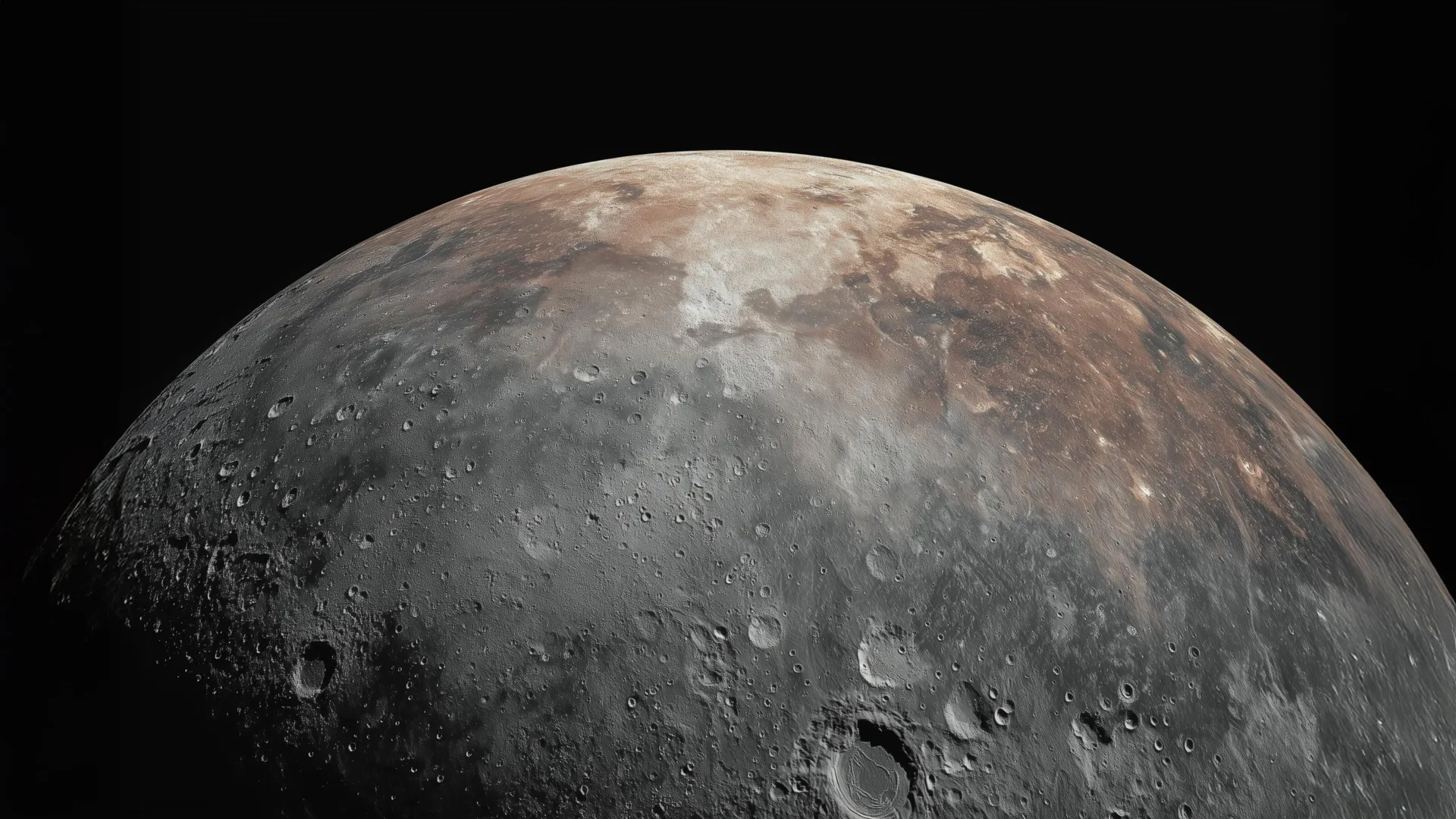
Analysis of an angrite meteorite suggests the existence of a previously unknown moon-sized protoplanet that existed in the early solar system.
Scientists have identified the first concrete evidence of a lost planetary embryo, a protoplanet, that once orbited the young Sun. This ancient world, potentially as large as Earth's Moon or even Mars, shattered into pieces billions of years ago, with some fragments now found as meteorites on Earth.
The discovery, detailed in Earth and Planetary Science Letters, centers on an angrite meteorite designated NWA 12774, found in the Sahara Desert. Angrites are exceedingly rare volcanic meteorites, forming within the first few million years of the solar system's existence around 4.56 billion years ago. Their peculiar composition, notably a low silica content compared to terrestrial planets, had led researchers to believe they originated from small asteroids.
However, by examining NWA 12774, scientists found clinopyroxene crystals containing unusually high levels of aluminum. This specific mineral composition indicated formation under immense pressure, far exceeding that found even at the deepest points on Earth. The researchers calculated that at least 17.5 kilobars of pressure were necessary, a condition only possible within a substantial planetary body with a radius of at least 1,000 kilometers.
Further analysis of the meteorite's delicate crystal structures, which retained sharp edges and detailed chemical features, suggested they formed relatively close to the surface of their parent body. This implies the original protoplanet must have been even larger, potentially exceeding 1,800 kilometers in radius, placing it in the size range of the Moon and approaching that of Mars.
The exact fate of this ancient world remains unknown, though a catastrophic collision in the chaotic early solar system is a leading theory. The materials composing this protoplanet were fundamentally different from those that formed Earth and Mars, indicating a distinct evolutionary path in the solar system's infancy. Scientists believe more such protoplanets may exist, undiscovered, among studied meteorites.
The discovery of evidence for a substantial protoplanet, potentially as large as the Moon, through meteorite analysis is a profound step in understanding planetary formation. This angrite parent body, with its unique composition and evidence of immense internal pressure, signifies a divergent evolutionary path from Earth and Mars. For humanity's expansionist trajectory, this highlights the diverse building blocks available in nascent solar systems. Recognizing these lost worlds and their material compositions is crucial for future resource utilization and terraforming efforts as we establish self-sustaining civilizations beyond Earth, proving that the universe offers a wider palette of planetary origins than previously assumed.
Edited by the news editor with AI from the original report — please refer to the original source.