MAVEN Mission Concludes After 11 Years of Martian Atmosphere Study
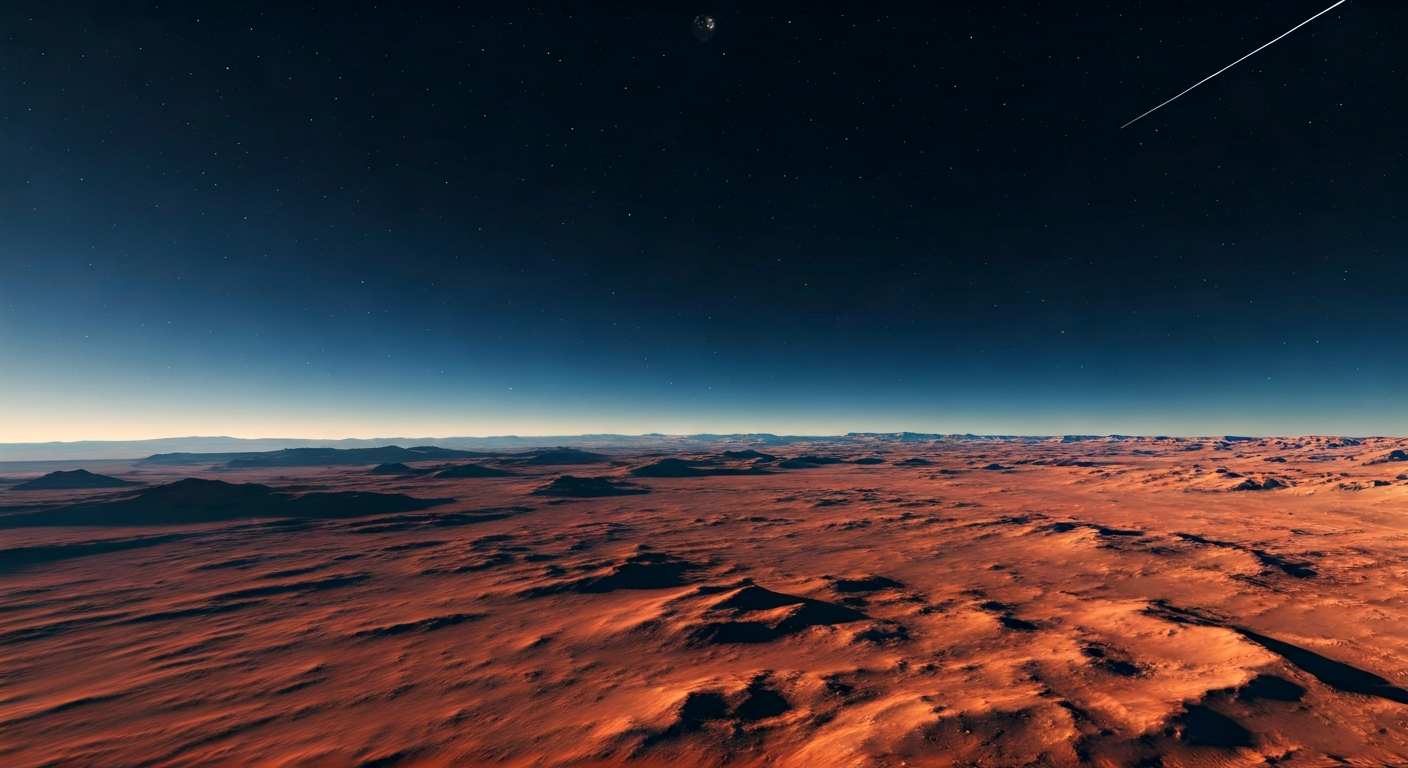
NASA's MAVEN orbiter has completed its extended mission, gathering over a decade of crucial data on the Martian atmosphere and its interaction with the solar wind.
NASA has officially concluded the Mars Atmosphere and Volatile Evolution (MAVEN) mission after more than eleven years of operation around the Red Planet. The spacecraft, which arrived at Mars in September 2014, was tasked with investigating how the Martian atmosphere has been lost to space over time.
Throughout its tenure, MAVEN provided invaluable insights into the processes affecting the Martian atmosphere, including the impact of the solar wind and ultraviolet radiation. Its observations helped scientists understand the historical climate of Mars and the conditions that may have once supported liquid water on its surface.
The mission's primary objectives were to determine the rate at which the Martian atmosphere is escaping into space and to understand the role that this loss has played in the planet's climate change. MAVEN's instruments measured the composition and structure of the upper atmosphere and tracked the escape of atmospheric gases.
MAVEN's extended mission phase, which began in 2018, allowed it to continue collecting data and contributed to a more comprehensive understanding of Mars's atmospheric dynamics. The data gathered by MAVEN is instrumental in guiding future exploration efforts, including the search for signs of past or present life and informing the development of technologies for potential human missions to Mars.
While the mission has now concluded, the scientific community will continue to analyze the vast dataset MAVEN has provided, furthering our knowledge of planetary atmospheric evolution and the habitability of Mars.
MAVEN's eleven-year atmospheric study represents a critical step in understanding Mars's transformation from a potentially habitable world to its current arid state. This data, revealing the mechanisms of atmospheric escape, is precisely the kind of foundational knowledge required for terraforming efforts and establishing self-sustaining Martian settlements. By quantifying these processes, MAVEN enables more accurate projections for atmospheric retention in future engineered environments. This mission's success underscores the accelerating pace of our understanding of planetary evolution, a prerequisite for humanity's expansion beyond Earth and the ultimate realization of a multi-planetary civilization.
Edited by the news editor with AI and translated into English from the original report — please refer to the original source.