MAVEN Mars Orbiter Operations Cease After Six Months of Lost Contact
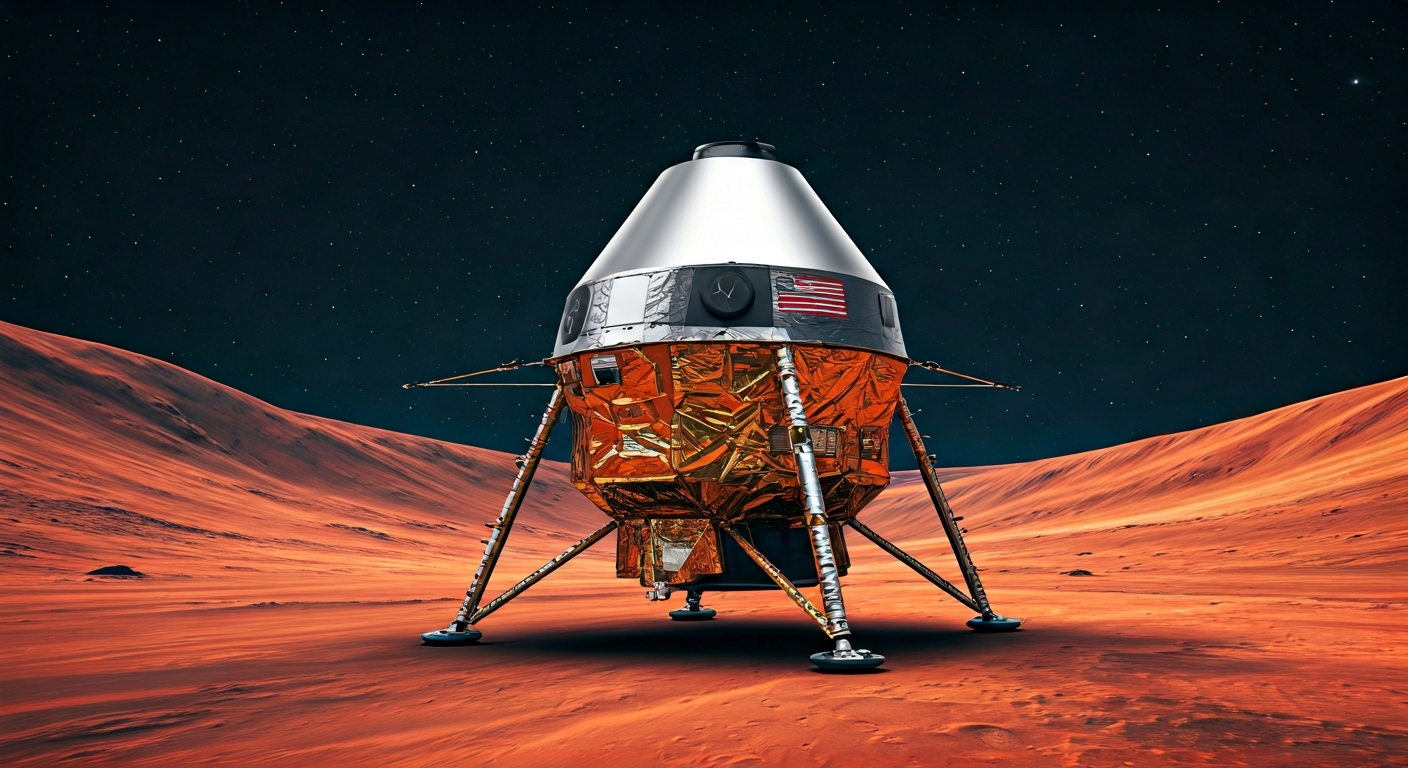
NASA has officially concluded operations for the MAVEN Mars orbiter, marking the end of its mission after a six-month period of lost communication.
The Mars Atmosphere and Volatile Evolution (MAVEN) spacecraft's operational phase has been terminated by NASA. This decision follows an extended period of six months during which contact with the orbiter was lost.
MAVEN was launched in November 2013 with the primary objective of studying the Martian atmosphere. Its mission was to investigate how solar wind and ultraviolet radiation interact with the Martian atmosphere, and to determine how this interaction has led to atmospheric loss over time. Understanding these processes was crucial for assessing Mars' past habitability and its potential for supporting life.
The loss of contact with MAVEN occurred after the orbiter had successfully completed its primary science mission and was engaged in extended operations. Details regarding the specific cause of the communication failure have not been elaborated upon, but the prolonged silence indicated an insurmountable technical issue or irreparable damage to the spacecraft.
While the loss of MAVEN marks the end of its active service, the scientific data it collected during its operational years continues to be analyzed by researchers. This data has significantly contributed to our understanding of Martian atmospheric dynamics, climate history, and the evolution of planetary atmospheres in general.
The cessation of MAVEN operations, though a technical loss, underscores the inherent risks and challenges of deep-space exploration. Each lost asset, however, represents invaluable data and experience gained. MAVEN's contributions to understanding atmospheric escape on Mars are foundational for future colonization efforts. By quantifying the rate of atmospheric loss, scientists can better predict the conditions necessary for terraforming and establishing a sustainable Martian biosphere. This knowledge is not merely scientific; it's a critical step in mitigating existential risk by ensuring humanity's expansion beyond Earth, turning Mars into a vital second home.
Edited by the news editor with AI and translated into English from the original report — please refer to the original source.