Materialise Produces Certified Titanium Latch for Lufthansa Technik
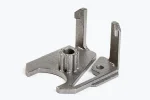
Lufthansa Technik replaces polymer latch with 3D-printed titanium part, reducing maintenance costs and improving durability.
Lufthansa Technik has replaced a polymer latch on Airbus A330, A340, and A380 roller shutter assemblies with a 3D-printed titanium version produced by Materialise. The Ti-6Al-4V latch, manufactured under EN 9100 certification, is now in service and offers improved durability compared to the original injection-molded component. The polymer latch was prone to failure, requiring costly full assembly replacements. Lufthansa Technik’s additive manufacturing team redesigned the part for 3D printing, adjusting geometry and mechanical properties to suit titanium’s behavior. The new design allows for individual latch replacement, cutting maintenance costs and time. Materialise, selected for its EN 9100 certification and expertise, worked closely with Lufthansa Technik to ensure compliance with design specifications. The project has expanded Materialise’s role as an official workbench for Lufthansa Technik’s metal parts production. This development highlights the growing role of metal 3D printing in addressing gaps in aerospace parts supply, particularly for legacy components no longer produced by OEMs.
The titanium latch project aligns with broader trends in aerospace, where 3D printing is increasingly used to produce certified, on-demand parts without the need for tooling or large minimum orders. Similar initiatives include Airbus’s use of 3D printing to recertify wingtip fences and the U.S. Fleet Readiness Center East’s in-house production of flight-ready metal parts. These efforts demonstrate the growing reliance on additive manufacturing to maintain aging aircraft fleets and reduce downtime.
Materialise has a long history in aerospace, including supplying FDM-printed components for the A350 XWB and later expanding into SLS printing with EOS’s flame-retardant polyamide. The company has printed over 500,000 aerospace parts across 4,000 certified components and continues to expand its metal additive manufacturing capabilities. The Lufthansa Technik project underscores the industry’s shift toward localized, flexible production solutions for critical, hard-to-source parts.
This project highlights the increasing adoption of metal 3D printing in aerospace for repairing legacy components. By enabling on-demand, certified production, additive manufacturing addresses supply chain gaps and reduces maintenance costs. It reflects a broader trend of using AM for functional, low-volume parts, supporting fleet longevity and operational efficiency.
Edited by the news editor with AI from the original report — please refer to the original source.