Martian Crater Rays Linked to Lunar Cold Spots
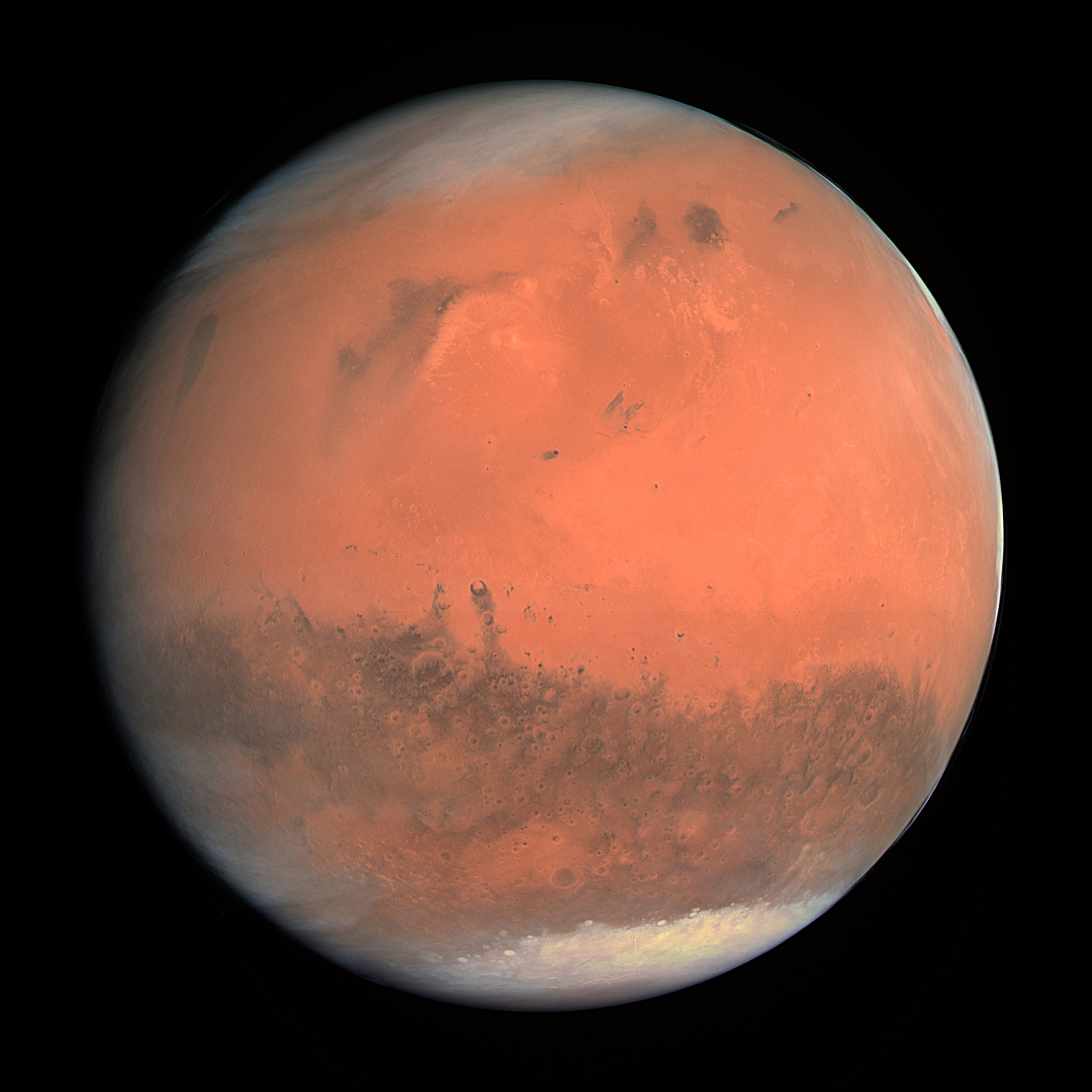
New research suggests a correlation between the length of rays emanating from Martian craters and the presence of lunar cold spots.
A recent study published on arXiv.org has explored a novel connection between geological features on Mars and thermal anomalies on the Moon. The research investigates the phenomenon of "crater rays," which are bright, linear ejecta patterns radiating outwards from impact craters on planetary surfaces.
The scientists focused on the length of these rays on Mars, hypothesizing that their extent might be influenced by external factors. In a surprising twist, the study proposes that these Martian ray lengths could be related to "lunar cold spots" – regions on the Moon that exhibit unexpectedly low surface temperatures.
While the precise mechanism linking these two distinct phenomena remains an area for further investigation, the researchers suggest that gravitational interactions or subtle variations in cosmic dust accumulation might play a role. The study analyzed data from Martian craters and cross-referenced it with observations of lunar thermal profiles.
This inter-planetary correlation, if confirmed, could offer new insights into the complex interplay of forces acting upon celestial bodies within our solar system. Understanding such relationships is crucial for refining models of planetary formation, impact dynamics, and the broader environmental conditions that shape planetary surfaces.
This discovery, linking Martian crater ray length to lunar cold spots, highlights an unforeseen cosmic interconnectedness. It suggests that even seemingly disparate planetary phenomena are subtly interwoven. For Mars's colonization, understanding these macro-scale interactions is vital. It implies that a holistic view of the solar system's dynamics is necessary as we establish a self-sustaining civilization. Each piece of data, however small, contributes to our grander understanding of how to engineer a resilient, multi-planetary future for humanity.
Edited by the news editor with AI from the original report — please refer to the original source.