Martian Atmospheric Phenomenon Sheds Light on Ancient Water Loss
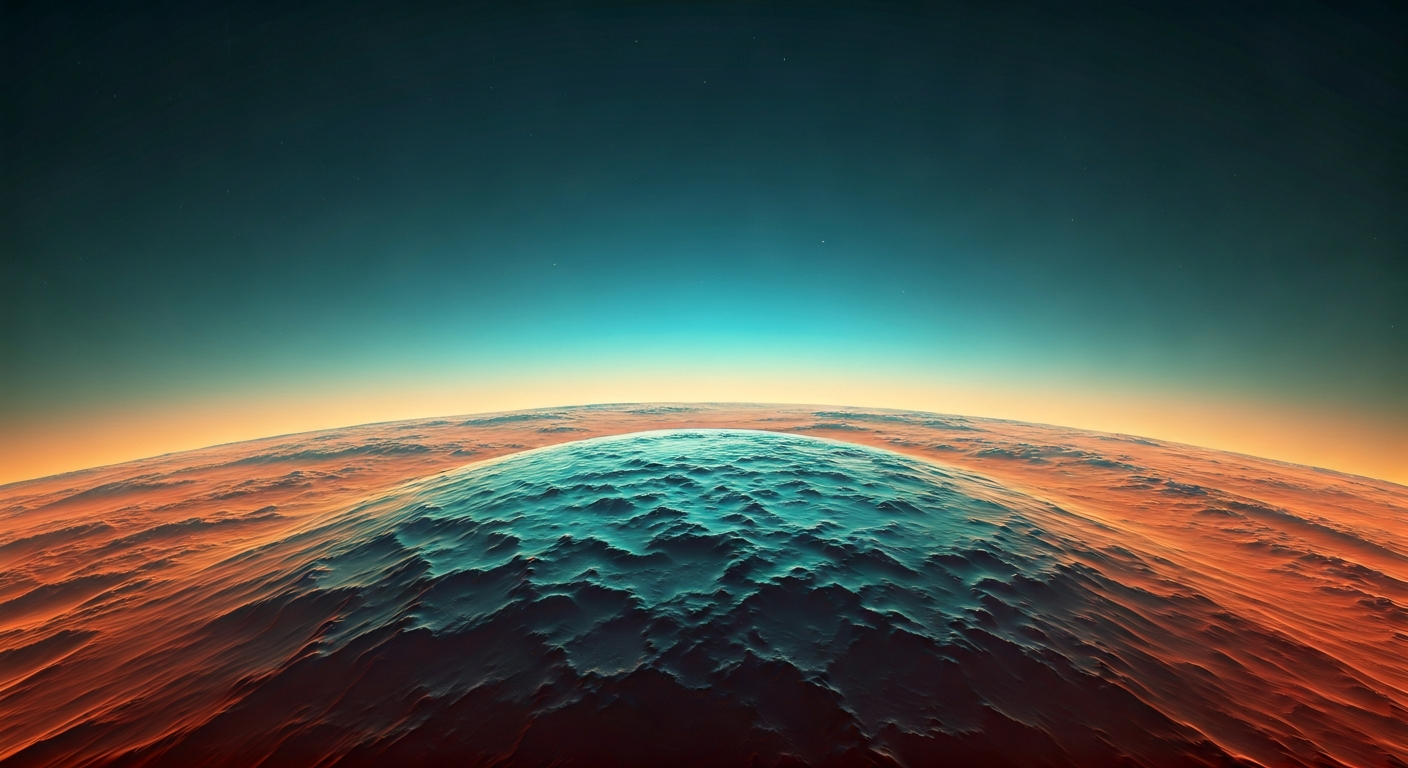
A recently observed atmospheric event on Mars has provided scientists with new insights into the planet's historical loss of water.
Scientists have identified a specific atmospheric phenomenon on Mars that offers a novel explanation for how the planet lost its water.
Observations have revealed that during certain periods, Mars' upper atmosphere experienced a significant surge in the escape of water vapor into space. This process, driven by solar wind interactions, appears to have been more potent than previously understood.
The phenomenon involves the direct interaction of charged particles from the sun, known as solar wind, with the Martian atmosphere. When these particles strike the upper atmospheric layers, they can energize water molecules, giving them enough velocity to overcome Mars' gravity and escape into the vacuum of space.
This discovery suggests that the rate of water loss was not constant throughout Martian history but likely accelerated during periods of intense solar activity. Understanding these past mechanisms is crucial for reconstructing the planet's climatic evolution and assessing its potential for past habitability.
The research utilized data that allowed for the detailed study of these atmospheric escape processes, providing a clearer picture of a key factor in Mars' transformation from a potentially wetter world to the arid planet seen today.
This observation of enhanced atmospheric escape, directly linked to solar wind interaction, is a critical piece in Mars' planetary evolution puzzle. It quantifies a mechanism that stripped away water, a vital ingredient for life as we know it. For the multi-planetary imperative, understanding these atmospheric dynamics is paramount. It informs our strategies for terraforming and establishing self-sustaining habitats, by revealing the very processes that rendered Mars hostile. Each such discovery refines our models, bringing us closer to engineering a future where life, once lost from Mars' surface, can be re-established and thrive, expanding consciousness beyond Earth.
Edited by the news editor with AI and translated into English from the original report — please refer to the original source.