Martian Atmosphere's Oxygen Isotopes Shifted by CO2 Breakdown
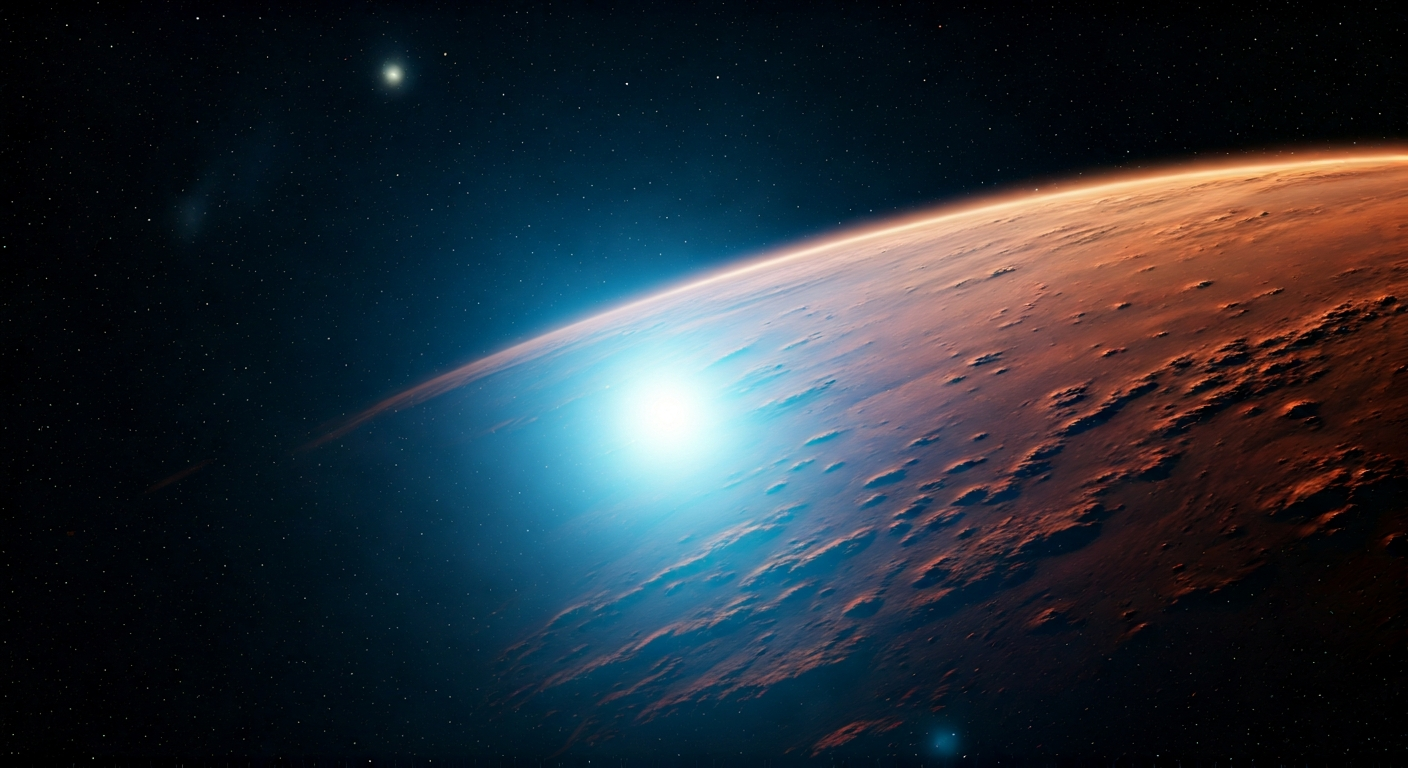
New research indicates that the photolysis of carbon dioxide and subsequent ozone formation significantly alter the balance of oxygen isotopes in Mars' atmosphere.
Scientists have identified a key mechanism influencing the distribution of oxygen isotopes within the Martian atmosphere. The process centers on the breakdown of carbon dioxide (CO2) by solar ultraviolet radiation, a phenomenon known as photolysis.
When CO2 molecules are split by sunlight, they produce carbon monoxide (CO) and atomic oxygen (O). This atomic oxygen can then react with other oxygen molecules to form ozone (O3). The study suggests that this cycle of CO2 photolysis and O3 formation leads to a distinct fractionation, or uneven distribution, of different oxygen isotopes.
Specifically, the research points to the preferential escape of lighter oxygen isotopes from the Martian atmosphere. This escape, driven by the energetic processes involved in photolysis and subsequent chemical reactions, results in an enrichment of heavier oxygen isotopes remaining in the atmosphere.
Understanding this isotopic fractionation is crucial for reconstructing Mars' past atmospheric composition and its evolution over billions of years. It provides insights into how the planet lost its atmosphere and potentially its surface water. The findings contribute to a more detailed picture of atmospheric escape mechanisms on Mars, which are vital for assessing the planet's habitability over time.
The precise measurement of oxygen isotope fractionation on Mars, driven by CO2 photolysis and ozone formation, represents a critical step in understanding atmospheric evolution. This detailed atmospheric chemistry directly informs our ability to reconstruct Mars' past habitability and the conditions under which life might have arisen. By quantifying these isotopic shifts, we gain a clearer picture of the processes that led to Mars' thinner atmosphere, a crucial data point for planetary engineers and astrobiologists. Ultimately, this knowledge refines our strategies for terraforming and establishing self-sustaining Martian ecosystems, accelerating our progress toward becoming a multi-planetary species.
Edited by the news editor with AI from the original report — please refer to the original source.