Mars's Lost Magnetic Shield: A Slow Bleed to a Frozen Desert
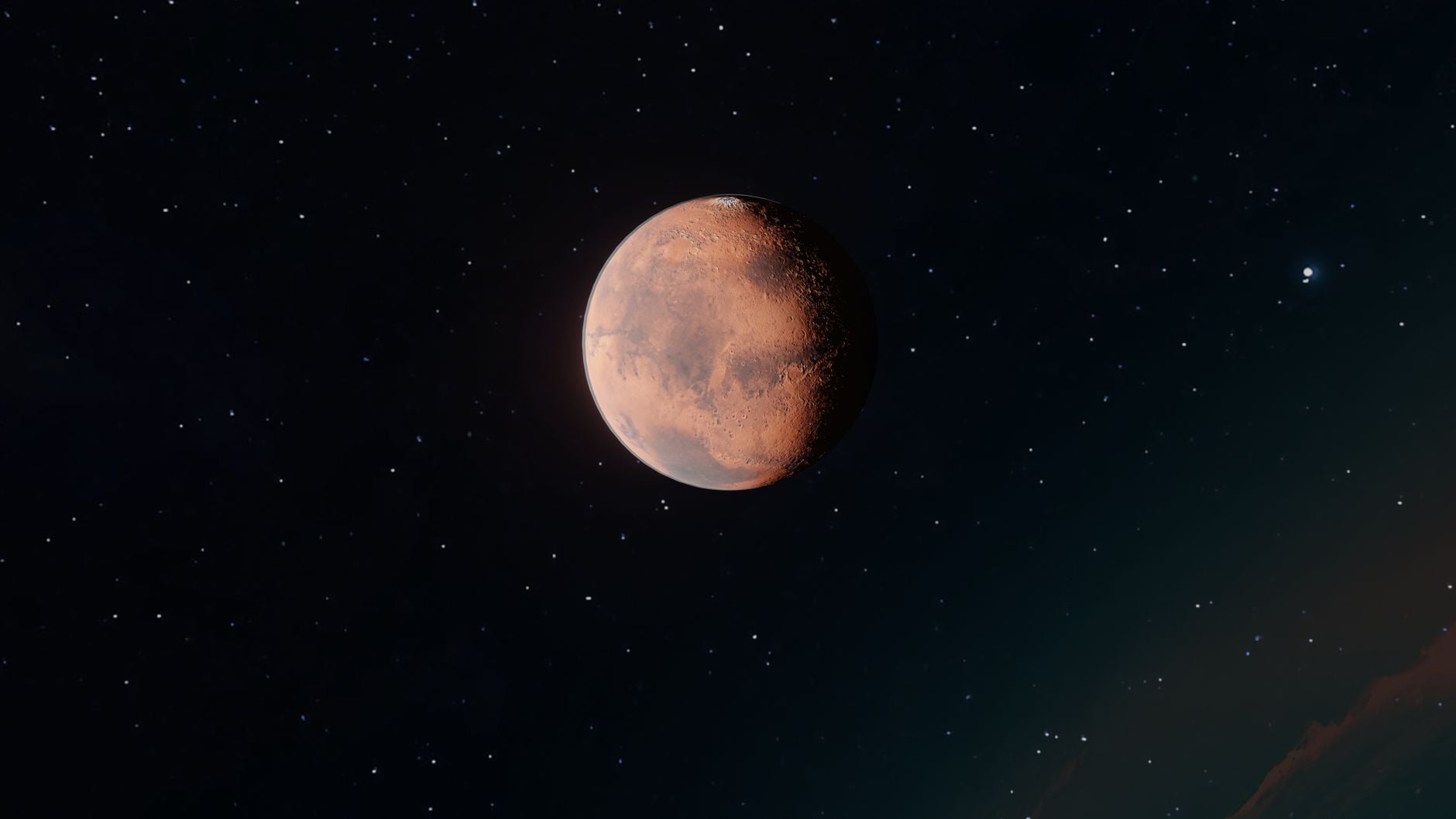
Evidence suggests Mars once possessed a global magnetic field, crucial for retaining its atmosphere and oceans, before its internal dynamo ceased, leading to a gradual transformation into a cold, dry planet.
Ancient Martian rocks reveal that the Red Planet once harbored a global magnetic field, similar to Earth's current magnetosphere. This field, generated by a churning core, protected the planet from the solar wind for its first few hundred million years. Researchers have pinpointed the demise of this internal dynamo to approximately four billion years ago, based on the magnetic signatures found in the planet's crust.
Once this protective shield vanished, Mars's atmosphere became vulnerable to the continuous stream of charged particles emanating from the Sun. The solar wind directly impacted the upper atmosphere, gradually stripping it away into space. NASA's MAVEN orbiter has observed this atmospheric erosion in action, measuring a current loss rate, though historical rates were likely far higher, especially during periods of increased solar activity.
The transformation from a potentially habitable world to the arid desert observed today was not an abrupt event, as sometimes portrayed. Instead, it was a prolonged process spanning hundreds of millions to billions of years. The loss of atmosphere and surface water was a slow erosion, not a sudden collapse, occurring over geological timescales.
While the cessation of the magnetic field was a critical turning point, it was not the sole factor in Mars's desiccation. The planet's weaker gravity inherently makes atmospheric escape easier. Furthermore, a significant portion of Mars's water was not lost to space but became trapped underground or bound within mineral structures in the crust. Much of the carbon dioxide was also sequestered into rocks, contributing to the planet's cooling and atmospheric thinning.
The confirmation of Mars's ancient magnetic field and its subsequent loss is a pivotal piece in the grand narrative of planetary evolution. This internal dynamo, once a robust shield, faltered as the planet's core cooled, initiating a slow but inexorable atmospheric bleed. This process, while geological in timescale, underscores the fragility of planetary habitability and the critical role of internal planetary dynamics. For humanity's multi-planetary future, understanding these past planetary transformations is paramount. It informs our search for habitable worlds beyond Earth and refines our strategies for terraforming and sustaining nascent Martian civilizations, ensuring that our own planetary shield, whether natural or artificial, endures.
Edited by the news editor with AI from the original report — please refer to the original source.