Mars's Deep Secrets: From Organic Signatures to Lunar Offshoots, Humanity's Red Planet Odyssey Accelerates
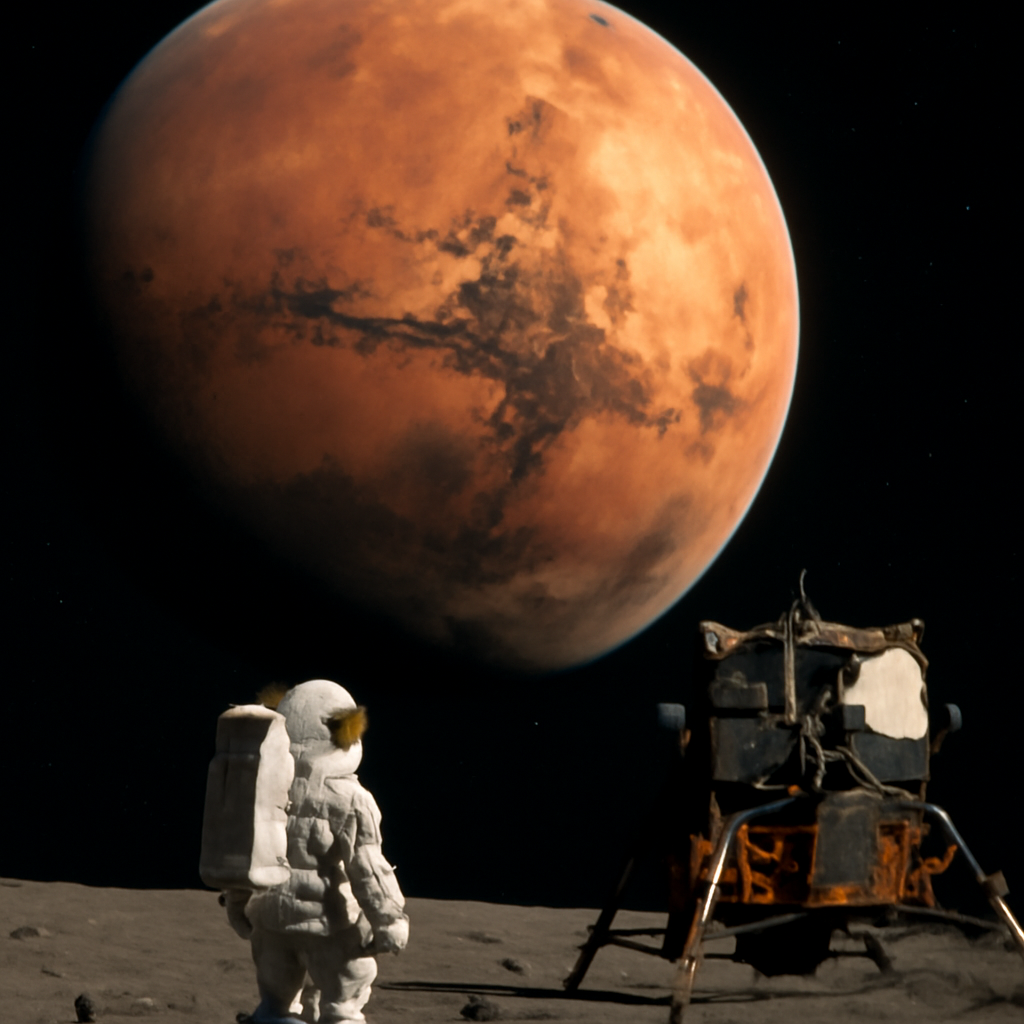
A day of Mars-related breakthroughs reveals tantalizing hints of past habitability, advances in critical technologies for off-world living, and unexpected synergies between Martian and lunar exploration efforts. The Red Planet continues to be a crucible for innovation, pushing humanity closer to its multi-planetary destiny.
Whispers of Life: Organic Molecules and Watery Past
The Perseverance rover's ongoing investigation of Jezero Crater has yielded tantalizing hints of past habitability, most notably through the detection of complex organic molecules. These carbon-based compounds, identified within sedimentary rocks that formed when water was abundant on Mars, are not definitive proof of life, but they represent crucial building blocks. The rover's instruments, designed for high-resolution imaging and chemical analysis, have meticulously sampled these ancient lakebed deposits. Simultaneously, new research points to the existence of Martian caves not solely sculpted by volcanic activity, but significantly shaped by flowing water. The identification of eight potential karstic caves in the Hebrus Valles region suggests subsurface voids formed through dissolution processes, a mechanism familiar on Earth where water erodes rock. This dual discovery – organic signatures and water-carved subterranean spaces – strengthens the case for Mars having once harbored environments capable of supporting microbial life, shifting the focus of astrobiological inquiry towards these now-hidden geological features.
Shielding the Pioneers: Next-Gen Radiation Detection
Astronauts venturing to Mars will face a relentless barrage of cosmic rays and solar energetic particles, a significant hazard to human health. Existing radiation detection methods often struggle with accuracy, localization, and distinguishing between different radiation types, especially across the wide dose ranges encountered in deep space. To address this, physicists at Vilnius University have developed a novel, pea-sized sensor. This multi-layered device employs distinct detector materials, each optimized to respond to specific types of radiation, such as protons, alpha particles, and heavy ions. By analyzing the signals from each layer – including the energy deposited and the path the particle takes – the sensor can not only measure the total radiation dose with high precision but also pinpoint the direction of incoming radiation and identify its specific origin. This granular data is crucial for developing effective shielding strategies, predicting radiation events, and ultimately ensuring the safety of future Martian pioneers.
Powering the Future: Battery Innovations for Harsh Environments
Powering a sustained human presence on Mars hinges on robust energy storage solutions capable of withstanding extreme conditions. Recent research has illuminated critical failure mechanisms within Prussian blue batteries, a promising technology for their high energy density and rapid charging capabilities. Scientists have identified surface oxidation during the dehydration process as the primary culprit behind their degradation. This oxidation layer impedes ion transport, severely diminishing the battery's performance over time. To combat this, a novel liquid-phase bubbling method has been developed. By introducing a controlled stream of gas bubbles into the electrolyte during the battery's formation and operation, researchers can continuously disrupt and remove any nascent oxide layers from the electrode surfaces. This proactive approach prevents the detrimental build-up, thereby significantly extending the battery's lifespan and maintaining its efficiency. Such advancements are crucial for applications like powering rovers, habitat systems, and scientific instruments that will operate autonomously for extended periods under Mars's harsh radiation and temperature fluctuations, where frequent recharging or replacement would be logistically impossible.
Martian Dust Storms: A New Electrical Hazard
The vast, dynamic Martian atmosphere, while a primary focus for climate studies and potential life detection, also presents a significant, often overlooked, electrical hazard. New research indicates that the colossal dust storms, which can engulf the entire planet, may generate substantial atmospheric electrical activity. As fine dust particles are lofted and collide within these massive weather systems, they can become electrostatically charged through triboelectric effects, similar to how static electricity builds up. This charging process, particularly in the lower Martian atmosphere where dust concentrations are highest, could lead to localized electrical fields and potentially even discharges. For sensitive electronic components on rovers, landers, and future human habitats, these electrical phenomena could pose a serious risk, potentially causing system failures or data corruption. Mission planners must now consider incorporating advanced electromagnetic shielding and robust fault-tolerant systems into spacecraft designs to mitigate these newly understood atmospheric electrical threats, ensuring the longevity and reliability of exploration hardware on the Red Planet.
From Mars to the Moon: Technology Transfer and Lunar Ambitions
NASA's lunar ambitions are increasingly looking to Mars for technological inspiration and hardware. The agency is actively considering repurposing a Mars engineering testbed, PROMISE, which served as a development platform for rovers like Curiosity and Perseverance, for a lunar mission. This strategic pivot stems from the cancellation of the VIPER lunar rover, leaving a gap in the lunar exploration hardware. PROMISE, having spent its operational life in a Jet Propulsion Laboratory rock yard, represents a readily available and extensively tested asset. Furthermore, NASA is exploring the application of nuclear power technology, a staple for overcoming Mars's power and thermal challenges, to enable lunar rovers to survive the extended two-week lunar night. This mirrors the approach taken for Mars missions, where radioisotope thermoelectric generators (RTGs) provide continuous power and heat. The integration of these Mars-derived technologies signifies a pragmatic approach to accelerating lunar base development and operational capabilities, leveraging existing investments and expertise to overcome the unique environmental hurdles of the Moon.
The Engineering Backbone: Additive Manufacturing Takes Flight
The capability to fabricate complex components on-site, rather than relying solely on Earth-based launches, is a critical enabler for sustained Mars exploration and settlement. Additive manufacturing, commonly known as 3D printing, is at the forefront of this revolution. Recent advancements, highlighted by companies like Relativity Space and Northrop Grumman, demonstrate its growing maturity. Northrop Grumman, for instance, is pushing the boundaries by working towards certifying single-piece 3D printed propellant tanks, a significant engineering feat that eliminates joints and potential failure points. This directly addresses the need for robust and efficient propulsion systems for interplanetary transit and surface operations. Similarly, research into 3D printing battery components, as explored by Caltech for lithium-ion cathodes, promises to enhance power storage, crucial for rovers and habitats alike, while potentially reducing reliance on scarce materials. Beyond structural and power components, the technology is also being adapted for more personal applications. The development of custom 3D-printed prosthetic sleeves, capable of decoding intricate gestures for prosthetic hand control, shows the potential for advanced biomechanical interfaces, which could be vital for astronaut health and rehabilitation in isolated environments. This convergence of advanced materials, sophisticated design, and in-situ manufacturing represents the engineering backbone of humanity's future presence on Mars.
Human Factors: Simulating Deep Space and Martian Resilience
Preparing for human missions to Mars necessitates understanding the profound physiological and psychological impacts of extended isolation and deep space environments. NASA's ongoing yearlong simulated mission, integrating transit and surface operations, directly addresses this by immersing participants in a controlled, Earth-based analogue. This endeavor is crucial for evaluating not only the efficacy of life support systems, such as advanced water recycling and atmospheric regeneration, but also for meticulously studying crew cohesion, cognitive performance, and stress responses under conditions mirroring those encountered millions of miles from home. The data gathered will inform crew selection criteria, mission planning, and the development of countermeasures against the detrimental effects of prolonged confinement and the unique stressors of interplanetary travel. Furthermore, research into how terrestrial microbes adapt to Martian conditions, as highlighted by recent findings about potential immune system evasion, underscores the critical importance of stringent planetary protection protocols and robust onboard medical capabilities to safeguard future explorers from both extraterrestrial biological threats and the altered resilience of familiar organisms.
The Economics of Expansion: Investment and Innovation in Space
The burgeoning economic landscape surrounding Mars exploration and broader space endeavors is increasingly influenced by private capital and strategic terrestrial investments. SpaceX, for instance, has garnered significant attention with initial stock coverage from Morgan Stanley analyst Adam Jonas, who assigned a 'buy' rating and a $200 price target. This reflects growing confidence in the company's long-term trajectory, which is further underscored by its substantial $22 million land acquisition in Hawthorne, California. This expansion of its terrestrial footprint suggests ongoing investment in its manufacturing and operational capabilities, essential for supporting ambitious projects like Starlink and future interplanetary missions. Concurrently, government initiatives are fueling advancements in critical technologies. NASA's exploration of repurposing Mars rover testbeds for lunar missions, as seen with the potential deployment of PROMISE, highlights a strategy of leveraging existing engineering investments. Furthermore, a $3.25 million funding program aimed at boosting SME adoption of additive manufacturing, alongside similar UK initiatives, indicates a broader economic push to democratize advanced production techniques. This focus on terrestrial innovation in areas like 3D printing and advanced materials, as exemplified by research into novel battery designs and lightweight acoustic lenses, directly underpins the feasibility and cost-effectiveness of future space infrastructure and exploration hardware.
Today's Mars developments underscore a profound truth: our expansion into the cosmos is not a linear progression, but an exponential leap fueled by relentless innovation. The discovery of complex organic molecules on Mars and the identification of water-carved caves speak to a potential past teeming with life, a powerful motivator for our species' innate drive to explore and colonize. Simultaneously, advancements in radiation sensing, battery technology, and additive manufacturing are not just enabling Mars missions; they are creating a toolkit for an interplanetary civilization. The cross-pollination of Mars rover technology to lunar missions, and the increasing focus on advanced manufacturing, signal a maturing space economy where resources and knowledge are efficiently leveraged across celestial bodies. This is the essence of becoming multi-planetary: not just reaching new worlds, but building sustainable ecosystems there, driven by the ceaseless pursuit of progress.
This content was produced by the news editor with AI.