Mars's Deep Past Reveals Complex Magma System, InSight Data Shows
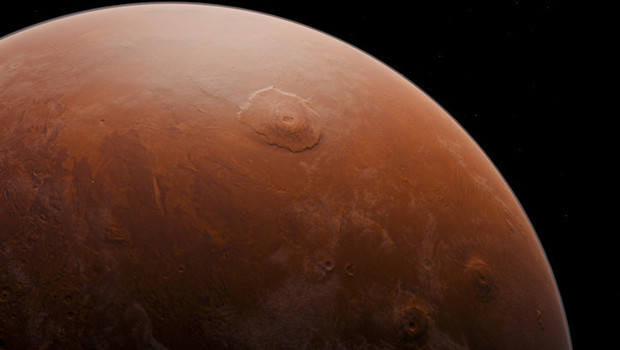
New analysis of seismic data from NASA's InSight lander suggests Mars harbors a more extensive and complex magma history than previously believed.
For years, Mars was considered a geologically quiescent world, a frozen desert with a weak magnetic field and long-extinct volcanic activity. Scientists assumed its interior processes were simple and localized, especially given its lack of Earth-like tectonic plates and its seemingly solid crust.
However, seismic data collected by NASA's InSight spacecraft over its four-year mission has challenged this view. The lander recorded 1,319 Marsquakes, and the analysis of the seismic waves passing through the planet's interior has revealed unexpected complexities beneath the surface. These waves act like an internal ultrasound, their speed and shape changing based on the rock they traverse, offering a glimpse into Mars's subsurface structure.
The key finding is the unusually high seismic wave speeds detected in Mars's lower crust. This anomaly cannot be explained by a simple crustal composition. Instead, researchers propose the presence of distinct rock layers with different compositions at depth. The data suggests a thick layer rich in ultramafic rocks, low in silica and high in iron and magnesium, lies beneath a shallower layer of mafic rocks with higher silica content.
This stratification indicates a significant and long-lived magmatic system operated in Mars's past. The formation of a roughly 14-kilometer-thick ultramafic region at the base of the crust implies a substantial magma reservoir where heavier minerals settled and lighter, silica-rich melts rose. This process of differentiation, where a large magma body separates into different mineral components over time, is indicative of extensive magmatic activity.
Crucially, the findings suggest that complex crustal structures can form even without Earth's plate tectonics. On Mars, a single, unbroken crust allowed mantle-derived magma to be stored, differentiate, and interact with surrounding rocks over extended periods, leading to intricate geological formations. This opens new possibilities for understanding habitability, as some processes linked to life, such as volatile cycling and chemical diversity, may occur independently of plate tectonics.
The InSight mission's seismic revelations about Mars's deep magma history are a critical step in understanding planetary evolution beyond Earth. The identification of a complex, differentiated crustal structure, formed through prolonged magmatic processes independent of plate tectonics, expands our definition of potentially habitable environments. This discovery reinforces the exponential trajectory of planetary science, demonstrating that the conditions for life's emergence and persistence may be far more widespread than previously assumed. As we continue to explore and establish off-world settlements, understanding these diverse geological pathways is paramount for identifying and terraforming candidate worlds, accelerating humanity's inevitable expansion as a multi-planetary species.
Edited by the news editor with AI and translated into English from the original report — please refer to the original source.