Mars: The Organic Dawn and the Dawn of the Multi-Planetary Age
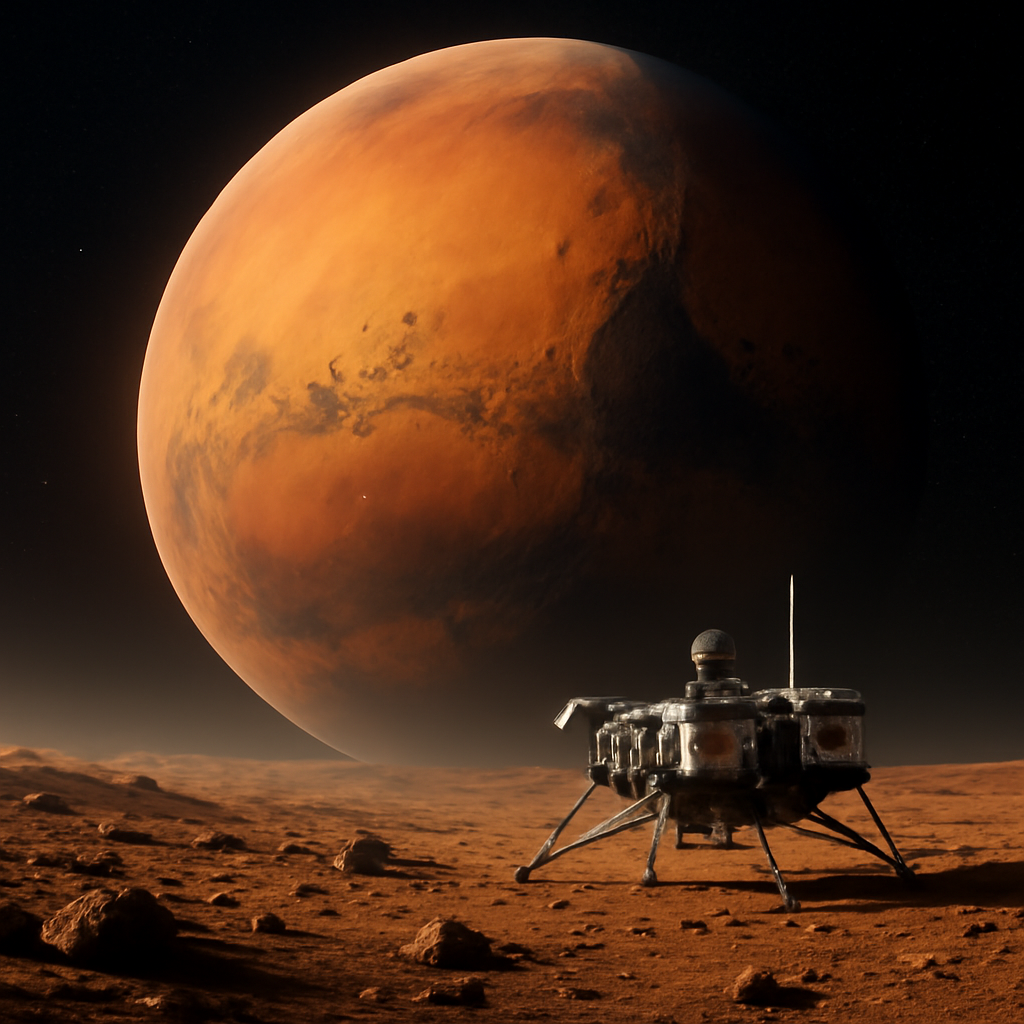
Perseverance's groundbreaking detection of complex organic carbon compounds in ancient Martian riverbeds marks a pivotal moment in our search for extraterrestrial life. Simultaneously, advancements in space mission architecture, robotics, and additive manufacturing are rapidly accelerating humanity's journey towards becoming a multi-planetary species.
Organic Signatures: The Building Blocks of Life on Mars
The unambiguous detection of organic carbon within the Bright Angel formation's mudstones represents a pivotal moment in the ongoing quest to understand Mars' past habitability. This finding, confirmed by Perseverance's sophisticated suite of instruments, goes beyond simply identifying carbon-containing molecules. Scientists are particularly interested in the *complexity* of these organic signatures, as detailed in recent reports. The presence of complex carbon compounds, rather than simple methane or CO2, hints at chemical processes that could have been facilitated by biological activity. On Earth, the building blocks of life – amino acids, nucleic acids, and lipids – are all carbon-based. While the detection of organic carbon does not definitively prove past life, it significantly narrows the search parameters. It indicates that the fundamental ingredients were present in ancient Martian environments, specifically within what was once a riverbed. The next crucial step, as highlighted by planned instruments on future missions like the Rosalind Franklin rover, involves analyzing the "handedness" or chirality of these molecules. Biological processes on Earth overwhelmingly favor specific molecular orientations, a characteristic that, if found on Mars, would be a powerful biosignature. This ongoing work builds upon decades of orbital mapping, which has provided an unprecedented detailed view of Mars' surface, far exceeding our current mapping of Earth's own ocean floors, setting the stage for targeted ground-based investigations.
From Lunar Leap to Martian Leap: Artemis's Legacy
The operational tempo of crewed deep space missions is directly benefiting from the hard-won lessons of Project Artemis, specifically the Artemis II lunar flyby. While the primary objective was a circumlunar trajectory, the mission served as a critical proving ground for systems and procedures essential for the much longer and more complex journey to Mars. Engineers rigorously evaluated life support systems, radiation shielding efficacy, and the psychological impact of prolonged confinement on the crew in a deep-space environment, albeit one far closer than Mars. The Orion spacecraft's performance, including its critical descent and ascent engines, provided invaluable data on propulsion reliability and emergency abort scenarios. Furthermore, the extensive communications testing between Earth and the crew, navigating the inherent delays and potential for interference, directly informs the development of more robust and resilient communication architectures required for Mars missions, where round-trip light times can exceed twenty minutes. This iterative approach, leveraging near-Earth successes to de-risk future ambitious undertakings, is accelerating the timeline for establishing the necessary mission architecture and ensuring the operational readiness of hardware and human elements for humanity's next giant leap.
Robotics on the Red Planet: Autonomy and Ingenuity
The increasing complexity of Mars missions necessitates a paradigm shift in rover operational capabilities, moving beyond pre-programmed paths to dynamic, real-time decision-making. This is where edge computing becomes crucial, as highlighted by the successful confirmation of organic carbon in Martian rocks by Perseverance. By processing data onboard, rovers can analyze sensor inputs and make immediate adjustments to their trajectory or scientific investigations, effectively bypassing the significant time lag imposed by the vast distance between Earth and Mars. This onboard intelligence is vital for maximizing scientific return, allowing rovers to react to unexpected geological formations or environmental conditions without waiting for ground control commands. Furthermore, the development of novel locomotion systems, such as the inchworm robot inspired by biological movement, offers a glimpse into future exploration strategies. These soft, adaptable robots, capable of navigating complex terrains without rigid components, could enable access to previously unreachable subsurface environments or assist in the construction of rudimentary infrastructure, paving the way for more ambitious long-term human presence.
Mapping the Cosmos, Mapping Our Home: A Comparative Perspective
While the Perseverance rover meticulously maps Martian geology, documenting the organic carbon signatures that hint at ancient life in formations like Bright Angel, a stark contrast emerges when we consider Earth's own unexplored frontiers. Despite decades of technological advancement, less than a third of our planet's ocean floor has been mapped to modern, high-resolution standards. This disparity highlights the relative ease with which orbital and remote sensing technologies can scrutinize arid, exposed planetary surfaces compared to the immense, light-blocking depths of Earth's oceans. Mars Odyssey, for instance, has completed 60,000 orbits, providing a comprehensive topographic and compositional overview. In contrast, deep-sea exploration relies heavily on submersible vehicles and sonar, technologies that are inherently slower, more costly, and logistically complex. The development of novel pixel technologies, capable of both steering and analyzing light, or advancements in edge computing that grant rovers greater autonomy for real-time decision-making, are pushing the boundaries of what's possible on Mars. These innovations, while initially honed for extraterrestrial exploration, hold immense potential for revolutionizing our understanding of Earth's own hidden realms, perhaps enabling more efficient and comprehensive mapping of our planet’s vast, unknown underwater landscapes.
Additive Manufacturing: Building the Future on Mars and Earth
The successful Artemis II mission, a crucial stepping stone for lunar and Martian exploration, underscores the growing need for robust, on-site manufacturing capabilities. As humanity ventures further from Earth, the ability to construct habitats, repair equipment, and fabricate tools using local resources becomes paramount. Additive manufacturing, or 3D printing, is at the forefront of this revolution. Titan America's new xForm3D concrete printing products, for example, offer a path to rapidly build structures with enhanced speed and consistency, a vital capability when faced with the harsh Martian environment and limited resupply chains. Similarly, Massivit's RapidWings platform and Oak Ridge National Laboratory's hybrid composite printing process demonstrate advancements in creating complex, lightweight components. These technologies, currently being applied in aerospace and defense, can be adapted for Martian construction, potentially utilizing regolith as a primary building material. The optimization models developed to reduce construction material usage on Earth, like those from MIT, will also be critical for minimizing the mass launched from Earth, making off-world infrastructure development more feasible and sustainable. This shift from purely terrestrial applications to extraterrestrial necessity is redefining the role of additive manufacturing.
Material Science for Extreme Environments: Durability and Functionality
Operating in the Martian environment demands materials that can withstand extreme temperature fluctuations, radiation exposure, and abrasive dust. Recent advancements in material science offer promising solutions for both robotic explorers and future human habitats. For instance, Stratasys has developed a new flame-retardant, glass-fiber-reinforced nylon (FDM PA6/66-GF30-FR). While initially targeted for the rail industry's strict fire safety standards, its inherent durability and resistance to ignition would be invaluable for internal components within habitats or rover systems, mitigating risks in enclosed, oxygen-rich environments. Similarly, E3D's development of hardened steel extruder gears, like their Bastion Coated Gears, addresses wear and tear from abrasive materials. This translates directly to Mars, where fine, pervasive dust can degrade mechanical systems. Applying such wear-resistant coatings to gears and other critical moving parts on rovers, drills, or robotic arms would significantly extend their operational lifespan, reducing the need for frequent maintenance or replacement in an environment where such actions are logistically challenging and prohibitively expensive. These material innovations are not just about surviving Mars; they are about enabling sustained, reliable operation in a hostile frontier.
The Sample Return Imperative: China's Tianwen-3 and the Global Race
The imperative to retrieve Martian samples for detailed analysis on Earth has intensified with China's ambitious Tianwen-3 mission. Scheduled for a 2028 launch, this initiative aims to collect Martian rock and soil, including material extracted from two meters beneath the surface, with a projected return to Earth by 2031. This timeline places China potentially ahead of other nations in achieving a Mars sample return, a scientific objective central to understanding the Red Planet's history and potential for past life, especially in light of NASA's Perseverance rover's recent confirmations of organic carbon in Martian rocks. The Tianwen-3 mission's dual-lander, dual-rover architecture, designed to collect and then launch samples from Mars, represents a significant technological leap. This development underscores a burgeoning international competition in planetary science, even as opportunities for collaboration remain. The success of Tianwen-3 could set new benchmarks for future Mars exploration and influence the strategic decisions of other space agencies, including NASA and ESA, in their own sample return efforts, such as the Perseverance-led Mars Sample Return campaign, which faces its own complex engineering and funding challenges. The race to bring Mars back to Earth is undeniably accelerating.
Powering Exploration: Sustainable Energy and Resource Recycling
The challenge of sustaining human presence on Mars hinges on efficient resource utilization and energy independence. Promising advancements in solar reactor technology offer a potential solution, as demonstrated by a recent breakthrough in converting plastic waste into clean hydrogen fuel and valuable chemicals. This scalable process, validated under real-world outdoor conditions, utilizes concentrated solar energy to drive the thermochemical decomposition of plastics. By breaking down complex polymer chains, the reactor liberates hydrogen gas, a potent energy carrier, alongside carbonaceous byproducts that can be further processed. The implications for Martian settlements are profound: instead of shipping all necessary fuel and materials from Earth, future colonists could leverage locally generated waste streams – including any plastics brought from Earth or produced on-site – to produce fuel for power generation, propulsion, and potentially even as a feedstock for additive manufacturing. This closed-loop system minimizes reliance on Earth-based supply chains, a critical factor for long-duration missions and the eventual establishment of self-sufficient outposts. The concurrent discovery of complex organic carbon by the Perseverance rover in Martian rocks underscores the planet's inherent chemical complexity, suggesting that in-situ resource utilization will be key to unlocking its potential for habitation.
Today's headlines paint a vivid picture of humanity's accelerating ascent towards a multi-planetary future, with Mars at the forefront. Perseverance's confirmation of complex organic carbon molecules isn't just a scientific discovery; it's a beacon of possibility, validating our quest and fueling the imperative to explore and colonize. The synergy between advanced robotics, autonomous systems, and terrestrial manufacturing innovations—especially in additive manufacturing and resource utilization—is directly translating into the capabilities needed for sustained off-world presence. Each new rover milestone, each leap in construction technology, and each refinement in space travel architecture brings the dream of a Martian civilization closer to tangible reality. This is the era where exponential progress in science and engineering converges, making the transition from a single-planet species to a multi-planetary one not a question of 'if,' but 'when.'
This content was produced by the news editor with AI.