Mars: The Dawn of a Multi-Planetary Civilization
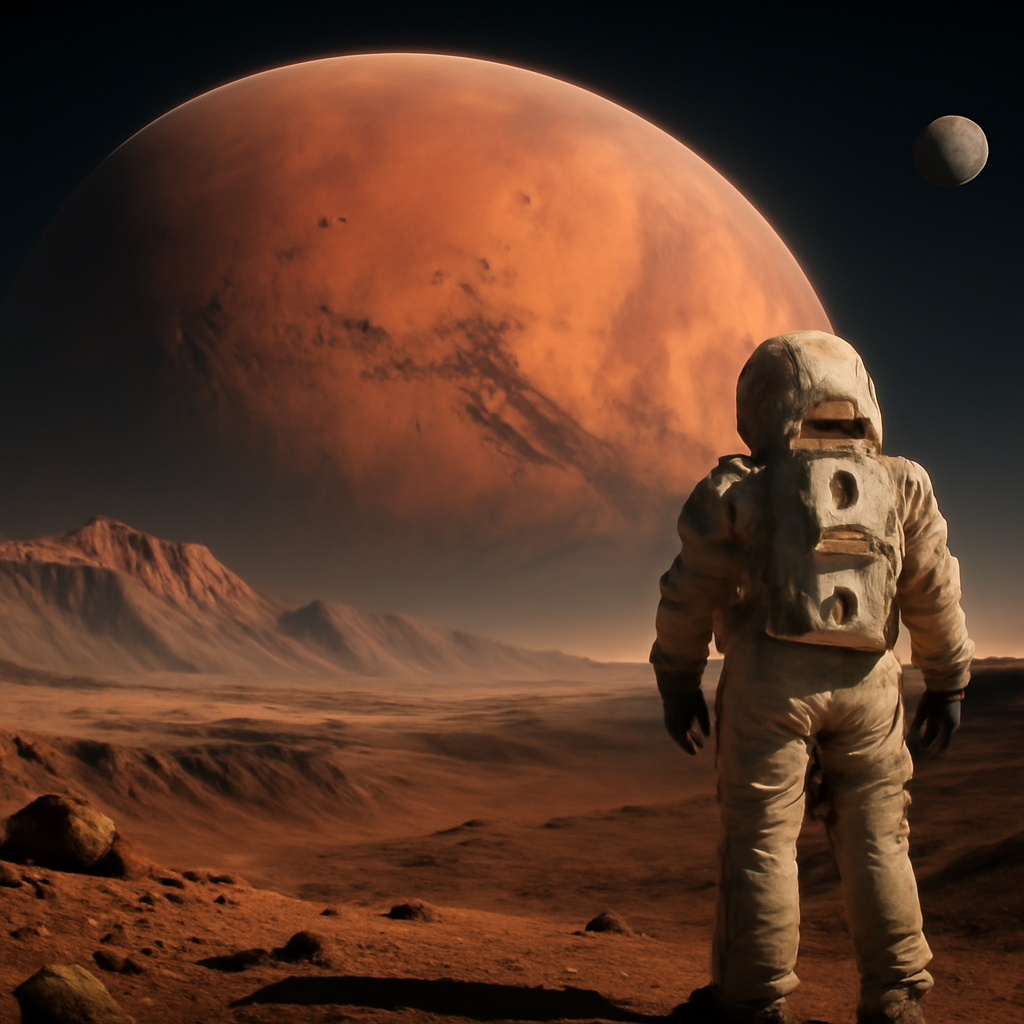
From the discovery of water-carved caves to the detection of complex organic molecules, Mars continues to reveal its potential for past and future habitability. Meanwhile, Earth-based innovations in 3D printing, AI, and propulsion are rapidly accelerating humanity's journey to becoming a multi-planetary species.
Subsurface Secrets: New Evidence of Martian Water and Habitability
The discovery of potential karstic caves in Mars' Hebrus Valles region, identified as water-carved formations rather than solely volcanic tubes, significantly bolsters the argument for Mars' past habitability. These subsurface voids, analogous to Earth's limestone caves, suggest the presence of persistent liquid water capable of dissolving rock over geological timescales. This is complemented by recent findings from NASA's Perseverance rover in Jezero Crater, which detected complex organic molecules, including macromolecular carbon, within ancient mudstone. While not definitive proof of life, the presence of these carbon-based building blocks in conjunction with evidence of liquid water environments creates a more compelling scenario for the emergence and sustenance of microbial life billions of years ago. The combination of these two independent lines of evidence—geological formations indicating subsurface water and the detection of organic chemistry—paints a picture of a Mars far more dynamic and potentially life-friendly than previously understood, shifting the focus from surface conditions to the protective, water-rich environments beneath the regolith.
The Martian Immune Challenge: Protecting Future Astronauts
The prospect of establishing a human presence on Mars is not solely an engineering or logistical challenge; it also presents a novel biological hurdle. As we prepare to send astronauts to the Red Planet, the potential for Earth-borne microbes, inadvertently carried by spacecraft or suits, to adapt to Martian conditions and subsequently pose a threat to human health is a growing concern. Research indicates that these terrestrial microorganisms, if exposed to the Martian environment – characterized by its thin atmosphere, high radiation, and frigid temperatures – could undergo genetic alterations. These modifications might not only enhance their survival but also influence how they interact with the human immune system. Specifically, adapted microbes could potentially circumvent the body's natural defenses, leading to unforeseen infections or immune dysregulation in astronauts whose immune systems are already stressed by the rigors of space travel and living in an alien environment. This underscores the critical need for stringent planetary protection protocols and advanced biomedical monitoring to safeguard the health of future Martian explorers.
From Mars to the Moon: Repurposing Exploration Technologies
NASA's Artemis program, aiming for a sustained lunar presence, is strategically evaluating technologies honed for the harsh Martian environment. Foremost among these is the potential repurposing of nuclear-powered rovers. Such a system, originally conceived to navigate the vast, radiation-bombarded Martian plains and power long-duration scientific investigations far from a solar-powered base, offers compelling advantages for lunar operations. The Moon, while lacking Mars's thick atmosphere, presents its own challenges: extreme temperature swings between lunar day and night, prolonged periods of darkness, and a regolith that can be abrasive to mechanical systems. A radioisotope thermoelectric generator (RTG) or a small fission reactor, providing consistent, high-density power independent of sunlight, would enable continuous rover operation, essential for constructing and maintaining a lunar base, excavating resources, and supporting astronaut excursions, even in permanently shadowed regions near the poles. This parallel development path, from Mars exploration to lunar infrastructure, underscores a pragmatic approach to interplanetary settlement, leveraging existing technological maturation to accelerate ambitious off-world goals.
Revolutionizing Manufacturing: Precision LiDAR and AI for Critical Components
The ability to manufacture critical components with micron-level precision is paramount for both robust terrestrial industries and the ambitious endeavors of space exploration. Recent advancements in Light Detection and Ranging (LiDAR) technology are poised to revolutionize this domain. A novel LiDAR approach, capable of imaging small objects with unprecedented accuracy, allows for the inspection of intricate geometries that were previously beyond the reach of standard metrology. This technology functions by emitting precisely timed laser pulses and analyzing the reflected light’s time-of-flight to construct a three-dimensional model of an object. By achieving resolutions in the micron range, it can detect minute imperfections, deviations from design specifications, or material inconsistencies in manufactured parts. This level of detail is crucial for components like those used in advanced aerospace systems, where even microscopic flaws can lead to catastrophic failure. The integration of artificial intelligence further enhances this capability, enabling automated analysis of the LiDAR data. AI algorithms can be trained to identify specific types of defects, compare scan data against digital twins with extreme fidelity, and flag parts that do not meet stringent quality control standards, thereby accelerating the inspection process and ensuring the reliability of hardware destined for environments as demanding as Mars.
Magma Oceans and Seismic Insights: Reconstructing Early Mars
New seismic data from Mars is painting a picture of a planet far more dynamic in its youth than previously understood, suggesting that vast oceans of molten rock may have once covered its surface. This isn't just a geological curiosity; the implications for early Martian habitability are profound. The intense heat generated by these magma oceans would have driven extensive hydrothermal activity, creating environments where liquid water could persist for extended periods, even as the planet’s atmosphere was still developing. Furthermore, the continuous churning and cooling of this molten material would have released significant amounts of gases, including water vapor and carbon dioxide, potentially contributing to a thicker, warmer atmosphere capable of supporting liquid water on the surface. Understanding the scale and duration of these magma oceans is crucial for pinpointing the most promising locations for early life to have emerged, offering a compelling new angle in the search for biosignatures. The seismic waves, analyzed through advanced techniques, provide a subsurface 'sounding' that allows scientists to infer the composition and state of matter deep within the planet, revealing a history shaped by incandescent, planet-enveloping seas.
3D Printing the Future: From Terracotta Habitats to Resilient Spacesuits
The burgeoning Mars colonization effort hinges on the transformative capabilities of additive manufacturing. Beyond merely assembling habitats, 3D printing is poised to revolutionize construction by creating structures directly from in-situ Martian regolith. Imagine terracotta-like modules, inspired by designs like Rameshwari Jonnalagedda's 'Minimal Matter,' printed layer by painstaking layer using locally sourced materials. This approach not only minimizes the immense payload required from Earth but also allows for structures that integrate seamlessly with the Martian environment, potentially even mimicking the water-carved formations discovered in Hebrus Valles. Furthermore, the wear and tear on equipment, especially spacesuits, necessitates robust, on-demand repair and replacement. Researchers are already developing advanced 3D-woven fabrics that promise significantly improved impact resistance for critical components like the Hard Upper Torso, a vital step towards ensuring astronaut safety in the harsh Martian landscape. This technological leap ensures that the very tools of survival and exploration can be manufactured, maintained, and enhanced on-site, paving the way for a truly sustainable presence.
Propulsion and Infrastructure: Powering Interplanetary Transit
The ambitious goal of establishing a multi-planetary civilization hinges on robust propulsion systems and the underlying logistical infrastructure. SpaceX's Starship program, with its third-generation vehicle now undergoing flight testing and continuous Raptor engine development at Starbase, represents a significant leap in heavy-lift capability. The sheer scale of Starship necessitates a reliable and cost-effective supply chain, which is why the company is pursuing permits for an eight-mile natural gas pipeline to connect its Texas launch site to a dedicated supplier. This direct pipeline bypasses the complexities and costs associated with transporting cryogenic propellants via road or rail, ensuring a consistent fuel stream essential for frequent launches and rapid development cycles. Complementing this hardware focus, Dawn Aerospace is advancing its reusable spaceplane technology, backed by $25 million in Series B funding, and is exploring in-orbit refueling networks. Such developments in reusable transit, coupled with the burgeoning use of additive manufacturing for critical aerospace components—from impact protection for Mars samples to advanced spacesuit fabrics—lay the foundational elements for the sustained interplanetary transit required to ferry humans and cargo to Mars.
Accelerating Spacecraft Design: AI, Supercomputing, and Material Science
The relentless pace of Mars exploration, from searching for subsurface water in Hebrus Valles to analyzing organic molecules in Jezero Crater, is being mirrored by a revolution in how we design and build the spacecraft that will carry us there. Gone are the multi-year design-to-manufacturing timelines. Today, advancements in artificial intelligence, coupled with the immense processing power of supercomputers, are compressing these cycles into months, even weeks. For instance, the development of the Aires Tide hypersonic vehicle saw a 15-fold cost reduction and a seven-fold speed increase, a direct result of AI algorithms optimizing complex fluid dynamics simulations and material stresses. This acceleration is further bolstered by breakthroughs in material science and analysis. New models, like the one predicting sheet metal behavior in seconds using microstructural data, allow engineers to rapidly iterate on designs for everything from structural components to propellant tanks. These technologies are not merely theoretical; they are actively being integrated. Authentise's AI tool is already slashing aerospace documentation costs, streamlining the creation of critical technical data packages, while advanced 3D-woven fabrics promise safer, more resilient spacesuit components. This synergistic approach, where AI and supercomputing inform material choices and manufacturing processes, is fundamentally altering the economics and feasibility of ambitious space missions, making multi-planetary endeavors a tangible near-term reality.
The convergence of these headlines paints a clear picture: humanity's destiny lies beyond Earth. The ongoing exploration of Mars, revealing hints of past water and organic chemistry, validates our drive to colonize the Red Planet. Simultaneously, breakthroughs in additive manufacturing, advanced materials, and AI are providing the foundational technologies for self-sufficient off-world settlements and robust interplanetary transport. The exploration of Mars is not merely a scientific endeavor; it is an existential imperative, a necessary step in safeguarding and expanding the human legacy. Each innovation, from nuclear-powered rovers to resilient spacesuit fabrics, is a building block for a future where humanity thrives across multiple worlds, ensuring our long-term survival and exponential progress.
This content was produced by the news editor with AI.