Mars TGO/NOMAD-UVIS Tracks Martian Ice Clouds for Four Years
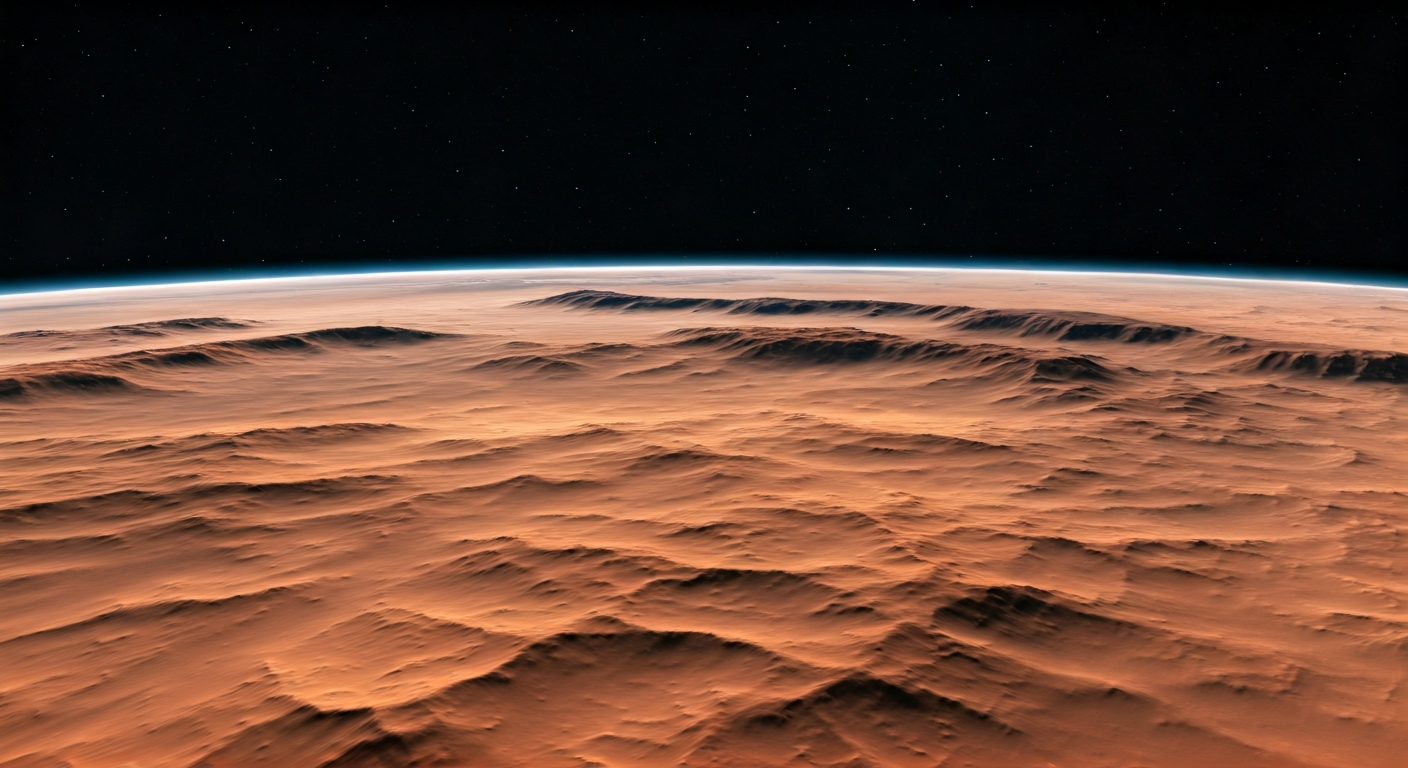
New data from the Trace Gas Orbiter's NOMAD-UVIS instrument provides a comprehensive climatology of Martian ice clouds, observed over four Earth years.
Scientists have compiled an extensive dataset detailing the behavior of ice clouds on Mars, utilizing observations from the NOMAD-UVIS instrument aboard the European Space Agency's Trace Gas Orbiter (TGO). This research spans a significant period, covering four Martian years, which is approximately eight Earth years.
The NOMAD-UVIS instrument, specifically its Ultraviolet and Visible Spectrometer (UVIS) channel, was employed to retrieve information about these atmospheric phenomena. The nadir retrieval technique means the instrument was looking directly down at the Martian surface and atmosphere from orbit.
This analysis has resulted in the creation of climatologies, which are essentially long-term averages and statistical descriptions of weather and climate. These climatologies offer unprecedented insight into the prevalence, distribution, and variations of ice clouds across the Martian atmosphere over an extended observational period.
The data gathered provides a detailed picture of how Martian ice clouds form, persist, and change seasonally and annually. Understanding these cloud systems is crucial for comprehending Mars's atmospheric dynamics and its water cycle, which are key factors for future exploration and potential habitability.
The TGO/NOMAD-UVIS's four-year ice cloud climatology marks a significant step in our understanding of Martian atmospheric processes. By precisely mapping the distribution and behavior of water ice clouds, this data directly informs models of Mars's water cycle. This detailed atmospheric knowledge is not just academic; it's foundational for establishing self-sustaining human outposts. Understanding atmospheric dynamics, including cloud formation and precipitation patterns, is critical for designing habitats, predicting weather hazards, and ultimately, terraforming Mars. Each piece of data like this accelerates our trajectory towards becoming a multi-planetary species, transforming Mars from a desolate world into a vibrant, second home for humanity.
Edited by the news editor with AI from the original report — please refer to the original source.