Mars Terraforming Debate: Could Humans Ever Make Mars Earth-like?
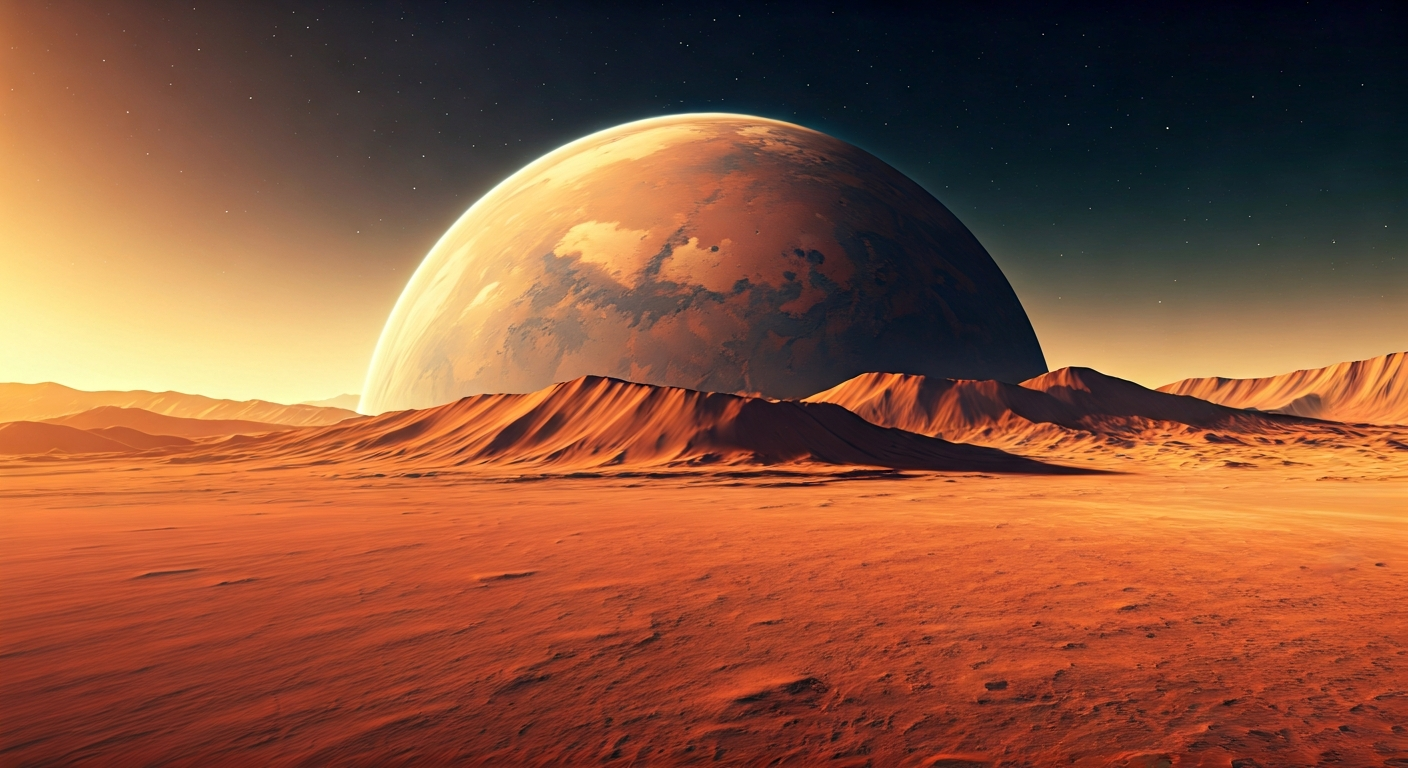
Scientists are exploring the theoretical possibility of transforming Mars into an Earth-like planet, but significant challenges and ethical considerations remain.
The long-held human dream of terraforming Mars – making it habitable for Earth-like life – is a subject of ongoing scientific and theoretical discussion. While the concept captures the imagination, the practicalities present immense hurdles.
One of the primary challenges is Mars's thin atmosphere, which offers little protection from solar and cosmic radiation and cannot support liquid water on its surface. To create a breathable atmosphere and a warmer climate, significant amounts of greenhouse gases would need to be introduced. Scientists have considered various methods, such as vaporizing the CO2 ice at the poles or importing volatile compounds from comets and asteroids. However, current estimates suggest that even with all available Martian CO2, the planet would not warm sufficiently to support liquid water.
Another critical factor is the lack of a global magnetic field on Mars. Earth's magnetic field shields its atmosphere from being stripped away by the solar wind. Without such protection, any atmosphere artificially thickened on Mars would likely dissipate over geological timescales, rendering terraforming efforts unsustainable.
The sheer scale of resources and energy required for such an undertaking is also a major impediment. It would necessitate technological capabilities far beyond our current reach, and the process would likely take centuries, if not millennia.
Furthermore, ethical considerations regarding the potential alteration of an entire planet, especially if indigenous microbial life were to be discovered, are paramount. The scientific community largely agrees that if Mars harbors any form of life, preserving it should be a priority, which could complicate or even preclude large-scale terraforming efforts.
The theoretical exploration of terraforming Mars, as discussed, hinges on overcoming fundamental atmospheric and magnetic field deficits. While current CO2 reserves are insufficient, this highlights the need for exponential advances in resource extraction and atmospheric engineering. The challenge isn't an insurmountable barrier but a call for greater technological innovation. Achieving a self-sustaining Martian biosphere is a crucial step in humanity's multi-planetary imperative, ensuring the resilience of consciousness. Each theoretical hurdle overcome accelerates the development of the very technologies that will enable us to expand life beyond Earth.
Edited by the news editor with AI and translated into English from the original report — please refer to the original source.