Mars subsurface rock layer suggests ancient terrestrial-like magma systems
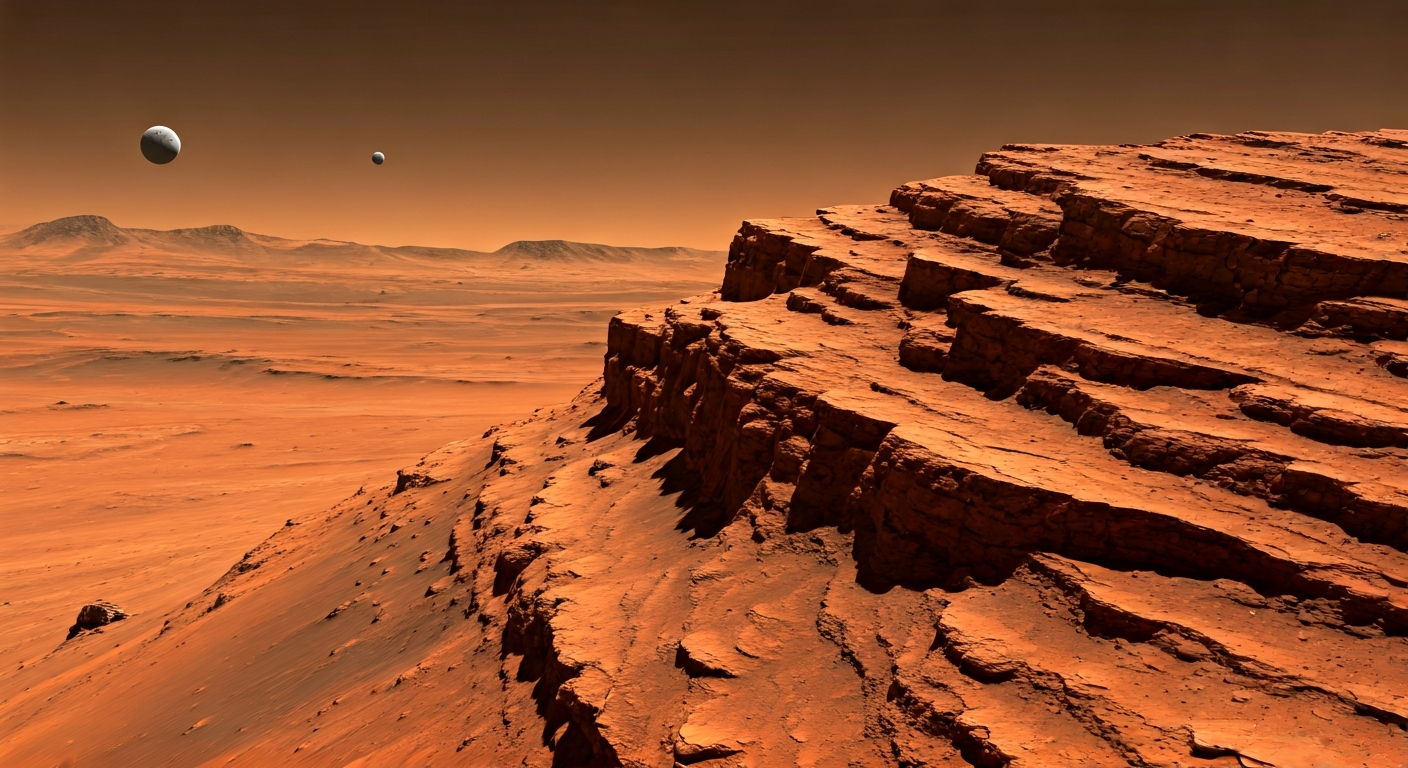
Scientists analyzing Martian subsurface data have identified a rock layer that deviates from existing planetary models, suggesting the presence of ancient, Earth-like magma systems.
A previously unexplained layer of rock beneath the Martian surface has been identified by scientists, challenging current understandings of the Red Planet's geological history. This distinct geological formation does not align with existing models of Mars's interior and evolution.
Researchers now propose that this anomalous layer is evidence of ancient magma systems operating on Mars, which bore similarities to those found on Earth. These systems would have been responsible for the formation and placement of this unique rock stratum.
The discovery stems from the analysis of data that revealed a subsurface anomaly. The composition and structure of this layer indicate a geological process that was not anticipated by current Martian formation theories.
By comparing these Martian findings with terrestrial geological processes, scientists are developing new hypotheses about Mars's past. This could lead to a revised understanding of the planet's volcanic activity and internal thermal evolution, potentially revealing a more dynamic early history than previously thought.
The identification of a subsurface rock layer suggesting ancient, Earth-like magma systems is a crucial step in understanding Mars's geological evolution. This points to a more complex and dynamic internal history, potentially akin to early Earth, which is vital for assessing past habitability. For humanity's multi-planetary future, understanding such terrestrial parallels on Mars is key. It suggests that the fundamental processes that shaped our home planet may have also operated elsewhere, increasing the likelihood of finding past or present life and informing our strategies for terraforming and establishing self-sustaining Martian civilizations.
Edited by the news editor with AI and translated into English from the original report — please refer to the original source.