Mars Rover's Raman Spectrometer Analyzes Carotenoid Pigment Stability Under UV
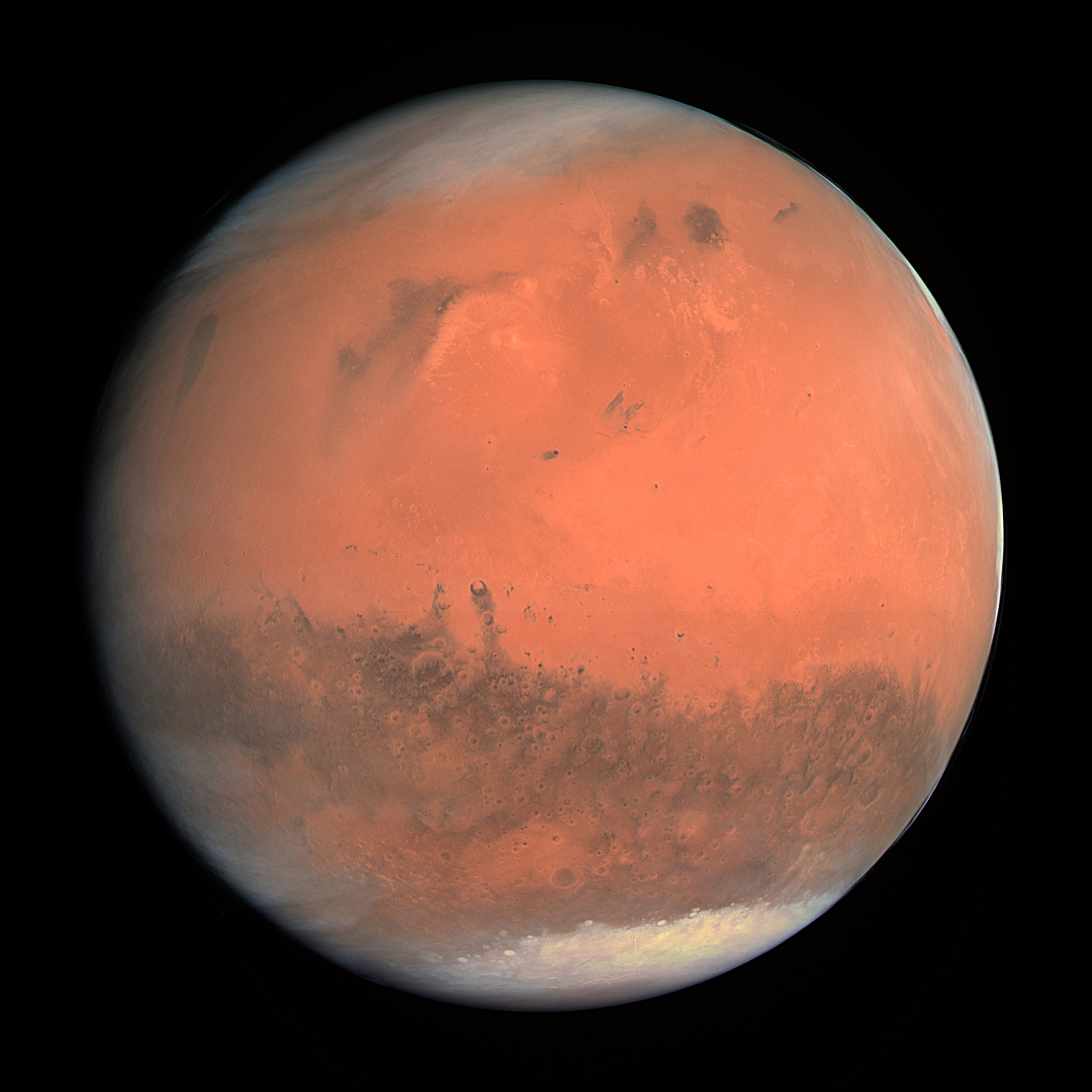
New research details how a Raman spectrometer, similar to those on Mars rovers, can assess the durability of carotenoid pigments when exposed to simulated Martian ultraviolet radiation, offering insights into potential biosignatures.
Scientists have investigated the stability of carotenoid pigments, organic molecules that can act as biosignatures, when subjected to the harsh ultraviolet (UV) radiation environment expected on Mars. The study utilized a Raman spectrometer, a type of instrument employed by NASA's Perseverance and Curiosity rovers, to analyze these pigments within simulated Martian evaporite samples.
Evaporites are minerals formed from evaporating water, and their presence on Mars suggests past habitable conditions. The research focused on how UV irradiance, a significant factor on the Martian surface due to the thin atmosphere and lack of a global magnetic field, affects the chemical structure and thus the detectability of carotenoids. These pigments are known for their antioxidant properties and their role in photosynthesis, making them potential indicators of past life.
The findings indicate that the Raman signal, which provides a chemical fingerprint of the molecules, can effectively monitor the degradation of carotenoids under prolonged UV exposure. This ability is crucial for distinguishing between actual biological remnants and abiotic organic compounds that might mimic biosignatures. The study demonstrated that while UV radiation does alter the carotenoids, their characteristic Raman signatures persist to a detectable degree, even after significant irradiation.
This work has direct implications for astrobiology missions searching for evidence of ancient Martian life. By understanding how potential biosignatures like carotenoids behave under Martian surface conditions, scientists can refine the interpretation of data returned by instruments like the SuperCam and SHERLOC on the Perseverance rover. The research validates the utility of Raman spectroscopy as a tool for identifying and characterizing organic molecules that could signify past biological activity on the Red Planet.
This research into carotenoid stability under simulated Martian UV irradiance is a critical step in our multi-planetary imperative. Raman spectroscopy, as demonstrated here, offers a robust method for identifying organic molecules that could represent biosignatures. The ability to track the persistence of these complex molecules, even after UV degradation, refines our tools for detecting past life on Mars. Such advancements are essential for our long-term goal of establishing a self-sustaining civilization. By confirming the presence of biosignatures, we not only validate Mars as a candidate for life's expansion but also accelerate our understanding of how life can endure and evolve in extraterrestrial environments, paving the way for humanity's cosmic future.
Edited by the news editor with AI from the original report — please refer to the original source.