Mars Rovers Gain Autonomy with Edge Computing for Real-Time Decisions
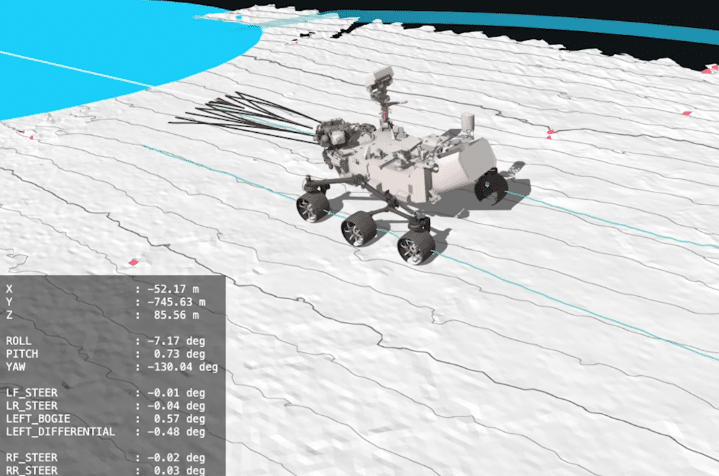
Edge computing is empowering Mars rovers with onboard decision-making capabilities, overcoming communication delays and enabling more dynamic scientific exploration.
Operating robotic explorers on Mars presents a significant challenge due to the vast distances involved, which cause communication delays of several minutes each way. This latency makes real-time remote piloting impossible, forcing mission controllers to pre-plan commands and wait for results, potentially leaving rovers vulnerable to hazards.
To address this, the next generation of Mars rovers is increasingly relying on edge computing. This technology allows rovers to process data and make decisions locally, rather than depending on instructions from Earth. This onboard intelligence is crucial for navigating complex terrain, identifying obstacles, and adjusting scientific objectives autonomously.
Edge computing also helps mitigate the effects of space radiation, which can interfere with sensitive computing systems and corrupt data. By processing information onboard, rovers can handle multiple computational tasks, from navigation to scientific analysis, with greater resilience.
This shift towards autonomy is a departure from earlier missions, where rovers moved in short, pre-planned segments. Modern rovers like NASA's Perseverance, utilizing generative AI and advanced algorithms, can cover significantly more ground, as demonstrated by drives exceeding 800 feet, nearly double the distance of older systems.
The development of advanced processors and onboard data analysis capabilities represents a fundamental evolution in planetary exploration. Edge computing, by enabling immediate responses to the rover's environment, is a key enabler for more efficient operations, greater scientific productivity, and the pursuit of unexpected discoveries on Mars and beyond.
The integration of edge computing into Mars rovers signifies a critical step towards true interplanetary autonomy. By enabling real-time, onboard decision-making, these rovers overcome the tyranny of distance and communication lag, transforming them from remotely controlled tools into independent explorers. This capability is not merely an efficiency upgrade; it's an existential necessity for expanding humanity's reach. As we push further into the solar system, the ability for spacecraft to adapt and act without Earth-bound delays accelerates our trajectory towards becoming a multi-planetary species, laying the groundwork for self-sustaining outposts and the long-term survival of consciousness.
Edited by the news editor with AI from the original report — please refer to the original source.