Mars Rovers Gain Autonomy, Boosting Exploration Efficiency
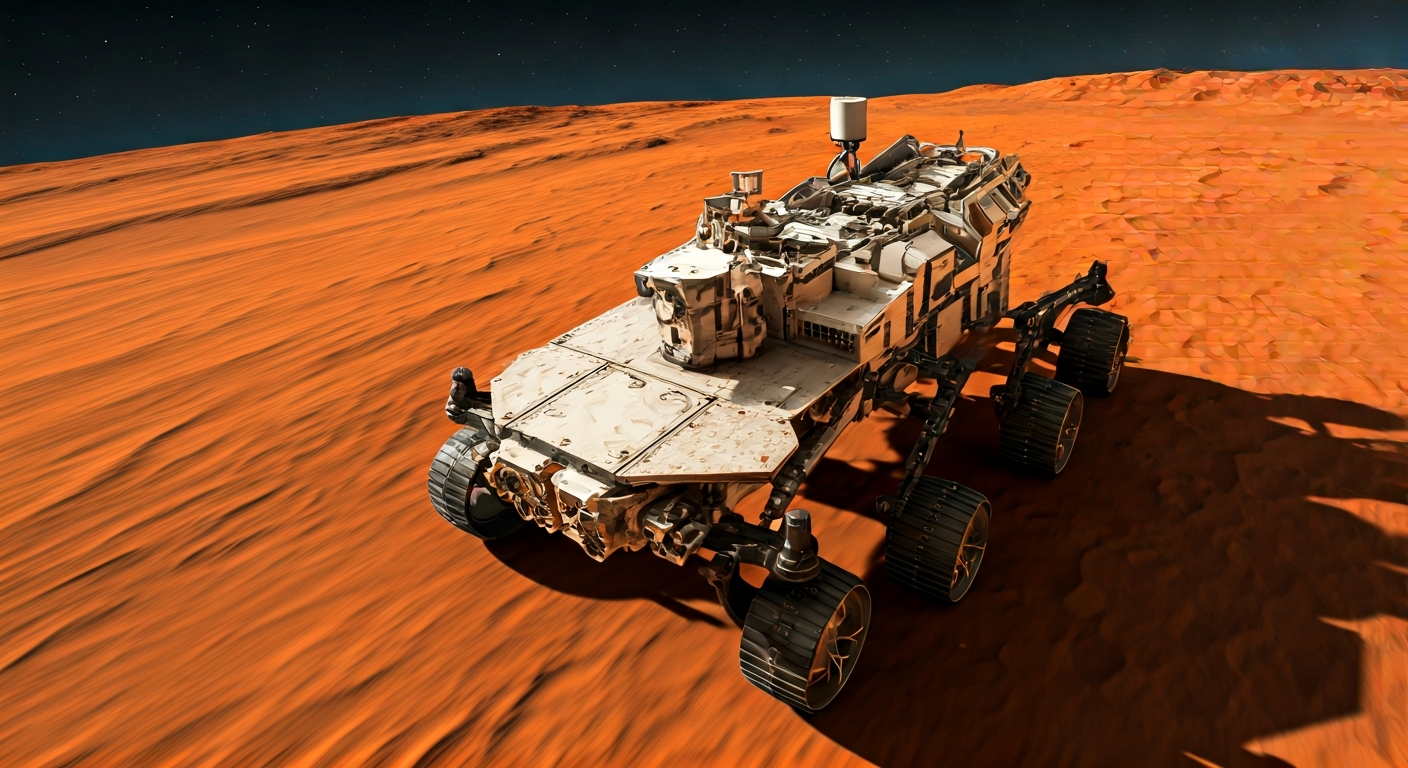
New semi-autonomous rover technology developed by Chinese scientists can make exploration decisions on Mars without waiting for Earth-based commands, significantly increasing operational speed.
Chinese researchers have engineered a new generation of semi-autonomous robotic explorers designed to significantly accelerate the pace of Martian surface exploration. This advanced technology allows rovers to independently assess their surroundings and make critical decisions, such as identifying scientifically interesting rock formations, without requiring real-time instructions from mission control on Earth.
The development addresses a major bottleneck in current Mars missions: the significant time delay in communication between Earth and the Red Planet, which can range from several minutes to over twenty minutes each way. By enabling rovers to process data and choose targets on-site, the need for constant human oversight is reduced, allowing for more continuous and efficient scientific investigation.
This enhanced autonomy is particularly beneficial for tasks involving detailed geological surveys and sample collection. The system can analyze visual data from the rover's cameras and onboard sensors to distinguish between different types of rocks and geological features, prioritizing those with the highest scientific potential. This intelligent decision-making capability means rovers can cover more ground and gather more valuable data within a given timeframe.
The research, which involved collaboration with institutions in Zurich, points to a future where robotic explorers on Mars and other celestial bodies can operate with greater independence, adapting to unforeseen circumstances and capitalizing on fleeting scientific opportunities. The goal is to maximize the scientific return of missions by optimizing the rover's operational time and its ability to react swiftly to discoveries on the Martian surface.
This leap in semi-autonomous rover capability is a crucial step toward true Martian self-sufficiency. By reducing reliance on Earth's delayed communications, these intelligent machines can begin to act as precursors to human outposts, performing continuous geological analysis and resource identification at exponential speeds. This autonomy directly accelerates the data acquisition and operational tempo necessary for establishing a robust, self-sustaining presence, empowering life's expansion beyond Earth by enabling more efficient and responsive exploration of potential settlement sites and resource depots.
Edited by the news editor with AI and translated into English from the original report — please refer to the original source.